Bulb Marking Stakes
After flowering but before foliage dies back, mark clump locations with small, labeled stakes so dormant bulbs are not accidentally dug up or overplanted later in the season.

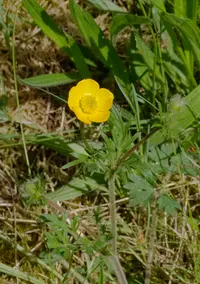
Ranunculus bulbosus, commonly called bulbous buttercup, is a small perennial wildflower with bright yellow, glossy, cup-shaped blooms and deeply divided leaves. It grows from a swollen, bulb-like base, forming low clumps in grasslands and open, often disturbed sites.
This species is native to Europe but is now widespread in lawns, pastures, and roadsides in many temperate regions, including parts of North America. It spreads easily by seed and bulb-like tubers, which makes it persistent once established and sometimes weedy.
It prefers full sun, moist but well-drained soils, and can tolerate relatively poor ground. Anyone wanting to care for bulbous buttercup should understand its tendency to spread and its preference for open, unshaded spots.

Care Difficulty
Moderate Care

Light Preference
Full Sun

Water Requirements
Moderate Water

Temperature Preference
Cold Hardy

Hardiness Zone
3–8

Soil Texture
Sandy, Loamy, Rocky

Soil pH
Slightly acidic (6.5–7.0), Neutral (7.0)

Soil Drainage
Well-drained

Fertilization
Minimal (feed rarely)
Scan your plant to receive care tips personalized for your specific plant
Available on iOS and Android
This species thrives in open, bright conditions typical of meadows and pastures.
Water needs are modest and strongly linked to soil drainage and season.
This temperate wildflower is adapted to cool springs and mild summers.
This species tolerates a wide humidity range and rarely needs special humidity management outdoors or in containers.
Ranunculus bulbosus prefers light, well-aerated ground that never stays waterlogged.
This species can be grown in containers if drainage and bulb position are carefully managed.
Ranunculus bulbosus usually thrives in low-nutrient soils, so fertilizing is optional and should stay light.
Pruning needs for Ranunculus bulbosus are minimal and focus mainly on hygiene and seed control.
This species is most often grown in the ground, so focus on careful transplanting of its small bulbs rather than frequent repotting.
Ranunculus bulbosus is commonly propagated by bulbs and seed, allowing both clonal increase and naturalizing.
This hardy species needs little winter attention in most temperate climates.

Plant Health Check
Not sure what's wrong with your plant? Check your plant's health inside the app.
Bulbous buttercup contains ranunculin, a compound that converts to an irritating toxin when plant tissue is crushed or chewed, which can cause mouth and digestive irritation in cattle and other livestock. Grazing animals usually avoid it when other forage is available, so poisoning events in the field are uncommon.
The species forms a swollen, bulb-like corm at the base of its stem, which stores nutrients and helps it survive summer drought and mowing. This underground storage organ also allows the plant to regrow quickly in the following spring.
Its bright yellow flowers have sepals that bend downward away from the petals, a key trait used by botanists to distinguish this species from similar buttercups. This recurved sepal character is reliable enough to identify the plant even in mixed grassland communities.

In intensively managed pastures and hay fields in parts of Europe and North America, bulbous buttercup can act as an indicator of soil disturbance and reduced grass vigor, often increasing in abundance where repeated grazing, trampling, or soil compaction has weakened more desirable forage species.
This species spreads readily by seed and from its swollen root base, especially in grazed pastures and lawns. In suitable conditions it can form dense patches, so regular removal of seed heads and unwanted clumps helps limit spread.
Keep your plants happy and healthy with plant identification, disease detection, and easy care guidance.