Salinity management
If grown away from natural seawater, periodically irrigate with a dilute marine salt solution (about 10–15 g non-iodized sea salt per 1 L water) to maintain halophytic health and prevent weak, overly lush growth.

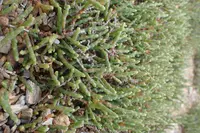
Beaded samphire (Salicornia quinqueflora) is a small, succulent halophyte, meaning it naturally thrives in salty environments. It forms low, bright green, jointed stems that look bead-like and often create dense mats.
This species is common in coastal salt marshes, tidal flats, and estuaries in Australia and nearby regions. It is adapted to regular saltwater exposure and fluctuating moisture levels, which strongly influences how easy it is to grow away from the coast.
Gardeners who care for Beaded Samphire need to understand its need for high salinity, very free-draining, sandy or gritty substrates, and strong light, which can make it challenging in typical garden soil.

Care Difficulty
Moderate Care

Light Preference
Full Sun

Water Requirements
Aquatic

Temperature Preference
Warm Climate

Hardiness Zone
8–11

Soil Texture
Sandy, Silty

Soil pH
Neutral (7.0), Slightly alkaline (7.0–7.5)

Soil Drainage
Waterlogged tolerant

Fertilization
Minimal (feed rarely)
Scan your plant to receive care tips personalized for your specific plant
Available on iOS and Android
This coastal halophyte needs strong light to maintain compact, healthy growth.
This salt-marsh species prefers consistently moist to wet conditions and tolerates brackish water.
This species is adapted to mild, maritime climates with cool to warm temperatures.
Humidity is not a critical factor for this coastal halophyte compared with salinity and watering.
Salicornia quinqueflora prefers saline, sandy, fast-draining substrates that mimic coastal marsh edges.
This species can be grown in containers when the setup mimics a shallow, coastal, saline substrate.
This coastal halophyte usually needs little feeding, especially in salty, nutrient-rich substrates, but light support can help container plants.
Salicornia quinqueflora needs minimal pruning, mainly to tidy plants and encourage compact growth in containers.
This salt-marsh species is more often transplanted outdoors than repotted, but container plants may need attention as they mature.
This plant is usually propagated from seed or soft stem pieces under warm, bright conditions.
In mild coastal climates this species usually needs little special winter care once established in the ground.

Plant Health Check
Not sure what's wrong with your plant? Check your plant's health inside the app.
This coastal succulent actively pumps salt from seawater into its bead-like segments, storing it in vacuoles so that the rest of its tissues can function almost like a normal freshwater plant.
It is naturally found on the upper parts of salt marshes and tidal flats in Australia and New Zealand, where it tolerates regular seawater flooding that would quickly kill most terrestrial plants.
Its dense, low growth helps trap sediment and organic matter in salt marshes, gradually stabilizing shorelines and contributing to the formation of new coastal habitat for other salt-tolerant species.

In some coastal regions of Australia and New Zealand, this species is used as an indicator plant for highly saline, tidally influenced soils, helping ecologists map the transition between true marine habitats and more inland terrestrial vegetation zones.
The succulent shoots are edible and commonly eaten raw or lightly cooked. They have a crisp texture and salty flavor, reflecting their coastal habitat. Always harvest from clean, uncontaminated shores and rinse thoroughly before culinary use.
Keep your plants happy and healthy with plant identification, disease detection, and easy care guidance.