Wind training
In windy sites, allow young trees to flex in moderate wind without staking so they develop stronger trunks, and only use loose, temporary staking during the first 1–2 years if the root ball shifts or the canopy leans strongly.

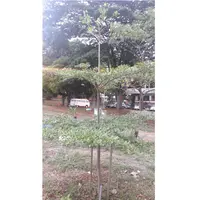
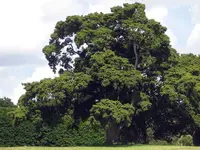
Madagascar almond (Terminalia mantaly) is a fast-growing tropical tree valued for its layered, umbrella-like branching and neat, symmetrical crown. It is often used as a shade or street tree in warm climates. Native to Madagascar, it adapts well in many coastal and tropical regions where winters are mild. The tree has small, clustered leaves that form flat tiers, giving it a distinctive architectural look. It tends to be hardy once established but needs warmth, sun, and space to develop its full form. Understanding how to care for Madagascar almond is important, as it dislikes cold, waterlogged soil, and very dry, compacted sites.

Care Difficulty
Moderate Care

Light Preference
Full Sun

Water Requirements
Moderate Water

Temperature Preference
Tropical / Frost Sensitive

Hardiness Zone
10–12

Soil Texture
Sandy, Loamy, Organic-rich

Soil pH
Slightly acidic (6.5–7.0), Neutral (7.0)

Soil Drainage
Well-drained

Fertilization
Minimal (feed rarely)
Scan your plant to receive care tips personalized for your specific plant
Available on iOS and Android
This species thrives in bright, open sites with strong light and some protection from extreme midday sun.
This tree prefers deep, infrequent watering that allows the soil to partly dry between soakings.
This tropical tree performs best in warm, frost‑free climates with stable temperatures.
This species tolerates a wide humidity range but grows best with moderately moist air.
This tree prefers freely draining, moderately fertile soil that does not stay wet for long.
This species can be grown in large containers for patio or temporary landscape use.
This fast-growing shade tree benefits from moderate feeding in containers or poor soil, but established in-ground trees often need little fertilizer.
Pruning helps Terminalia mantaly maintain a strong framework and layered canopy, especially in landscapes and streetscapes.
This tree is usually grown in the ground, so care focuses more on transplanting young specimens than on frequent repotting.
Propagation of Terminalia mantaly is possible for nurseries or dedicated growers but is not usually done by casual home gardeners.
This tropical tree is frost-sensitive and needs specific winter care in regions with cool or freezing conditions.

Plant Health Check
Not sure what's wrong with your plant? Check your plant's health inside the app.
This species naturally develops flat, horizontal branch tiers that stack in layers, creating a distinctive umbrella-like silhouette that is used in tropical urban design to cast broad, even shade.
In its introduced range, this tree tolerates wind, salt spray, and poor, compacted soils, which explains its frequent use as a street and seaside planting in coastal towns.
The tree forms strong, shallow lateral roots that can heave paving and compete intensely with nearby plants, so it is often planted away from buildings and hardscapes in urban planning.

In several tropical cities, this species has become so dominant in avenue and parking-lot plantings that its distinctive layered crown is used as a visual cue in local landscape plans to signal shaded public rest areas from a distance.
This species is generally fast-growing in warm climates, adding about 0.5–1.5 m per year when young. Growth slows as it matures. Adequate space, water, and nutrients help grow Terminalia mantaly with a strong, tiered canopy.
Keep your plants happy and healthy with plant identification, disease detection, and easy care guidance.