

Olive tree (Olea europaea) Light Needs

Olive tree grows best in full sun, with several hours of direct light each day.

Light Preference

Full Sun

Olea europaea Light Requirements

Olea europaea comes from the Mediterranean region, where summers are bright, dry, and exposed. In its native habitat, it grows in open sites, rocky slopes, and long-cultivated groves with long hours of direct sun rather than shade. This background explains why container-grown plants often weaken when kept in dim rooms, especially in spring and summer. Olive tree prefers full sun.

  • Ideal exposure:

    Olive tree needs about 6–8 hours of full sun daily, including at least 6 hours of direct sunlight when possible.

  • Direct sun:

    Mature, acclimated plants tolerate strong direct sun well, including afternoon exposure outdoors.

  • Lower light:

    Partial sun is tolerated, but dim shade leads to weak, stretched growth over time.

  • Acclimation:

    Increase sun exposure gradually after indoor conditions, shipping, or a shaded nursery location.

Indoors, placement works only where the brightest unobstructed window can provide several hours of direct sun.

NPoor
North-facing window:

A north-facing window is usually too dim unless strong supplemental light is used for much of the day.

ESuitable
East-facing window:

An east-facing window is suitable for smaller specimens if it provides direct morning sun and bright light afterward.

SBest
South-facing window:

A south-facing window is the best indoor option, especially when the plant sits within 1–2 ft of clear glass.

WSuitable
West-facing window:

A west-facing window can work if afternoon heat is not trapped against the leaves or container.

If indoor growth stretches or leans, the plant is likely not receiving enough direct sun.

Full sun is usually beneficial, but abrupt or trapped heat exposure can stress leaves.

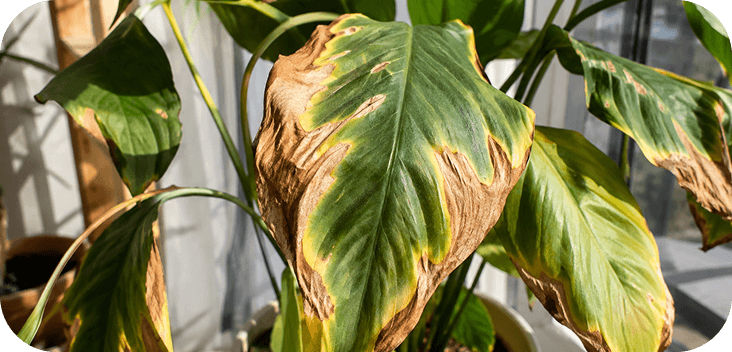
Sunburn patches:

Dry tan or gray patches may appear on the upper, sun-facing leaves after a sudden move into intense sun.

One-sided scorching:

Damage often shows most on the side facing afternoon sun or hot glass, while shaded growth looks less affected.

Bleached new growth:

Tender shoots may look pale or washed out when bright exposure increases faster than the plant can adapt.

Crisped leaf tips:

Fine leaf tips can dry after repeated hot, reflective sun, especially in small containers near walls or glass.

Move it back from the hottest exposure, or filter the strongest afternoon rays for 1–2 weeks. Reintroduce brighter sun gradually once new growth looks steady.

Low light is a common reason indoor specimens lose compact, productive growth.

  • Stretched shoots:

    New stems may grow long and thin as they reach toward a stronger light source.

  • Leaning canopy:

    The crown may tilt toward the brightest side instead of growing evenly.

  • Wide leaf spacing:

    Leaves may form farther apart on new stems, giving the growth a sparse look.

  • Reduced flowering:

    Plants kept too dim may produce few or no flowers during the normal bloom period.

  • Small new leaves:

    Fresh leaves may come in smaller than older leaves when light is consistently weak.

Shift Olea europaea to a brighter site with direct sun, making the change gradually if the new location is much brighter. Expect improvement in new growth, not older stretched stems.

If full sun is not available, use the brightest area that receives several hours of direct light instead of a shaded decorative spot.

Place the container close to the light source, rotate it every 1–2 weeks, and move it gradually when increasing sun exposure.

A dim room or a position several feet back from bright glass is unsuitable because the canopy will stretch toward stronger light.

Get Personalized Care Plan

Scan your plant to receive care tips personalized for your specific plant

FAQ

This species needs full sun to stay compact and vigorous. Aim for strong outdoor light or the brightest indoor exposure available, with direct sunlight for much of the day.

More Plant Light Guides

Get the Botan App

Discover how to care for your plants with Botan.

Botan app identifying a plant with a phone camera
Rice Water for Plants – Which Plants Love It and How to Make It

8 min read · 14 Jul 2026

Rice Water for Plants – Which Plants Love It and How to Make It

Rice water can be an ideal DIY solution for orchids, roses, or fruiting plants. It supports growth, leaf count, and height. We’ll share how to make and apply it correctly for your plant.

Plant Care
Rice Water for Plants – Which Plants Love It and How to Make It
How to Winterize Your Garden in 6 Steps

5 min read · 28 Sept 2026

How to Winterize Your Garden in 6 Steps

Learn how to prepare your garden for winter with a practical six-step checklist covering cleanup, tender plant care, watering, mulching, winter protection, and winterizing equipment and containers.

Plant Care
How to Winterize Your Garden in 6 Steps
Plant Pot Sizes: How to Choose the Right Plant Container

7 min read · 20 Aug 2026

Plant Pot Sizes: How to Choose the Right Plant Container

Plant pot sizes can be confusing because the number on the label only tells you part of the required information. A container may look spacious but actually be too shallow. So, how to choose pot size for plant species?

Beginner Guides
Plant Pot Sizes: How to Choose the Right Plant Container