


Refresh Leggy Growth
Every 12–18 months, cut back older, bare stems by 1/3–1/2 in late spring to stimulate dense, fresh trailing shoots instead of letting the plant become thin and straggly.


Tahitian bridalveil, Gibasis geniculata, is a trailing tropical perennial often grown in hanging baskets for its fine, cascading stems and delicate white flowers. The small, narrow leaves create a soft, curtain-like effect that suits bright indoor spaces and sheltered patios.
This species comes from warm regions of Mexico and Central America, where it grows in lightly shaded, humid habitats. It is considered relatively easy to grow, as long as it receives bright, indirect light, regular but moderate moisture, and a well-draining potting mix.
Gardeners who learn how to care for Tahitian bridalveil usually find it a fast-growing plant that responds well to light pruning and consistent, steady conditions.

Care Difficulty
Moderate Care

Light Preference
Bright Indirect Light

Water Requirements
Keep Soil Moist

Temperature Preference
Tropical / Frost Sensitive

Hardiness Zone
10–11

Soil Texture
Loamy, Organic-rich

Soil pH
Acidic (5.5–6.5), Slightly acidic (6.5–7.0)

Soil Drainage
Moist but well-drained

Fertilization
Light (every 4–6 weeks)
Scan your plant to receive care tips personalized for your specific plant
Available on iOS and Android
This trailing species prefers bright, indirect light that mimics dappled woodland shade.
Gibasis geniculata prefers consistently lightly moist soil, not soggy or bone dry.
This plant grows best in warm, frost-free conditions with stable temperatures.
This species prefers moderate to high humidity for best foliage density and flowering.
This plant performs best in a light, airy, organic-rich potting medium that drains quickly.
This trailing species is very suitable for container and hanging basket culture.
Gibasis geniculata responds well to light, consistent feeding during its active growing season.
Pruning Gibasis geniculata helps maintain a compact, cascading shape and encourages fresh growth.
Repotting Gibasis geniculata supports healthy root development and sustained top growth.
Propagation of Gibasis geniculata is commonly done from stem cuttings taken during active growth.
Gibasis geniculata is frost sensitive and needs protection in regions with cold winters.

Plant Health Check
Not sure what's wrong with your plant? Check your plant's health inside the app.
This species belongs to the Commelinaceae (spiderwort) family and is closely related to tradescantias, which explains its jointed, bending stems and small three-petaled flowers.
The tiny white flowers open in loose clusters and are reported to release a light fragrance at night, which likely helps attract nocturnal pollinators in its native habitat.
In suitable conditions this plant develops long, trailing, geniculate (jointed and bent) stems that root at nodes, allowing it to form dense, cascading mats in both containers and hanging baskets.
Poor flowering usually comes from low light, old or exhausted stems, or nutrient imbalance. Provide bright, indirect light, lightly fertilize in spring–summer, and trim back long, woody trails to stimulate fresh growth and more flower buds.
Keep your plants happy and healthy with plant identification, disease detection, and easy care guidance.


Annual Sword fern
Nephrolepis undulata var. aureoglandulosa

southern raintree
Brunfelsia australis

showy balloonvine
Cardiospermum grandiflorum

Acalypha siamensis
Acalypha siamensis
 POPULAR
Corncob cactus
Euphorbia mammillaris
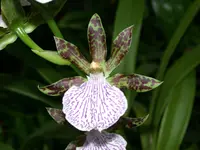
Zygopetalum maculatum
Zygopetalum maculatum
 POPULAR
Chinese Banyan
Ficus microcarpa
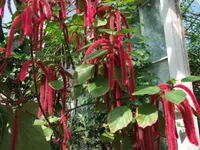
Chenille plant
Acalypha hispida