Wind-shaping for strength
In windy sites, lightly stake young plants for the first 1–2 years but allow some movement, which encourages a sturdy trunk and reduces the risk of windthrow in maturity.

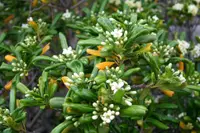
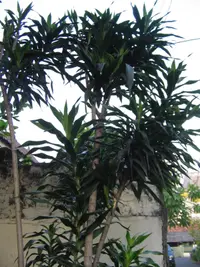
Japanese cheesewood (Pittosporum tobira) is an evergreen shrub or small tree grown for its dense foliage and fragrant, creamy white spring flowers. It has thick, leathery, glossy green leaves arranged in clusters at the stem tips, giving a tidy, rounded outline that suits hedges, screens, and foundation plantings.
This species occurs naturally in coastal areas of East Asia and is widely used in mild coastal climates for its tolerance of wind, salt spray, and pruning. It adapts well to containers and can handle a range of soils if drainage is good, which makes it relatively straightforward to care for Japanese cheesewood.
It generally prefers bright light, moderate moisture, and neutral to slightly alkaline soil, and it copes well with regular shaping and maintenance pruning.

Care Difficulty
Easy Care

Light Preference
Full Sun

Water Requirements
Moderate Water

Temperature Preference
Warm Climate

Hardiness Zone
8–11

Soil Texture
Sandy, Loamy, Clay

Soil pH
Slightly acidic (6.5–7.0), Slightly alkaline (7.0–7.5)

Soil Drainage
Well-drained

Fertilization
Minimal (feed rarely)
Scan your plant to receive care tips personalized for your specific plant
Available on iOS and Android
This shrub prefers bright conditions and performs best with several hours of direct sun each day.
This species prefers evenly moist but not saturated soil once established.
This shrub thrives in mild climates with moderate temperature swings.
This shrub handles a wide humidity range and usually does not need special humidity control indoors or outdoors.
This shrub prefers loose, draining soil that does not stay wet around the roots.
This species is well suited to container growing, especially for patios, entryways, and small gardens.
This shrub responds well to moderate feeding but often grows acceptably in average soil without extra inputs.
Thoughtful pruning keeps Pittosporum tobira dense, balanced, and healthy.
This species is more often grown in the ground, but container plants and young shrubs benefit from thoughtful transplanting.
Pittosporum tobira is commonly propagated by semi-hardwood cuttings, with seeds used less often for home gardens.
This shrub is moderately cold hardy but benefits from simple winter precautions in cooler regions.

Plant Health Check
Not sure what's wrong with your plant? Check your plant's health inside the app.
The creamy white flowers open in spring and early summer with a scent often compared to orange blossom or jasmine, and the fragrance becomes stronger in the evening and at night, likely to attract nocturnal pollinators.
This species naturally occurs on rocky seashores in East Asia and shows high tolerance to wind, salt spray, and sandy, poor soils, which explains its frequent use in coastal hedges and seaside plantings.
When the woody capsules split, they reveal bright orange to red seeds coated in a sticky resin that adheres to birds' beaks and feathers, helping the plant spread to new sites.

In parts of the Mediterranean basin and coastal California, long-term use in landscaping has allowed this species to naturalize in the wild, where it can form dense thickets that compete with native coastal vegetation and is monitored as a potentially invasive ornamental.
Lack of blooms usually comes from insufficient light, heavy pruning at the wrong time, or very young age. Mature plants flower best with good light, modest feeding, and pruning only after flowering so buds are not removed.
Keep your plants happy and healthy with plant identification, disease detection, and easy care guidance.