Encourage Bushy Form
Pinch back the soft tips of new shoots in spring and early summer to promote branching and a denser canopy rather than one tall, leggy stem.

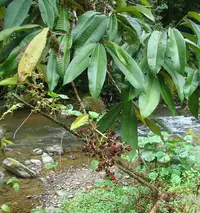
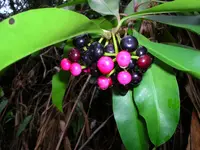
Ardisia compressa is an evergreen shrub from tropical forests of Mexico and Central America, often grown for its glossy foliage and clusters of red berries. It typically forms a compact, upright shape with dark green leaves and showy fruit that can persist on the plant for many months. In warm climates it is used as an understory shrub, while in cooler regions it is sometimes kept in containers or sheltered spaces. It prefers bright, filtered light, consistent moisture, and well-drained, humus-rich soil. Understanding how to care for Ardisia compressa helps gardeners maintain healthy growth and reliable fruiting in suitable conditions.

Care Difficulty
Moderate Care

Light Preference
Partial Shade

Water Requirements
Regular Water

Temperature Preference
Tropical / Frost Sensitive

Hardiness Zone
10–11

Soil Texture
Loamy, Sandy, Organic-rich

Soil pH
Acidic (5.5–6.5), Slightly acidic (6.5–7.0)

Soil Drainage
Moist but well-drained

Fertilization
Light (every 4–6 weeks)
Scan your plant to receive care tips personalized for your specific plant
Available on iOS and Android
This shrub prefers bright, gentle light that mimics a forest understory edge.
This species prefers evenly moist, not soggy, soil around its root zone.
This plant thrives in warm, frost-free conditions typical of subtropical understory habitats.
This shrub prefers moderately humid air to maintain healthy foliage and berries.
Ardisia compressa grows best in loose, evenly moist, well-drained soil with high organic content.
This species adapts well to container growing when root space and drainage are carefully managed.
Moderate feeding supports steady growth and fruiting in Ardisia compressa.
Light pruning keeps Ardisia compressa compact and encourages healthy new growth.
Occasional repotting or transplanting maintains root health and stable growth.
Ardisia compressa is most often propagated from semi-ripe cuttings or seeds.
This species dislikes hard frost and benefits from simple winter protection in cooler climates.

Plant Health Check
Not sure what's wrong with your plant? Check your plant's health inside the app.
This species naturally occurs as an understory shrub in moist tropical forests of Mexico and Central America, where it is adapted to filtered light and stable, warm conditions rather than full sun exposure.
It produces tight clusters of glossy red drupes (fleshy fruits with a single seed) that often remain on the plant for an extended period, providing a long-lasting visual display and food for birds.
In parts of its native range, this species grows on calcareous (lime-rich) substrates, showing an ability to cope with relatively high soil pH compared with many other tropical understory shrubs.
Poor flowering usually comes from low light, heavy pruning at the wrong time, or nutrient imbalance. Avoid cutting stems that just flowered, provide stable conditions, and use a balanced fertilizer to support bud formation.
Keep your plants happy and healthy with plant identification, disease detection, and easy care guidance.