


Optimize mounting
Mount plants on hardwood slabs or in open baskets with coarse media so the many pendent inflorescences can hang freely without creasing or rotting against the pot edge.

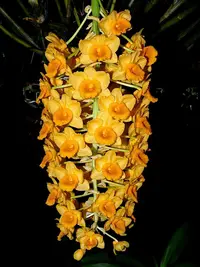
Dendrobium densiflorum is an epiphytic orchid that typically grows on trees in warm, humid forests of the eastern Himalayas and Southeast Asia. It forms dense, hanging clusters of yellow flowers with a fuller, rounded lip. The plant has upright, cane-like pseudobulbs and deciduous to semi-deciduous leaves, giving it a distinct seasonal rhythm. Flowering is usually dramatic but relatively brief, followed by a rest period. It is considered moderately challenging, as it needs marked seasonal changes, good light, and careful watering to stay healthy. Understanding how to care for Dendrobium densiflorum starts with providing bright conditions, strong air movement, and a fast-draining orchid substrate.

Care Difficulty
Hard Care

Light Preference
Bright Indirect Light

Water Requirements
Moderate Water

Temperature Preference
Tropical / Frost Sensitive

Hardiness Zone
11–12

Soil Texture
Peaty, Organic-rich

Soil pH
Acidic (5.5–6.5)

Soil Drainage
Well-drained

Fertilization
Moderate (every 2–4 weeks)
Scan your plant to receive care tips personalized for your specific plant
Available on iOS and Android
This orchid prefers bright, filtered light similar to bright forest edges.
This species needs thorough watering followed by a clear drying period.
This orchid grows best with warm days and slightly cooler nights.
This orchid needs consistently moderate to high humidity to maintain healthy canes, roots, and flowers.
This epiphytic species needs a very airy, fast-draining medium rather than dense, conventional potting soil.
This species is well suited to containers, especially hanging baskets or well-drained orchid pots.
Balanced feeding supports flowering and healthy canes in Dendrobium densiflorum during its active season.
Pruning focuses on cleaning and shaping Dendrobium densiflorum rather than heavy cutting.
Repotting Dendrobium densiflorum is done infrequently and mainly when the root system outgrows its container.
Propagation of Dendrobium densiflorum is usually done by division rather than from seed at home.
Winter care is important because this orchid is sensitive to frost and prolonged cold.

Plant Health Check
Not sure what's wrong with your plant? Check your plant's health inside the app.
This species produces dense, hanging racemes of 20–50 or more bright yellow, fragrant flowers that can reach 20–30 cm in length, creating a pendant curtain effect uncommon even among other Dendrobium orchids.
It naturally grows as an epiphyte or lithophyte on trees and rocks in montane forests of the eastern Himalayas and northern Southeast Asia, often between roughly 1,000–1,800 m where nights are cool and humidity is consistently high.
The plant forms club-shaped pseudobulbs that store water and nutrients, then sheds many or all leaves at the end of the growing season before producing flowers on the mature, often leafless canes in spring.

In parts of northeastern India and neighboring regions, especially in the eastern Himalayas, wild plants of this species are sometimes collected locally and sold in markets as ornamental flowering sprays during their brief but very showy blooming season, reflecting its high cultural and aesthetic value in its native range.
Lack of flowering usually comes from insufficient light, no distinct cool-dry winter rest, or overfeeding with nitrogen. Provide bright conditions, a drier, cooler winter period, and balanced fertilizer to support how to take care of Dendrobium densiflorum for reliable blooms.
Keep your plants happy and healthy with plant identification, disease detection, and easy care guidance.

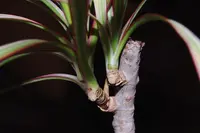
Dragon Tree
Dracaena reflexa var. angustifolia 'Tricolor'
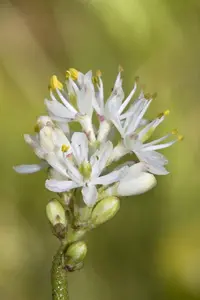
western false asphodel
Triantha occidentalis
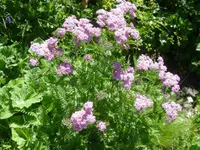
Alps yarrow
Achillea distans
vegetable fern
Diplazium esculentum
violet teacup flower
Jovellana violacea
fivefingers
Syngonium angustatum
Guadeloupe peperomia
Peperomia emarginella
 POPULAR
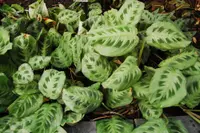
Prayerplant
Maranta leuconeura