white mustard Care (Sinapis alba)

Also known as: yellow mustard
white mustard

About white mustard

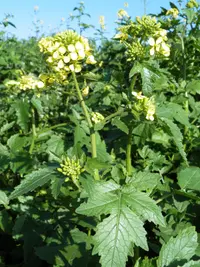
White mustard (Sinapis alba) is a fast-growing annual herb grown for its seeds and leafy biomass. It belongs to the cabbage family and has bright yellow flowers on upright, branching stems with light green, lobed leaves. In the wild it occurs around the Mediterranean and Western Asia but is now widely naturalized in temperate regions, often in fields and disturbed soils. The plant establishes quickly, tolerates cool conditions, and usually grows easily from seed, which makes it suitable for beginners who want to learn how to care for white mustard. It prefers open, sunny locations, moderately moist soil, and good drainage for healthy growth.

Main Plant Requirements

Care Difficulty

Easy Care

Light Preference

Full Sun

Water Requirements

Moderate Water

Temperature Preference

Cool Climate

Hardiness Zone

6–9

Soil Texture

Sandy, Loamy, Silty

Soil pH

Acidic (5.5–6.5), Slightly acidic (6.5–7.0)

Soil Drainage

Well-drained

Fertilization

Minimal (feed rarely)

Get Personalized Care Plan

Scan your plant to receive care tips personalized for your specific plant

Available on iOS and Android

How to Care for the white mustard

Sinapis alba thrives in bright, open conditions suited to cool-season field crops.

  • Provide 6–8 hours of direct sun daily; full sun supports strong growth and seed production for white mustard.
  • Plant in a spot with morning to early afternoon sun; light afternoon shade is tolerated in hot regions to limit heat stress and leaf scorch.
  • In early spring and late fall, prioritize maximum sun exposure, but in midsummer avoid reflected heat from walls or pavement that can overheat plants.

This species prefers consistently moist but not waterlogged soil during active growth.

  • Before irrigating, let the top 2–4 cm of soil start to dry, then water enough to moisten the root zone without leaving standing water.
  • Increase watering during warm, windy periods when soil dries quickly; reduce frequency in cool, cloudy weather to prevent root rot and fungal disease.
  • Watch for wilting, dull leaves, or slowed growth as signs of underwatering, and for yellowing, limp foliage or soggy soil as signs of excess moisture around Sinapis alba.

This cool-season annual performs best in moderate, stable temperatures.

  • Ideal growth occurs at 55–70°F (13–21°C), which supports rapid vegetative development and flowering without heat stress.
  • Plants tolerate brief dips to 25–28°F (-4 to -2°C), but hard freezes below this range can damage young tissues and reduce stand density.
  • In hot spells above 80–85°F (27–29°C), growth slows and flowering may hasten; use earlier sowing dates so main development occurs in cooler spring or fall conditions.

Humidity is rarely critical for Sinapis alba, which thrives in typical outdoor ambient conditions.

Sinapis alba prefers loose, well-drained, moderately fertile soil for fast germination and steady growth.

  • Use a loamy or sandy-loam texture with plenty of fine mineral particles to support root anchoring.
  • Aim for a slightly acidic to neutral pH of 6.0–7.5 to optimize nutrient availability and root function.
  • Incorporate 20–30% mature compost for organic matter and moisture retention without creating a heavy, compacted substrate.
  • Avoid poorly drained clay pockets and waterlogged spots; improve aeration with sharp sand or fine grit where drainage is marginal.

This species is suitable for short-term container growing, especially for greens, microgreens, or small seed crops.

  • Choose a container at least 15–20 cm deep so the taproot can extend without kinking or circling tightly.
  • Use a stable, heavier pot material if exposure to strong wind is expected, as tall, fast growth can make containers tip-prone.
  • Ensure surplus water drains freely and remove any outer cachepot water promptly to prevent fine roots from sitting in stagnant moisture.

This fast-growing annual needs only light feeding, as soils are often already fertile for white mustard.

  • Use a balanced NPK granular fertilizer or well-rotted compost in early spring before rapid growth begins.
  • Apply 1 light dose per main growing cycle; avoid repeated high-nitrogen applications that cause lush, weak growth.
  • If using liquid feed, dilute to 1/2 strength and water onto moist soil to reduce root burn risk.
  • Stop feeding in late season; no fertilizer is needed once plants near flowering and seed formation.

Pruning Sinapis alba is minimal and focuses on maintaining plant health and controlling spread.

  • Trim back dead, broken, or diseased stems as soon as they appear using clean, sharp scissors or hand pruners.
  • Pinch or cut back overly tall or crowded shoots in mid growth to reduce lodging and encourage bushier plants.
  • Remove spent flower clusters before seeds mature if self-seeding and spread need to be limited.
  • Cut remaining plants at ground level after seed harvest to clear beds and reduce volunteer seedlings next season.

This species is usually grown as a direct-sown annual crop, so transplanting Sinapis alba is limited and must be gentle.

  • Transplant only young seedlings when roots just fill the plug or cell, before they become rootbound or start circling.
  • Move plants in early spring once frost risk is low, as older plants react poorly to root disturbance.
  • Shift seedlings to the field or a larger container at the same soil depth, firming soil lightly around the roots.
  • Water immediately after transplanting and keep soil evenly moist for 7–10 days to limit transplant shock and wilting.

Sinapis alba is most commonly propagated from seed, which germinates quickly under suitable conditions.

  • Sow seeds in early spring when soil reaches about 45–60°F, either in trays or directly in the ground.
  • Provide loose, well-drained soil and light, even moisture; avoid waterlogging, which reduces germination.
  • Cover seeds lightly with 0.5–1 cm of soil, as deeper sowing delays or reduces emergence.
  • Allow 5–10 days for germination, then thin crowded seedlings to promote strong individual plants.

As a cool-season annual, Sinapis alba usually completes its life cycle before hard winter and needs little winter care.

  • In cold regions, remove finished plants after seed harvest to reduce disease carryover and unwanted volunteers.
  • Where mild winters occur, a light mulch can stabilize soil temperatures and reduce erosion on former mustard beds.
  • Container-grown plants kept late into fall can be moved under cover to avoid repeated hard freezes on saturated soil.

Care Tips

Windfirm support

In exposed sites, place low mesh or string supports along the row when seedlings reach 8–10 cm to prevent lodging from wind and heavy rain, which helps maintain upright stems and cleaner seed pods.

Staggered sowing

For a steady supply of young greens, sow small batches every 10–14 days rather than one large sowing, and clear older, tougher plants promptly to reduce pest carryover between successions.

Targeted thinning

Thin seedlings in stages, first to 3–4 cm and later to 8–10 cm, using pulled plants as microgreens while also improving airflow and reducing disease pressure in the remaining stand.

Timely pod harvest

Harvest seed pods when most have turned from green to pale straw and the lowest pods rattle when shaken, then finish drying the pulled plants upside down under cover to limit shattering and seed loss.

Short-term cover use

When using white mustard as a cover crop, mow or cut it down just as the first flowers open and incorporate the residue lightly into the top 5–8 cm of soil, allowing at least 2–3 weeks for breakdown before sowing the next crop for more effective caring for white mustard in rotation systems.

Common Pests and Diseases

Flea beetles

These insects chew numerous small round holes in young leaves, giving foliage a shot-holed or lace-like appearance and slowing early growth.

Solution

Use floating row covers to physically exclude beetles from seedlings, keep the area free of brassica weeds that host the pest, and apply a targeted insecticide such as spinosad or pyrethrin to foliage in the evening if damage is severe, following label directions carefully.

Cabbage aphids

These insects form dense gray-green colonies on stems, flower stalks, and leaf undersides, causing leaf curling, distortion, and sticky honeydew deposits.

Solution

Spray colonies off with a strong but controlled stream of water, remove heavily infested flowering shoots, encourage natural predators like lady beetles, and if needed treat with insecticidal soap or horticultural oil, ensuring thorough coverage of leaf undersides.

Downy mildew

This disease causes pale yellow angular spots on upper leaf surfaces and a gray-white downy growth on the undersides, leading to leaf blight in cool, humid conditions.

Solution

Improve airflow by avoiding dense sowing, irrigate at soil level rather than overhead, remove and destroy affected leaves, and rotate away from other brassicas for at least 2–3 years to reduce carryover of the pathogen.

White rust

This disease produces small white blister-like pustules on leaves and sometimes stems, which later turn brown and can cause leaf distortion and premature yellowing.

Solution

Remove and destroy infected plant material promptly, avoid overhead watering, control nearby brassica weeds that can host the pathogen, and practice crop rotation with non-brassica crops to lower inoculum levels.

Blackleg

This disease leads to light brown to gray lesions on stems and leaf petioles with darker margins, sometimes causing plants to lodge or collapse, especially in wet conditions.

Solution

Use clean seed, avoid sowing in fields with a recent history of brassica diseases, destroy crop residues after harvest, and maintain a 3–4 year rotation out of brassica crops to reduce pathogen survival in debris and soil, which is a key part of Sinapis alba care instructions in field settings.

Interesting Facts

Sulfur‑rich seed flavor

The sharp taste of white mustard comes from glucosinolates and the enzyme myrosinase in the seeds, which release pungent sulfur‑containing compounds when the seeds are crushed and moistened.

Nematode‑suppressing cover crop

White mustard is widely used in agriculture as a biofumigant cover crop because, when incorporated into soil, its glucosinolates can help suppress certain soilborne pests such as plant‑parasitic nematodes.

Fast annual life cycle

This species completes its entire life cycle in a single season and can flower within a few weeks under favorable conditions, which makes growing white mustard useful for quick green manure or seed production.

Botan icon

Did you know?

White mustard has been cultivated around the Mediterranean since antiquity, and its mild, pale seeds are the traditional base for classic European table mustards, especially those produced in central and northern Europe.

FAQs about white mustard

Yellowing leaves often come from nutrient deficiency, especially nitrogen, or from waterlogging and compacted soil. Check drainage, avoid standing water, then apply a balanced fertilizer. Older leaves yellowing first usually indicates normal nutrient drawdown or plant aging.

Grow Healthy Plants with Botan Care

Keep your plants happy and healthy with plant identification, disease detection, and easy care guidance.

Botan plant care app — identify plants on mobile

Explore More Plants