river redgum Care (Eucalyptus camaldulensis)

Also known as: Red River Gum, Murray, Murray Red Gum, Rostrata Gum, longbeak eucalyptus
river redgum

About river redgum

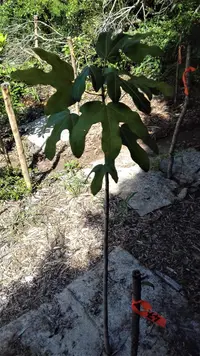
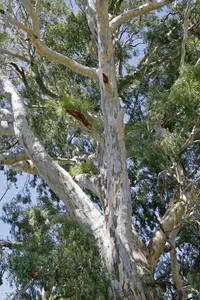
River redgum, Eucalyptus camaldulensis, is a fast-growing evergreen tree known for its pale, peeling bark and long, narrow, aromatic leaves. In nature it often forms tall, spreading trees along rivers and floodplains.

This species is native to Australia but is widely planted in warm, dry regions worldwide for shade, timber, and erosion control. It tolerates drought once established but prefers deep, well-drained soil with regular moisture.

Growth can be very vigorous and large, so it suits spacious gardens, shelterbelts, or managed plantings more than small yards. Knowing how to care for river redgum starts with understanding its need for full sun and room for strong roots.

Main Plant Requirements

Care Difficulty

Moderate Care

Light Preference

Full Sun

Water Requirements

Moderate Water

Temperature Preference

Warm Climate

Hardiness Zone

8–11

Soil Texture

Sandy, Loamy, Clay

Soil pH

Slightly acidic (6.5–7.0), Slightly alkaline (7.0–7.5)

Soil Drainage

Moist but well-drained

Fertilization

Minimal (feed rarely)

Get Personalized Care Plan

Scan your plant to receive care tips personalized for your specific plant

Available on iOS and Android

How to Care for the river redgum

This species thrives in strong, direct sun from an early age for dense, healthy growth.

  • Provide 6–10 hours of direct sun daily; full sun from morning through late afternoon is ideal for river redgum in open ground.
  • Tree tolerates light partial shade for a few hours, but prolonged shade leads to sparse branching, reduced growth, and weaker wood.
  • In hot, arid climates, young trees benefit from brief late-afternoon shade to reduce leaf scorch, especially during their first 1–2 summers.

This tree prefers deep, infrequent watering once established, with soil allowed to partially dry between soakings.

  • For young trees, water when the top 5–8 cm of soil feels dry, applying a slow, deep soak that moistens at least 30–45 cm down.
  • Mature Eucalyptus camaldulensis can tolerate dry spells if roots are deep, but prolonged wilting, dull leaves, and twig dieback indicate insufficient moisture.
  • Avoid standing water and heavy, poorly drained soils; yellowing leaves, soft new growth, and persistent wetness after 24 hours suggest overwatering.

This species is adapted to warm to hot climates but has some tolerance for brief cold spells once mature.

  • Optimal growth occurs around 68–90°F (20–32°C), with fastest height and trunk expansion in consistently warm conditions.
  • Established trees can survive short drops to about 20–25°F (-6 to -4°C), but young plants are more damaged and may die near these limits.
  • Seedlings and saplings should be protected from hard frost and hot, drying winds above 100°F (38°C), which can scorch foliage and stress new growth.

Eucalyptus camaldulensis tolerates a wide humidity range but grows best in moderately dry air.

  • Target 30–50% humidity, similar to typical indoor air in heated homes.
  • Leaves curling inward or browning at tips in very dry air indicate humidity stress, especially in young trees.
  • If air is extremely dry, group plants together or place a wide water tray nearby to slightly raise local humidity without creating constant leaf wetness.

This species prefers mineral, well-aerated soil that drains quickly yet does not stay bone dry for long.

  • Use a sandy or sandy-loam mix, for example 50% coarse sand, 30% loam, 20% fine bark or composted material.
  • Ensure sharp drainage; water should pass through freely without pooling on the surface or in the saucer.
  • Aim for slightly acidic to neutral pH, around 6.0–7.5, as strongly alkaline substrates can limit nutrient uptake.
  • Improve aeration by adding coarse sand or small grit and avoid heavy clay or peat-dominant mixes that compact and hold water.

This species can be grown in containers for a limited time, especially when kept pruned as a small specimen.

  • Choose a deep, heavy pot to stabilize the fast, top-heavy growth and resist wind tipping outdoors.
  • Select a container material that does not dry too rapidly, such as thick-walled clay or composite, to buffer root-zone moisture swings.
  • Use a pot only slightly wider than the root ball to prevent excess unused mix from staying wet and reducing aeration.

Eucalyptus camaldulensis grows acceptably in poor soils but benefits from light, controlled feeding in containers or managed landscapes.

  • Use a balanced, slow-release fertilizer (for example 10-10-10) in spring at half the label rate for young or potted trees.
  • Feed once at the start of the growing season; a second light application in midsummer is enough for river redgum.
  • Avoid high-nitrogen products that push weak, lanky growth; aim for steady, moderate vigor instead.
  • Skip feeding in winter or dormancy, and never apply fertilizer to drought-stressed or freshly transplanted trees.

Pruning Eucalyptus camaldulensis focuses on safety, structure, and clearance rather than heavy shaping.

  • Carry out main pruning in late winter to early spring before strong new growth begins.
  • Remove dead, damaged, crossing, or crowded branches, prioritizing those that rub or create weak forks.
  • Use clean, sharp bypass pruners or a pruning saw, cutting just outside the branch collar without leaving stubs.
  • Direct pruning toward creating a single strong leader and well-spaced scaffold branches to reduce breakage risk.

This fast-growing species is usually short-term in containers, then planted out once strong enough.

  • Look for roots circling the pot, pushing through drainage holes, or stunted growth as signs it needs a larger container or planting site.
  • Transplant in late winter to early spring, aiming for 1–2 moves only before establishing the tree in its final ground position.
  • Shift to a pot 1–2 sizes larger or into a wide planting hole, keeping the root flare at soil level and backfilling firmly.
  • Water deeply after transplanting, keep soil evenly moist for several weeks, and avoid heavy pruning at the same time to limit stress.

Eucalyptus camaldulensis is most reliably propagated from seed under warm, bright conditions.

  • Collect ripe seed capsules, dry them until seeds are released, then sow in late winter to early spring.
  • Use a sterile, free-draining seed mix, barely cover the seeds, and keep at 68–75°F with constant light moisture.
  • Provide bright light and good air movement; germination often occurs within 2–4 weeks.
  • Transplant seedlings carefully once they have several true leaves, disturbing roots as little as possible.

Mature Eucalyptus camaldulensis tolerates light frost but young or potted trees need simple winter precautions in colder climates.

  • In regions below about 20–25°F, grow in large containers or very sheltered sites for better survival.
  • Mulch the root zone with 5–8 cm of bark or wood chips, keeping mulch slightly away from the trunk.
  • Move container plants into a bright, frost-free space, such as a cool greenhouse or unheated sunroom, during hard freezes.

Care Tips

Establish deep roots

During the first 1–2 years, give fewer but longer soakings to encourage a deep taproot, and avoid frequent light watering that keeps roots shallow and makes the tree more vulnerable to drought and windthrow.

Manage dominant leaders

Inspect the young tree annually and select a single strong central leader, removing competing upright stems early to create a stable structure and reduce the risk of future branch failure in storms.

Control basal suckers

Check the base and root zone several times a year for vigorous shoots, cutting suckers cleanly at their point of origin so the tree directs energy into the main trunk and scaffold branches instead of dense, weak growth.

Plan wind exposure

When growing river redgum in open sites, orient planting so prevailing winds hit the narrower side of the crown and avoid locations where funneled winds can twist the trunk, which lowers the risk of lean or structural stress as the tree matures.

Protect from soil compaction

Keep heavy foot traffic, vehicles, and storage of materials away from the root zone out to at least the drip line, since compacted soil reduces oxygen around roots and can slow growth or cause long-term decline.

Common Pests and Diseases

Myrtle rust

This disease causes bright yellow powdery pustules on young leaves, shoots, and stems, often followed by deformation and dieback of affected tissue.

Solution

Remove and destroy infected shoots as soon as symptoms appear and avoid overhead watering that keeps foliage wet. In areas where myrtle rust is established, reduce stress by maintaining even soil moisture, avoid heavy pruning flushes during warm, humid periods, and use registered myrtle rust fungicides on high-value trees if local regulations and site conditions allow.

Psyllids (lerp insects)

These insects form small, white, sugary coverings (lerps) on leaves and feed on sap, causing leaf yellowing, distortion, and sometimes heavy leaf drop.

Solution

Prune and dispose of heavily infested twigs and hose down foliage to physically remove lerps on accessible trees. Encourage natural predators such as lady beetles, avoid excessive nitrogen fertilization that stimulates soft new growth, and if necessary use a targeted systemic insecticide labeled for psyllids on eucalyptus, following all safety directions.

Longhorn borers

This pest consists of large beetle larvae that tunnel into trunks and branches, leading to oozing sap, frass (sawdust-like material), branch dieback, and in severe cases structural weakness or tree death.

Solution

Maintain tree vigor with appropriate watering and avoid mechanical injuries to bark, since stressed or damaged trees are more attractive to borers. Remove and destroy heavily infested branches, improve site conditions to reduce stress, and consult a certified arborist about trunk-injected or systemic treatments if valuable trees show repeated borer activity.

Eucalyptus gall wasp

These insects induce small, hard galls on young stems and leaf midribs, which can stunt growth and cause a witches-broom effect where many short, deformed shoots form.

Solution

Prune out and destroy galled twigs before adult wasps emerge, typically during cooler seasons, and avoid moving infested material to new sites. Support beneficial parasitoid wasps by minimizing broad-spectrum insecticides in the area and, for severe recurring infestations, seek region-specific biological control or targeted chemical options from local forestry or extension services.

Powdery mildew

This disease appears as a white or gray powdery coating on leaves, especially on young foliage in shaded or crowded conditions, and can reduce photosynthesis and growth if severe.

Solution

Improve air circulation by selective pruning, avoid overcrowding with other plants, and water at the base rather than wetting leaves. Remove heavily infected leaves where practical and apply a suitable fungicide labeled for powdery mildew on ornamental trees if the problem persists, as part of broader Eucalyptus camaldulensis care in humid climates.

Interesting Facts

Specialist river tree

This species is naturally confined to riverbanks and floodplains across inland Australia, where it forms long gallery forests that closely trace watercourses, even through very arid landscapes.

Deep and flexible roots

It develops extremely deep and wide root systems that can tap into underground water and also tolerate periodic flooding, which allows it to survive both extended droughts and short-term inundation.

Keystone for wildlife

River redgums provide critical nesting hollows, shade, and leaf litter habitat for many Australian birds, bats, reptiles, and invertebrates, making them a keystone species in riverine ecosystems.

Botan icon

Did you know?

Some river redgum trees are known to live for several hundred years, and as they age they develop large trunk hollows that can take more than a century to form, creating long-term habitat for species such as cockatoos and brushtail possums.

FAQs about river redgum

This species is considered fast-growing, often adding 90–150 cm in height per year in warm climates with reliable moisture. Growth slows in poor, dry, or compacted soils and in cooler regions with shorter growing seasons.

Grow Healthy Plants with Botan Care

Keep your plants happy and healthy with plant identification, disease detection, and easy care guidance.

Botan plant care app — identify plants on mobile

Explore More Plants