Tara Care (Tara spinosa)

Tara

About Tara

Tara (Tara spinosa) is a small, deciduous tree or large shrub from arid Andean regions of Peru and neighboring countries. It belongs to the legume family and forms fine, fernlike foliage. The plant often develops a spreading, irregular crown with small yellowish flowers followed by thick, woody pods rich in tannins. It is adapted to dry, sunny sites and poor, rocky soils, which makes it drought tolerant and suitable for low-input landscapes in warm climates. These traits make it relatively undemanding once established, though young plants benefit from regular watering and good drainage while you learn how to care for Tara.

Main Plant Requirements

Care Difficulty

Moderate Care

Light Preference

Full Sun

Water Requirements

Low Water

Temperature Preference

Warm Climate

Hardiness Zone

9–11

Soil Texture

Sandy, Loamy, Rocky

Soil pH

Slightly acidic (6.5–7.0), Slightly alkaline (7.0–7.5)

Soil Drainage

Well-drained

Fertilization

Minimal (feed rarely)

Get Personalized Care Plan

Scan your plant to receive care tips personalized for your specific plant

Available on iOS and Android

How to Care for the Tara

This sun-loving dryland tree needs strong light to flower and fruit well.

  • Provide 6–8 hours of direct sun daily; full sun is best, especially in open, arid or semi-arid sites where Tara can develop a dense canopy.
  • Tolerates light partial shade (3–4 hours direct sun) but flowering and pod production decrease and growth becomes more open and sparse.
  • In very hot regions, protect young plants from intense late-afternoon sun with slight shade; pale, scorched leaves indicate excess sun, while elongated, weak shoots suggest insufficient light.

This drought-tolerant legume prefers deep, infrequent watering rather than constant moisture.

  • In open ground, water thoroughly only when the top 5–8 cm of soil are dry, allowing water to soak 20–30 cm deep, then let the soil dry again.
  • Reduce watering in cool seasons, supplying just enough to prevent complete soil desiccation; mature Tara spinosa can withstand extended dry periods once established.
  • Ensure sharply draining soil; yellowing, soft leaves and persistent surface wetness signal overwatering, while crisp, folding leaves and twig tip dieback indicate underwatering.

This species thrives in warm, semi-arid climates and is sensitive to hard frost.

  • Optimal growth occurs around 68–86°F (20–30°C); flowering and pod set are most reliable within this warm range when combined with strong sun.
  • Mature trees tolerate brief drops to about 25–28°F (-4 to -2°C), but young plants can be damaged below 32°F (0°C) and benefit from frost protection.
  • Handles high heat up to about 100–105°F (38–41°C) if soil is not waterlogged; prolonged cold, wet conditions increase root stress and disease risk.

This species is drought-adapted and humidity is rarely a limiting factor for healthy growth.

This leguminous shrub prefers dry, lean, well-structured soil that drains quickly yet allows deep rooting.

  • Use a gritty, loamy mix with 40–60% coarse sand or fine gravel plus mineral topsoil, with only a modest amount of compost.
  • Aim for slightly alkaline to neutral pH around 7.0–8.0, avoiding strongly acidic mixes that can limit nutrient availability.
  • Improve aeration and drainage by blending in perlite or pumice rather than peat-heavy products that hold excess water.
  • Avoid compacted clay, waterlogged spots, or thick organic mulches that keep the root zone constantly moist and low in oxygen.

This shrub can be grown in large containers, mainly for young plants or where in-ground planting is not possible.

  • Choose a heavy, wide-based container to prevent tipping as the woody canopy becomes tall and winds increase leverage on the pot.
  • Select a pot deep enough to support a strong taproot, prioritizing depth and volume over decorative but shallow designs.
  • Use a very free-draining mineral mix in containers, as limited soil volume and rainfall can cause faster saturation and root stress than in-ground conditions.

This drought-adapted legume usually needs minimal feeding, but light fertilization can support healthy growth in poor soils.

  • Use a balanced NPK fertilizer (such as 10-10-10) or well-rotted compost on young or container-grown Tara once in early spring.
  • Apply fertilizer at half the label strength to avoid excess salts in dry soils.
  • Feed only 1–2 times during the growing season, then stop in late summer to allow wood to harden.
  • Do not fertilize during winter dormancy unless the plant is under intensive container culture.

Pruning Tara spinosa is mainly done to maintain structure, safety, and access rather than for flowering.

  • Plan main pruning for late winter or very early spring before new growth starts.
  • Remove dead, diseased, crossing, or badly damaged branches using sharp, clean bypass pruners or a pruning saw.
  • Thin crowded inner branches to improve light penetration and airflow, keeping a balanced, open canopy.
  • Limit heavy heading cuts; favor selective thinning cuts to maintain a strong central framework and stable form.

This species is most often grown in the ground, so care focuses on transplanting young trees rather than frequent repotting.

  • Transplant in late winter or early spring when the tree is dormant and temperatures are mild.
  • Look for signs such as roots circling the nursery pot, poor drainage, or slowed growth before moving a container-grown plant.
  • Choose a sunny site with well-drained soil; plant at the same depth as in the pot and water deeply after planting.
  • Reduce root stress by handling the root ball gently, pruning only circling roots, and shading or wind-screening for the first 1–2 weeks.

Propagation of this dryland tree is usually done from seed, with some use of semi-hardwood cuttings.

  • Collect mature pods, remove seeds, then scarify the hard coat lightly with sandpaper or a brief hot-water soak to improve germination.
  • Sow in spring in a free-draining, sandy mix, keeping temperatures near 70–80°F and moisture even but not waterlogged.
  • For semi-hardwood cuttings, take 10–15 cm pieces in late spring to summer, use rooting hormone, and place in a warm, humid environment.
  • Label seed or cutting batches clearly to track origin and performance, which helps refine Tara spinosa plant care over time.

Established trees are moderately cold tolerant and usually need limited winter care in mild to warm climates.

  • Young or newly transplanted plants benefit from a 5–8 cm mulch layer over the root zone, kept away from the trunk.
  • In areas with freezing winters, wrap young trunks with breathable tree wrap to reduce bark injury from frost.
  • Move container-grown plants to a sheltered, frost-free spot, such as an unheated garage, when hard frosts are expected.

Care Tips

Establish strong framework

In the first 2–3 years, select 3–5 well‑spaced main stems and remove competing shoots to build a sturdy open framework that will support heavy pod crops and improve air circulation.

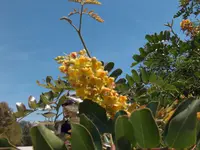
Timed pod thinning

If the young pods set too densely on a branch, remove some by hand soon after fruit set so the remaining pods size up better and the limbs are not overloaded or broken by weight.

Wind and weight support

In exposed or windy sites, install a stout stake or low tripod support for young trees and use soft ties, as branches can be brittle and may snap once heavy pods develop.

Manage root competition

Keep a clear, mulched circle of 60–90 cm around the trunk free from turf and aggressive weeds to reduce root competition and maintain better moisture and nutrient availability when growing Tara.

Seasonal sanitation

After harvest and again in late winter, remove and destroy dried pods, dead twigs, and any mummified plant material from the canopy and soil surface to reduce overwintering pests and disease inoculum.

Everything About Tara

Common Pests and Diseases

Scale insects

This pest attaches to young stems and pods, sucking sap and weakening branches, which can reduce flowering and pod production.

Solution

Prune out heavily infested twigs, then wash remaining stems with a strong stream of water and treat with a light horticultural oil or insecticidal soap, repeating every 7–10 days until new growth appears clean.

Pod-boring moth larvae

These insects tunnel into developing pods, feeding on seeds and causing shriveled or prematurely dried fruit that lowers tannin yield.

Solution

Collect and destroy infested pods, keep the area under trees free of fallen pods, and use light traps or pheromone traps where available to monitor and break the life cycle, applying a Bacillus thuringiensis (Bt) product to young pods if local guidelines allow.

Leaf spot

This disease produces small brown to dark spots on leaflets that may merge into larger lesions, leading to partial defoliation in humid or rainy periods.

Solution

Remove and dispose of fallen leaves, improve air circulation by thinning crowded branches, avoid overhead irrigation if possible, and use a copper- or chlorothalonil-based fungicide during prolonged wet weather if local regulations and label directions permit.

Powdery mildew

This disease causes a white, powdery coating on leaf surfaces and young shoots, which can lead to leaf distortion and reduced vigor in dense or shaded plantings.

Solution

Increase sun exposure where feasible, thin inner branches to improve airflow, avoid excess nitrogen fertilization, and apply a sulfur or potassium bicarbonate fungicide at the first sign of white patches if conditions stay warm and dry.

Interesting Facts

High-tannin seed pods

The dry pods contain unusually high levels of hydrolysable tannins, often above 40% of pod weight, which makes them valuable for leather tanning and natural dyes.

Andean dryland specialist

This small tree is native to arid and semi-arid zones of Peru and neighboring regions, where it thrives on poor, rocky soils and tolerates prolonged drought once established.

Natural gum source

The endosperm of its seeds yields tara gum, a galactomannan polysaccharide used as a food thickener and stabilizer, often as a plant-based alternative to some synthetic additives.

Botan icon

Did you know?

Archaeobotanical evidence from coastal Peru indicates that tara was used by pre-Columbian cultures for tanning and dyeing textiles, showing a documented history of human use that spans more than a thousand years.

FAQs about Tara

Growth is moderate. Seedlings often reach 60–100 cm in 2–3 years, then slow as wood hardens. Pods for tannin or gum production typically appear after 4–7 years, depending on climate, soil fertility, and water availability.

Grow Healthy Plants with Botan Care

Keep your plants happy and healthy with plant identification, disease detection, and easy care guidance.


Botan plant care app — identify plants on mobile

Explore More Plants