Staggered Succession Sowing
Sow small batches of seed every 2–3 weeks from late spring to midsummer so plants mature at different times, giving a longer display of color and reducing the risk that one heatwave or storm damages the entire planting.

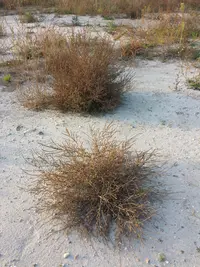
Burningbush (Bassia scoparia), also called summer cypress or Mexican fireweed, is a fast-growing annual shrub often used in borders and mass plantings. It forms a dense, rounded mound of finely textured, bright green foliage that turns intense red to burgundy in fall.
This species is native to Eurasia but is now widely naturalized in many temperate regions, sometimes behaving as an invasive plant. It grows quickly from seed, tolerates poor soils, and handles heat and dryness, which makes it simple to establish but important to manage.
In garden settings, it prefers full sun, moderate moisture, and well-drained soil. Understanding these basic needs makes it easier to care for burningbush responsibly and prevent unwanted self-seeding.

Care Difficulty
Easy Care

Light Preference
Full Sun

Water Requirements
Low Water

Temperature Preference
Warm Climate

Hardiness Zone
2–11

Soil Texture
Sandy, Loamy, Clay

Soil pH
Slightly acidic (6.5–7.0), Slightly alkaline (7.0–7.5)

Soil Drainage
Well-drained

Fertilization
Minimal (feed rarely)
Scan your plant to receive care tips personalized for your specific plant
Available on iOS and Android
Bassia scoparia thrives in open, bright sites with strong direct sun.
Bassia scoparia prefers evenly moist but not saturated soil, especially during establishment.
This annual shrub performs best in warm conditions and is sensitive to frost.
Bassia scoparia handles a wide humidity range and usually does not need special humidity management outdoors.
Bassia scoparia prefers light, sharply drained soil that never stays waterlogged.
This species is suitable for short-term container growing outdoors.
Bassia scoparia grows fast and benefits from light, consistent nutrition during its brief growing season.
Bassia scoparia responds well to light pruning that maintains its dense, rounded form.
This species is usually grown as an annual in beds, so transplanting young plants correctly matters more than later repotting.
Propagation of Bassia scoparia is most practical from seed, which is typically abundant and fast to germinate.
Bassia scoparia is usually treated as a frost-tender annual and does not need complex winter care outdoors.

Plant Health Check
Not sure what's wrong with your plant? Check your plant's health inside the app.
This species often dries at the end of the season and breaks off at the base to form a tumbleweed, rolling in the wind and scattering large numbers of seeds over long distances.
Bassia scoparia can grow in highly saline soils by storing excess salts in its tissues, which allows it to colonize disturbed and marginal sites where many other plants struggle to survive.
The plant uses C4 photosynthesis, a pathway that concentrates carbon dioxide in specialized cells and improves efficiency in high light, heat, and drought compared with typical C3 plants.

In some regions of North America, this species has been studied as a candidate for phytoremediation, because it can accumulate and tolerate high levels of salts and certain soil contaminants while producing a large biomass in a single growing season.
This species is usually grown as a fast-growing annual, completing its life cycle in 1 season. In mild climates some plants may persist longer, but gardeners typically re-sow each year for best form and color.
Keep your plants happy and healthy with plant identification, disease detection, and easy care guidance.