Encourage Succession Reseeding
Leave a few flowering plants uncut until seed pods dry and shatter, then lightly disturb the top 0.5–1 in of soil to help seeds make contact and ensure a continuous self-sown stand next season.

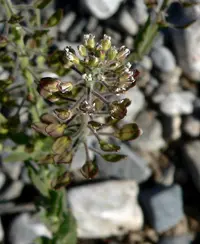
Virginia pepperweed (Lepidium virginicum) is a small, upright annual or short-lived perennial herb in the mustard family. It often appears in lawns, roadsides, disturbed soils, and garden edges.
Plants form slender, branching stems with small white flowers that mature into flat, round seed pods, giving a fine, airy texture. Foliage is typically sparse and may be more leafy at the base.
This species is native to North America but has spread widely as a self-seeding wild plant. It is very adaptable, tolerating poor soils, drought, and neglect, which makes it easy to care for Virginia pepperweed in low-maintenance landscapes.

Care Difficulty
Easy Care

Light Preference
Full Sun

Water Requirements
Low Water

Temperature Preference
Cold Hardy

Hardiness Zone
3–9

Soil Texture
Sandy, Loamy, Clay

Soil pH
Slightly acidic (6.5–7.0), Neutral (7.0)

Soil Drainage
Well-drained

Fertilization
Minimal (feed rarely)
Scan your plant to receive care tips personalized for your specific plant
Available on iOS and Android
This sun-loving annual thrives in open, exposed sites with strong light.
This species prefers dry to moderately moist soil and is adapted to inconsistent rainfall.
This hardy annual tolerates a broad temperature range once established outdoors.
This species is adapted to low–moderate atmospheric moisture and usually does not need humidity management.
This annual thrives in lean, well-drained mineral soils and tolerates relatively poor conditions.
This species is suitable for short-term container growing, mainly for edible or ornamental use.
Lepidium virginicum is adapted to low-fertility soils and usually needs no supplemental feeding in garden settings.
Pruning Lepidium virginicum is mainly used to manage spread and keep plants tidy in managed beds.
This species is usually grown in the ground, so transplanting young plants matters more than repotting.
Lepidium virginicum spreads mainly by seed, making sexual propagation straightforward for most growers.
Virginia pepperweed is cold hardy across much of North America and usually needs no special winter care.

Plant Health Check
Not sure what's wrong with your plant? Check your plant's health inside the app.
The flat, round seed pods of this species split open and release many tiny seeds that are easily carried by wind, animals, and human activity, which helps explain its rapid spread in disturbed sites such as roadsides and fields.
Lepidium virginicum is a common agricultural weed in North America, where it competes with crops in no-till systems and can act as an alternate host for some crop pests and pathogens.
This plant often appears in nutrient-enriched, disturbed soils, and botanists sometimes treat its frequent presence as an indicator of nitrogen-rich, human-influenced habitats.

The young leaves and seed pods of Lepidium virginicum have a naturally peppery, cress-like flavor due to mustard oils (glucosinolates), and have historically been used as a pungent seasoning in North American foraged foods.
Young leaves, tender stems, and immature seed pods are edible raw or cooked, with a mild peppery taste. Older parts become tough and bitter. Always harvest from clean, unsprayed areas away from roads or contaminated soils.
Keep your plants happy and healthy with plant identification, disease detection, and easy care guidance.