pacaya palm Care (Chamaedorea tepejilote)

pacaya palm

About pacaya palm

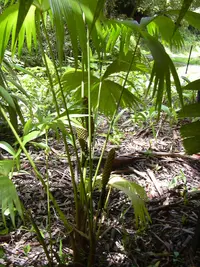
Pacaya palm, Chamaedorea tepejilote, is a small to medium understory palm native to humid forests of Central America. It is usually grown for its graceful, feathery fronds and slender cane-like stems.

In the wild it forms clumps in shaded, moist habitats, creating a soft, layered look rather than a single tall trunk. Indoors or in sheltered gardens it stays relatively compact and slow-growing.

Its tolerance of low to medium light and its preference for consistently moist, well-drained soil make it manageable for many growers. Understanding how to care for pacaya palm mainly involves providing stable warmth, gentle light, and protection from drying out completely.

Main Plant Requirements

Care Difficulty

Moderate Care

Light Preference

Partial Shade

Water Requirements

Moderate Water

Temperature Preference

Tropical / Frost Sensitive

Hardiness Zone

10–11

Soil Texture

Loamy, Peaty, Organic-rich

Soil pH

Acidic (5.5–6.5), Slightly acidic (6.5–7.0)

Soil Drainage

Moist but well-drained

Fertilization

Light (every 4–6 weeks)

Get Personalized Care Plan

Scan your plant to receive care tips personalized for your specific plant

Available on iOS and Android

How to Care for the pacaya palm

Chamaedorea tepejilote prefers bright, gentle light that mimics an understory forest habitat.

  • Provide 4–6 hours of bright, filtered light per day, such as dappled shade under taller plants or a sheer-curtained east window for pacaya palm.
  • Tolerates partial to full shade outdoors, but growth slows in deep shade and fronds may become sparse or stretched.
  • Avoid direct midday and harsh afternoon sun, which can scorch fronds; increase distance from hot windows in summer or use light curtains.

This palm prefers evenly moist but not waterlogged soil, with clear visual checks before each watering.

  • Water when the top 2–4 cm of soil feel dry, allowing excess to drain freely to prevent root rot.
  • Reduce watering in cooler seasons when growth slows, but do not allow the root zone to dry completely for Chamaedorea tepejilote.
  • Watch for yellowing, mushy leaf bases as a sign of overwatering, and crisp brown tips or folding leaflets as signs of underwatering.

This species thrives in consistently warm, frost-free conditions with minimal temperature swings.

  • Aim for 65–80°F (18–27°C) for steady growth, similar to a warm, shaded tropical understory.
  • Protect from cold; growth stops below about 55°F (13°C), and tissue damage occurs near 40°F (4°C) or with any frost.
  • In hot weather above 90°F (32°C), increase shade and airflow and maintain soil moisture to limit heat stress and leaf scorch risk.

This species prefers moderately humid air and reacts if conditions stay too dry.

  • Aim for 50–70% humidity to keep foliage lush and minimize leaflet tip browning.
  • It tolerates short spells of 35–40% humidity, but prolonged dry air leads to crisp brown edges and slower growth.
  • For pacaya palm, group plants together, use a pebble tray, or run a small humidifier near the plant rather than misting heavily.

Chamaedorea tepejilote grows best in loose, airy, organic-rich soil that drains quickly but retains some moisture.

  • Use a mix of roughly 2 parts peat or coco coir, 1 part fine bark, and 1 part perlite or pumice for structure and aeration.
  • Aim for slightly acidic to neutral pH around 6.0–7.0, avoiding strongly alkaline mixes that can lock up nutrients.
  • Ensure water moves through the profile in seconds, not minutes, to prevent stagnant pockets that encourage root rot.
  • Avoid heavy clay, unamended garden soil, or compacted mixes; loosen existing media by blending in extra bark and perlite.

This palm adapts well to container growing when the pot supports its upright, clumping habit.

  • Select a container with a broad, weighted base so the tall, narrow stems do not tip in wind or when soil is moist.
  • Use a deep pot that allows roots to spread downward, which keeps the plant more stable and reduces leaning stems.
  • Choose a slightly porous material such as unglazed clay if overwatering is a risk, as this lets the mix dry a bit faster between irrigations.

This palm benefits from light, steady feeding to support foliage and, in warm climates, flower and edible inflorescence production.

  • Use a balanced liquid fertilizer (for example 10-10-10 or 20-20-20) at 1/2 strength every 4–6 weeks during spring and summer.
  • Alternatively, apply a slow-release, balanced palm fertilizer at the start of the growing season, following label rates.
  • In rich garden soil, supplement with a thin layer of compost once a year rather than frequent synthetic feeding.
  • Reduce or stop feeding pacaya palm in autumn and winter, when growth slows and nutrient demand is lower.

Light pruning keeps Chamaedorea tepejilote tidy and reduces disease risk without stressing the palm.

  • Carry out most pruning in late winter or early spring, before strong new growth begins.
  • Remove only completely brown, dead, or badly damaged fronds, cutting close to the trunk without nicking live tissue.
  • Thin out crowded basal shoots if necessary to maintain an open clump shape and allow airflow.
  • Use clean, sharp pruners or a small pruning saw, disinfecting blades between plants to limit disease spread.

Container-grown plants and young landscape specimens appreciate thoughtful repotting or transplanting to avoid root disturbance stress.

  • Plan repotting or transplanting in late spring, once temperatures are consistently warm and growth is active.
  • Look for roots circling the pot, pushing out of drainage holes, or noticeably slowed growth as signs space is limited.
  • Repot every 2–3 years into a pot 2–5 cm wider, using a well-drained, organic-rich mix and keeping the rootball level at the same depth.
  • Water thoroughly after moving, shade from harsh sun for 1–2 weeks, and keep soil evenly moist to help roots re-establish.

New Chamaedorea tepejilote plants are most often produced from seed under warm, stable conditions.

  • Collect fresh, fully ripe seeds and clean off all fruit pulp to reduce fungal problems.
  • Sow in spring in a sterile, well-drained seed mix, keeping the medium at 75–85°F and consistently but lightly moist.
  • Provide bright, indirect light and high humidity; germination can be slow and uneven, taking several weeks to months.
  • Once seedlings have 2–3 true leaves, pot them individually with minimal root disturbance and continue warm, shaded growth.

This tropical palm is frost sensitive and needs protection or indoor shelter in regions with cold winters.

  • In USDA zones colder than 10, grow in containers and move indoors before temperatures drop below 40°F.
  • Indoors, place in bright, indirect light and keep temperatures around 60–75°F with moderate humidity.
  • For in-ground plants in marginal climates, mulch the root zone with 5–8 cm of organic material to buffer soil temperature.
  • Avoid cold drafts and overly wet soil in winter, which increase the risk of root and stem rot.

Care Tips

Staggered Repotting

Use a slightly deeper, not much wider, pot when repotting to encourage strong vertical root growth and reduce the risk of the plant becoming unstable as the stems stretch upward.


Cane Cluster Support

Install 2–3 discreet bamboo stakes around the clump and tie the canes loosely with soft garden tape to keep tall, slender stems upright and prevent wind snap, especially in exposed outdoor plantings.

Low-Light Acclimation

When moving a plant from bright outdoor shade to an indoor location, shift it over 2–3 weeks by gradually increasing time indoors each day to reduce leaf drop and stress during pacaya palm indoor care adjustments.

Selective Inflorescence Removal

If not harvesting the edible flower spikes, remove spent or weak inflorescences with clean pruners at their base to redirect energy into foliage density and overall plant vigor.

Targeted Pest Monitoring

Inspect the undersides of leaflets and tight crown areas every 2–3 weeks with a hand lens, and at the first sign of scale or spider mites, isolate the plant and apply a horticultural soap or oil according to label directions before infestations spread through a clump.

Common Pests and Diseases

Spider mites

This pest commonly infests thin, feathery palm foliage, causing tiny yellow stippling, dull fronds, and fine webbing, especially in dry indoor air. Symptoms include slowed growth and premature browning of leaf tips and edges.

Solution

Rinse fronds thoroughly with lukewarm water, including leaf undersides, then repeat every 5–7 days until no new damage appears. Increase humidity to 50–60%, avoid placing the plant near heating vents, and use insecticidal soap or a neem oil spray directed to the undersides of leaves if the infestation persists.

Scale insects

These insects appear as small, immobile bumps on stems and leaf midribs and draw sap from the plant, leading to yellowing, weakened fronds, and sticky honeydew that can attract sooty mold. Symptoms include slow decline rather than sudden collapse.

Solution

Manually remove visible scale with a cotton swab dipped in isopropyl alcohol, focusing on petioles and leaf bases. Follow up with 2–3 rounds of insecticidal soap or horticultural oil at 7–10 day intervals and isolate the plant from others during treatment as part of pacaya palm care instructions.

Mealybugs

This pest forms white, cottony clusters in leaf axils, at the base of fronds, and along tender stems, sucking sap and causing distorted new growth and general decline. Symptoms include sticky honeydew and occasional sooty mold on leaves and nearby surfaces.

Solution

Inspect leaf bases and hidden crevices, then dab individual clusters with isopropyl alcohol to break down their protective coating. Rinse the plant, improve air circulation around it, and apply insecticidal soap or neem oil every 7–10 days until no new mealybugs appear.

Fusarium leaf spot

This disease causes small, tan to dark-brown spots with possible yellow halos on leaflets, often starting on older fronds and progressing along the leaf blade. Symptoms include gradual thinning of the canopy as affected fronds are shed over time.

Solution

Remove and discard heavily spotted fronds and avoid overhead watering so water does not sit on leaves for long periods. Improve air movement, water at the soil level, and if spots continue to spread, use a palm-safe fungicide according to label directions while keeping the plant out of direct sun during treatment.

Graphiola leaf spot

This disease produces tiny, raised black spots or pustules on palm leaf surfaces, sometimes with a yellow halo, mainly on older foliage. Symptoms include cosmetic damage more than rapid decline, but heavy infection can reduce photosynthesis over time.

Solution

Prune and discard the most affected fronds, disinfecting pruners with alcohol between cuts, and avoid wetting foliage during irrigation. Increase spacing and airflow around the plant and, in persistent or severe cases, apply a copper-based fungicide labeled for palms, following all safety and timing directions.

Interesting Facts

Edible male inflorescences

The immature male flower clusters of this palm are traditionally harvested and eaten as a vegetable, especially in parts of Guatemala and southern Mexico, where they are cooked in stews and tamales.

Cloud forest specialist

This species is naturally found in humid lower montane and cloud forests of Central America, where it grows in shaded understories along stream banks and on moist slopes.

Geographic name origin

The species epithet tepejilote comes from a Nahuatl-derived local word used in Mesoamerica for the edible flowering shoots, reflecting the long-standing cultural use of the plant as a food source.

Botan icon

Did you know?

In traditional Mesoamerican markets, the tightly closed male inflorescences of this palm are sold seasonally as a distinct vegetable, and their collection and trade form a small but culturally important niche economy in some rural communities.

FAQs about pacaya palm

Yes. The immature male flower spikes, called pacayas, are traditionally eaten in parts of Central America. They are usually boiled or cooked to reduce bitterness and must be harvested before the flowers fully open.

Grow Healthy Plants with Botan Care

Keep your plants happy and healthy with plant identification, disease detection, and easy care guidance.

Botan plant care app — identify plants on mobile

Explore More Plants