Salt-Spray Placement
In coastal areas, site plants where they receive some windbreak from buildings or larger shrubs, which reduces salt-burn on new growth while still allowing the shrub to benefit from its natural salt tolerance.


Southern wax myrtle (Myrica cerifera) is an evergreen shrub or small tree, often used for hedges, screens, and naturalistic landscapes. It has narrow, aromatic leaves and dense branching that provide good cover for birds and wildlife.
This species is native to the coastal plains of the southeastern United States, where it naturally grows in sandy soils, wetlands, and along shorelines. It is valued for its tolerance of salt spray, wind, and poor soils, which makes it adaptable in many urban and coastal gardens.
It generally prefers full sun to light shade and moderately moist, well-drained soil, but once established it copes well with periods of drought. These traits make it relatively easy to care for southern wax myrtle in suitable climates.

Care Difficulty
Easy Care

Light Preference
Full Sun

Water Requirements
Moderate Water

Temperature Preference
Warm Climate

Hardiness Zone
7–11

Soil Texture
Sandy, Loamy, Clay

Soil pH
Strongly acidic (4.5–5.5), Acidic (5.5–6.5)

Soil Drainage
Moist but well-drained

Fertilization
Minimal (feed rarely)
Scan your plant to receive care tips personalized for your specific plant
Available on iOS and Android
This coastal shrub prefers ample sun but accepts some shade in warmer climates.
This shrub prefers evenly moist, well-drained soil once established but does not like prolonged saturation.
This species is adapted to mild, coastal-type climates with moderate heat and light winter chill.
This species tolerates a wide humidity range and rarely needs special humidity management outdoors.
Myrica cerifera thrives in loose, well-drained soils but also tolerates periodically wet sites once established.
This shrub can be grown in containers, but management of root space and stability is important.
Myrica cerifera needs modest feeding because it can fix nitrogen but still responds to light nutrition in poor soils.
Myrica cerifera benefits from thoughtful pruning to maintain structure and density without stressing the shrub.
This species is usually grown in the ground, so guidance focuses on transplanting rather than long-term container culture.
Myrica cerifera plant care sometimes includes propagation for hedges or naturalized plantings using seeds, suckers, or cuttings.
This shrub is generally cold hardy in much of its range but may need some help in colder zones or exposed sites.

Plant Health Check
Not sure what's wrong with your plant? Check your plant's health inside the app.
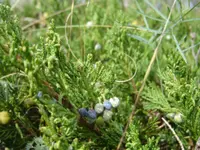
The fruits of this species are coated in a pale bluish wax that was historically boiled off and used to make bayberry candles, giving a clean, slow-burning light and distinctive scent.
Myrica cerifera forms symbiotic root nodules with actinobacteria in the genus Frankia, allowing the shrub to fix atmospheric nitrogen and thrive in very nutrient-poor, sandy soils.
This evergreen shrub is highly tolerant of salt spray and wind, which is why it naturally dominates dunes and maritime forests along the Atlantic and Gulf coasts and is often used as a living windbreak in coastal landscapes.

In parts of its native range, dense thickets of Myrica cerifera can significantly alter fire regimes by providing flammable evergreen fuel, which can in turn change how often and how intensely coastal ecosystems burn and gradually reshape plant community structure over time.
Yellowing leaves often result from waterlogged soil, nutrient-poor or very alkaline conditions, or sudden root disturbance. Check drainage, avoid frequent shallow watering, and apply a balanced slow-release fertilizer if soil tests show nutrient deficiency.
Keep your plants happy and healthy with plant identification, disease detection, and easy care guidance.