woolly burdock Care (Arctium tomentosum)

Also known as: Cotton Burdock
woolly burdock

About woolly burdock

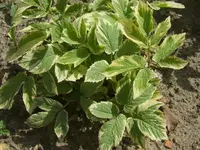
Woolly burdock, Arctium tomentosum, is a biennial herbaceous plant known for its large leaves and round burrs that cling to fur and clothing. It forms a leafy rosette in the first year, then sends up tall, branched flowering stems in the second year.

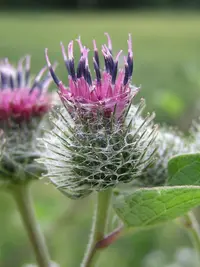
The foliage is gray-green and noticeably hairy, giving the plant a woolly look, especially on the undersides of the leaves. Purple thistle-like flower heads appear in summer.

This species is native to parts of Europe and Asia and has naturalized in many temperate regions, often along roadsides, field margins, and disturbed soils. It tends to be vigorous and can spread readily by seed, so care for woolly burdock focuses mainly on controlling its spread rather than meeting demanding growth needs.

It generally prefers full sun, moderately moist conditions, and well-drained, fertile soil.

Main Plant Requirements

Care Difficulty

Easy Care

Light Preference

Full Sun

Water Requirements

Moderate Water

Temperature Preference

Cold Hardy

Hardiness Zone

3–8

Soil Texture

Sandy, Loamy, Clay

Soil pH

Slightly acidic (6.5–7.0), Neutral (7.0)

Soil Drainage

Well-drained

Fertilization

Minimal (feed rarely)

Get Personalized Care Plan

Scan your plant to receive care tips personalized for your specific plant

Available on iOS and Android

How to Care for the woolly burdock

This temperate biennial prefers open, bright conditions to build strong rosettes and flowering stems.

  • Provide 6–8 hours of direct sun daily; morning to early afternoon sun is ideal, with light afternoon shade in very hot regions to prevent leaf scorch.
  • Woolly burdock tolerates partial shade (4–5 hours sun), but plants may grow taller and produce fewer, smaller flower heads in lower light.
  • In late spring and summer, watch for bleaching or crispy leaf edges from intense sun, and in dense shade expect weak, floppy growth prone to lodging.

This deep-rooted species prefers evenly moist but not saturated soil, especially in its first growing season.

  • Water when the top 3–5 cm of soil feel dry and the soil below is slightly cool and damp, rather than following a fixed calendar schedule.
  • During cool spring and fall, natural rainfall is often sufficient for Arctium tomentosum; in hot, dry spells, give a slow, deep soak to wet the upper 15–20 cm of soil.
  • Yellowing lower leaves, soft stems, or a sour soil smell suggest overwatering and poor drainage, while dull, wilting leaves that do not perk up overnight point to underwatering.

This hardy biennial tolerates a wide temperature range but grows best in mild conditions.

  • Optimal growth occurs around 60–75°F (16–24°C); rosettes develop strongly in cool to moderately warm weather, especially in spring and early summer.
  • Established plants tolerate cold down to about 5–10°F (-15 to -12°C) in the ground, with crowns insulated by soil and mulch during winter.
  • Heat above 85–90°F (29–32°C) can slow growth and increase wilting; provide extra water and light afternoon shade in prolonged hot, dry periods to reduce stress.

Humidity is not a critical factor for Arctium tomentosum, which adapts well to typical outdoor ranges.

Arctium tomentosum prefers deep, loose, moderately fertile soil that drains freely yet holds some moisture.

  • Use a loamy or sandy-loam soil with 20–30% compost mixed through the top 25–30 cm to support strong taproot development.
  • Ensure drainage by avoiding heavy clay; if clay is present, incorporate coarse sand or fine gravel plus organic matter to open the structure.
  • Aim for slightly acidic to neutral pH, around 6.0–7.2, as strongly acidic or alkaline soils reduce nutrient availability.
  • Avoid compacted or waterlogged ground; periodically loosen the top layer with a fork to maintain aeration around upper feeder roots.

This species is generally unsuitable for long-term container growing due to its large taproot and size.

This biennial wild species usually needs minimal feeding in average garden soil.

  • If growth is weak on poor soil, apply a light top-dressing of compost in early spring of the first year.
  • Use a balanced, slow-release fertilizer (around 10-10-10) at half strength, once in early spring if plants appear nutrient-starved.
  • Avoid repeated feeding during the season, as excess nutrients can cause lush, floppy foliage and fewer flowers.
  • Do not fertilize woolly burdock in winter or dormancy, when growth has stopped.

Arctium tomentosum benefits from simple, targeted pruning to manage size and seed spread.

  • Cut off spent flower heads before they set seed if self-sowing is not desired.
  • Remove dead, damaged, or diseased leaves and stems at ground level using clean hand pruners.
  • Thin crowded stems in early summer to improve airflow and reduce foliar disease risk.
  • In late fall or early spring, cut back dried stalks to tidy the area and encourage clean new growth.

This deep-rooted biennial is better transplanted young, as older plants resent disturbance.

  • Transplant seedlings when small, before the taproot thickens, ideally in early spring or early fall.
  • Choose a deep, loose, well-drained spot; avoid shallow or compacted soils that restrict the taproot.
  • Signs a container plant needs shifting include roots circling the pot, slow growth, and rapid drying of the mix.
  • Move with as much rootball as possible, water thoroughly, then shade for a few days to reduce transplant shock.

Seed propagation is the standard method for Arctium tomentosum in gardens and naturalized areas.

  • Collect mature seed heads in late summer, wearing gloves to avoid hooks, and dry in paper bags.
  • Sow outdoors in fall or very early spring; natural cold exposure improves germination of this biennial.
  • Place seeds on the soil surface and lightly cover, keeping the bed consistently moist until seedlings emerge.
  • Thin seedlings to allow strong, single taproots, spacing plants 30–45 cm apart for sturdy growth.

This species is cold hardy in most temperate climates and usually needs little winter intervention.

  • Established plants tolerate frost and freezing temperatures typical of temperate winters.
  • In colder regions or exposed sites, apply a light mulch layer to buffer soil temperature around the crown.
  • Container-grown plants benefit from moving to a sheltered, unheated area to limit root freeze–thaw stress.

Care Tips

Root barrier management

Install a 30–40 cm deep root barrier around planting areas if you want to limit spread, as the taproot is strong and seedlings appear easily from dropped burrs.

Burr control timing

Cut flower stalks just as burrs start to form but before they fully harden to prevent unwanted self-seeding and reduce the risk of burrs catching in animal fur or clothing.

Wildlife-safe placement

Site plants away from livestock paths, pet runs, and children’s play areas, since the hooked burrs can tangle in fur, wool, and hair if plants are allowed to set seed.

Targeted rosette thinning

In late autumn or very early spring, remove excess first-year rosettes with a narrow spade while the soil is moist to keep only the strongest plants and avoid dense, unmanageable clumps when growing woolly burdock.

Tool and clothing hygiene

After cutting or handling seed heads, clean tools, gloves, and clothing to remove clinging burrs so they do not transport viable seeds to other beds or natural areas.

Common Pests and Diseases

Leaf beetles

These insects feed on leaves, chewing round or irregular holes and sometimes skeletonizing the leaf surface, especially on young rosettes. Damage is usually cosmetic but can weaken first-year plants in dense infestations.

Solution

Hand-pick adults and larvae into soapy water where practical, and encourage natural predators by avoiding broad-spectrum insecticides around the patch. If damage is heavy on young plants, use a contact insecticidal soap or pyrethrin product directed only at affected foliage in dry, calm weather, and reduce nearby tall weeds that shelter beetles.

Aphids

These insects cluster on young stems, leaf undersides, and flower stalks, sucking sap and excreting sticky honeydew that can lead to sooty mold. Symptoms include distorted new growth, sticky surfaces, and an increase in ants on the plants.

Solution

Spray plants with a firm stream of water to dislodge colonies, repeating every few days as needed. For persistent infestations, apply insecticidal soap or a ready-to-use horticultural oil, coating stems and leaf undersides while avoiding treatment during high heat or full midday sun.

Powdery mildew

This disease appears as white to gray powdery patches on upper leaf surfaces, often starting on older leaves in crowded stands. Symptoms include dull, yellowing foliage and premature leaf decline in humid, shaded conditions.

Solution

Improve air circulation by thinning plants and removing dense surrounding vegetation, and avoid overhead watering in the evening. Remove and dispose of heavily infected leaves, and if needed use a labeled sulfur or potassium bicarbonate fungicide, applying in dry weather and following the product instructions carefully as part of broader Arctium tomentosum care instructions.

Leaf spot

This disease causes small brown to dark spots on leaves that may merge into larger dead patches, especially in wet seasons or poorly drained sites. Symptoms include irregular lesions with pale halos and early browning of lower foliage.

Solution

Remove and discard affected lower leaves and any heavily spotted plant debris to reduce spore spread. Reduce leaf wetness by watering at soil level and spacing plants more widely; in severe, recurring cases on valued stands, apply a copper-based fungicide early in the season when new spots first appear.

Stem and leaf borers

These insect larvae tunnel inside stems or midribs of large leaves, causing wilting, distorted growth, or collapsed flower stalks. This pest is more common in rough, unmanaged stands where the plant is left to mature over multiple seasons in the same area.

Solution

Cut and destroy wilted or distorted stems that show tunneling, before larvae complete development, and remove old stalks at the end of the season to limit overwintering sites. In larger patches, monitor stems early in the growing season and selectively remove any visibly damaged shoots to reduce future populations without treating the entire stand.

Interesting Facts

Dense woolly coating

The flower heads and upper stems are covered in a thick, gray-white felt of hairs, which distinguishes it from other burdock species and helps reduce water loss and UV exposure in open, sunny habitats.

Long-distance hitchhiker

Its hooked burrs attach firmly to animal fur and clothing, and the species is noted for spreading along roadsides and disturbed ground in parts of northern and central Europe and North America through this mechanical dispersal.

Preference for cooler climates

This species is naturally associated with cooler temperate regions and is more frequent in northern Europe and parts of Russia, reflecting a tolerance for cold winters and relatively short growing seasons compared to some related burdocks.

Botan icon

Did you know?

The dense woolly hairs on the flower heads of this species can be so thick that they give whole stands a noticeably silvery appearance from a distance, which has been used by field botanists as a quick visual cue to distinguish it from other Arctium species during roadside surveys.

FAQs about woolly burdock

This species can self-seed readily and form dense stands if not managed. Deadhead flower heads before seeds mature and remove unwanted seedlings promptly to prevent it from spreading beyond its intended area.

Grow Healthy Plants with Botan Care

Keep your plants happy and healthy with plant identification, disease detection, and easy care guidance.

Botan plant care app — identify plants on mobile

Explore More Plants