mahoe Care (Hibiscus elatus)

Also known as: blue mahoe
mahoe

About mahoe

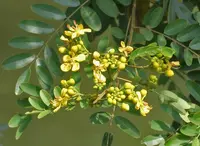
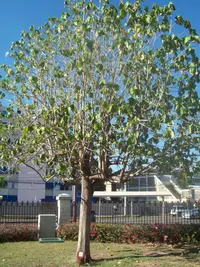
Mahoe, Hibiscus elatus, is a fast-growing evergreen tree native to the Caribbean, especially Cuba and Jamaica. In warm climates it is often used as a shade or timber tree.

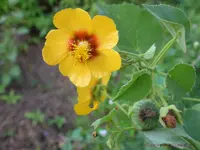
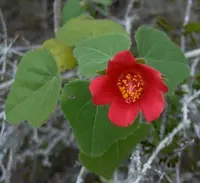
It typically has a straight trunk, dense crown, and showy hibiscus-type flowers that change color as they age. The foliage is glossy and forms a full canopy.

The species prefers warm, frost-free conditions and does best with consistent moisture and well-drained soil. Its rapid growth and general toughness make it relatively easy to establish in suitable climates.

Gardeners who want to learn how to care for mahoe should first check that their outdoor conditions match its tropical needs, as it is not suited to cold regions.

Main Plant Requirements

Care Difficulty

Moderate Care

Light Preference

Full Sun

Water Requirements

Regular Water

Temperature Preference

Tropical / Frost Sensitive

Hardiness Zone

10–11

Soil Texture

Sandy, Loamy, Organic-rich

Soil pH

Acidic (5.5–6.5), Slightly acidic (6.5–7.0)

Soil Drainage

Moist but well-drained

Fertilization

Minimal (feed rarely)

Get Personalized Care Plan

Scan your plant to receive care tips personalized for your specific plant

Available on iOS and Android

How to Care for the mahoe

Hibiscus elatus, commonly called mahoe, develops best with strong, consistent light in warm climates.

  • Provide 6–8 hours of direct sun daily, ideally strong morning sun with some light afternoon shade in hot regions.
  • Tolerates light partial shade, but flowering and crown density decrease if direct sun falls below about 4 hours per day.
  • In summer, protect from extreme afternoon exposure that scorches leaves; in winter, avoid dense shade from buildings or trees so the canopy still receives bright sun.

Hibiscus elatus needs steady moisture but reacts poorly to waterlogged soil.

  • Allow the top 3–5 cm of soil to dry before deep watering, ensuring water penetrates the root zone rather than frequent shallow sprinkling.
  • Use well-drained soil; prolonged puddling, sour smell, yellowing leaves, and soft stems indicate overwatering or poor drainage.
  • In hot, dry seasons, increase watering when leaves lose gloss or droop by midday; reduce frequency in cooler months while keeping the root zone slightly moist.

This tropical tree performs best in consistently warm, frost-free conditions.

  • Ideal growth occurs around 70–85°F (21–29°C), with stable warmth supporting continuous leaf and flower production.
  • Tolerates brief dips to about 45°F (7°C) but may suffer leaf damage; temperatures near or below 32°F (0°C) can kill young tissue.
  • Handles heat up to 95°F (35°C) if soil moisture is maintained; during hot, dry winds, expect stress signs such as leaf edge scorch and increased water demand.

This tropical hibiscus prefers moderately high, stable humidity to keep foliage healthy and flowering reliable.

  • Aim for 50–70% humidity for mahoe, especially in warm indoor or sheltered patio settings.
  • Brown, crisp leaf edges and buds dropping before opening often indicate air that is too dry.
  • Increase humidity with a nearby humidifier, grouping plants together, or placing the pot on a pebble tray above, not in, water.

Hibiscus elatus grows best in deep, moist, well‑drained, organically enriched soil that stays aerated.

  • Use a loamy mix with roughly 2 parts composted bark or garden loam, 1 part coarse sand, and 1 part perlite to balance moisture and air spaces.
  • Keep pH slightly acidic to neutral, around 6.0–7.0, as strongly alkaline soil can restrict nutrient uptake and weaken growth.
  • Improve drainage on heavy sites by planting on a slight mound and incorporating coarse sand or fine gravel through the top 20–30 cm.
  • Avoid compacted clay, waterlogged spots, or pure sand, which either suffocate roots or dry out so fast that flowering and leaf quality decline.

This species can be grown in large containers if the pot is chosen to manage its vigorous, top‑heavy growth.

  • Select a wide, heavy container to resist wind and support the tall woody canopy without tipping.
  • Choose thick-walled terracotta or similar porous material if the planting site tends to stay wet, to help moisture evaporate from the root zone.
  • Fill the pot with a deep, free‑draining mix and keep the upper few centimeters slightly drier than the root zone to reduce risk of stem base rot.

Hibiscus elatus responds well to moderate, balanced nutrition, especially when young or container-grown mahoe is establishing.

  • Use a balanced NPK fertilizer (for example 10-10-10) or well-rotted compost as the main nutrient source.
  • Feed every 4–6 weeks during the warm growing season, when active shoot and leaf growth is visible.
  • Apply liquid fertilizers at half the label strength to avoid salt buildup and root burn.
  • Reduce feeding to 1 light application or none in cooler months when growth slows.

Pruning Hibiscus elatus maintains a strong framework and encourages better flowering wood.

  • Carry out structural pruning at the end of the cool, dry season or just before active spring growth.
  • Remove dead, diseased, crossing, or inward-growing branches with clean, sharp bypass pruners or a pruning saw.
  • Thin crowded interior shoots to improve light penetration and airflow through the canopy.
  • Shorten excessively long or unbalanced limbs to refine shape and reduce wind stress, cutting just above outward-facing buds.

This species is usually grown as a landscape tree, so care focuses on transplanting young plants rather than frequent repotting.

  • Transplant container-grown saplings in late spring or early summer once soil is warm and frost risk is past.
  • Look for circling roots at drainage holes, root-bound containers, or stalled growth as signs a larger planting space is needed.
  • Handle the root ball gently, loosening only the outer circling roots, and plant at the same depth in a wide, well-drained hole.
  • Water thoroughly after planting, apply a 5–8 cm mulch ring, and keep soil evenly moist for the first growing season to limit transplant shock.

Hibiscus elatus is commonly propagated from semi-hardwood cuttings and seeds in warm climates.

  • Take semi-hardwood cuttings in late spring to mid-summer, 10–15 cm long, from healthy non-flowering shoots.
  • Insert cuttings in a free-draining mix under high humidity and bright, indirect light; bottom heat around 70–75°F improves rooting.
  • Collect ripe seeds from mature pods, then sow fresh in a light, well-drained substrate kept evenly moist.
  • Provide warmth (70–80°F) and good air circulation for seedlings, moving them to individual containers once true leaves develop.

This tropical tree is frost-sensitive and needs protection in regions with cool or freezing winters.

  • In mild frost-prone areas, apply a 5–8 cm organic mulch layer around the root zone, keeping it clear of the trunk.
  • Wrap young trunks with breathable frost cloth during predicted cold snaps below about 32°F.
  • Move container-grown plants indoors or to a heated greenhouse before temperatures drop near freezing.
  • Reduce watering in cool conditions, keeping soil just slightly moist to prevent root rot in cold, wet substrates.

Care Tips

Wind-hardening young trees

Stake young trees loosely and expose them gradually to stronger wind so the trunk can flex and thicken without snapping, then remove stakes within 12–18 months to avoid girdling.

Canopy shaping cuts

Use selective thinning cuts on crowded interior branches rather than heading back the whole canopy, which improves air flow, reduces fungal risk, and maintains a strong central leader for long-term structure.

Salt-spray management

In coastal sites, hose foliage with fresh water after salt-laden winds and apply a light organic mulch to protect surface roots from salt splash and improve recovery.

Root-zone protection

Keep turf and heavy foot traffic at least 60–90 cm away from the trunk, maintaining a clear mulch ring so fine feeder roots are not compacted or damaged by mowing equipment.

Post-storm inspection

After strong storms, inspect for cracked or partially torn branches and make clean reduction or removal cuts promptly to prevent decay from entering large wounds, an important part of consistent Hibiscus elatus plant care.

Common Pests and Diseases

Hibiscus lily mealybug

This pest often hides in leaf axils and along young stems, sucking sap and causing leaf yellowing, distortion, and sticky honeydew that encourages sooty mold. Infestations can weaken young Hibiscus elatus trees and reduce flowering.

Solution

Prune and destroy heavily infested tips, then wash accessible stems and leaves with a strong stream of water and a mild insecticidal soap, repeating every 7–10 days until populations drop. For higher trees or persistent infestations, use a systemic insecticide labeled for ornamental hibiscus and monitor new growth frequently as part of Hibiscus elatus plant care.

Pink hibiscus mealybug

This pest injects toxic saliva while feeding, leading to distorted, bunchy new growth, leaf curling, and dieback of small shoots. Symptoms include white cottony clusters on stems and heavy honeydew deposits.

Solution

Cut back and dispose of badly deformed shoots, then treat remaining foliage with insecticidal soap or horticultural oil, ensuring thorough coverage of crevices and undersides. Encourage or conserve beneficial insects such as lady beetles and lacewings outdoors, and repeat treatments every 7–14 days until new growth appears normal.

Hibiscus scale

These insects attach tightly to bark and leaf undersides, appearing as small bumps that cause yellow speckling, leaf drop, and general decline when populations are high. Sticky honeydew and sooty mold may develop on leaves and surrounding surfaces.

Solution

Gently scrape or rub off small populations with a soft brush or cloth, then apply horticultural oil during mild weather to smother remaining scale, focusing on twigs and the undersides of leaves. Inspect the trunk and main branches every few weeks and repeat oil sprays as needed, avoiding application during high heat or direct midday sun.

Leaf spot

This disease produces small brown or purplish spots on leaves that may enlarge, merge, and cause premature leaf drop, especially in warm, humid conditions. Symptoms include thinning foliage on inner branches and lower parts of the canopy.

Solution

Remove and discard affected leaves from the plant and ground to reduce inoculum, and improve air circulation by light pruning of crowded interior branches. If spotting continues in humid weather, apply a copper-based or chlorothalonil fungicide labeled for ornamental trees, spacing treatments according to the product label until new leaves emerge clean.

Sooty mold

This disease appears as a black, powdery or velvety coating on leaves and stems that grows on the honeydew secreted by sap-sucking insects, rather than directly infecting plant tissue. Heavy growth reduces light reaching the leaves and makes foliage look dull and dirty.

Solution

First control the honeydew-producing insects such as mealybugs or scale, then gently wash affected leaves with water and a mild soap solution to remove the mold. Increase light and airflow around the canopy through thoughtful pruning so leaves dry faster after rain, which helps prevent the mold from reestablishing.

Interesting Facts

Endemic Caribbean timber

Hibiscus elatus is naturally restricted to parts of Jamaica and Cuba, where it forms part of seasonal and montane forests and has long been valued locally as a durable hardwood tree rather than just as an ornamental shrub.

Color‑changing blossoms

The showy flowers typically open in bright yellow and then shift to orange or red tones over the same day, a color change that helps signal pollinators about the age and fertility status of the bloom.

Important honey source

In Jamaica this species is considered a good nectar tree for honey bees, and its flowering contributes to local honey production during particular seasons.

Botan icon

Did you know?

The wood of Hibiscus elatus, known as mahoe or blue mahoe, can display striking blue‑green and purple streaks due to natural mineral and chemical variations in the heartwood, which has made it a distinctive and sought‑after native cabinet timber in the Caribbean.

FAQs about mahoe

This species is generally fast-growing, often adding 60–120 cm per year in warm climates. In suitable ground conditions it can reach 15–20 m tall over time, forming a straight trunk and dense canopy.

Grow Healthy Plants with Botan Care

Keep your plants happy and healthy with plant identification, disease detection, and easy care guidance.

Botan plant care app — identify plants on mobile

Explore More Plants