Sturdy trellis training
Install a strong, non-rot wooden or metal trellis and loosely tie the stems with soft ties, guiding new segments upward to keep them off the ground and reduce fungal issues and mechanical damage.

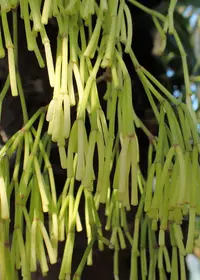
Yellow dragonfruit, Selenicereus megalanthus, is a climbing cactus grown for its bright yellow, spiny-skinned fruit with white, sweet, aromatic flesh. It has jointed, three-ribbed green stems that scramble or climb using aerial roots and support structures, forming a dense, architectural mass over time.
This species is native to higher-elevation tropical regions of South America, where it grows in warm, bright, and relatively dry conditions. It is moderately easy to grow if given strong light, free-draining soil, and protection from prolonged cold and excess moisture.
Flowering and fruiting usually require patience, space, and stable warmth, so it suits dedicated growers. Understanding how to care for Yellow dragonfruit helps maintain healthy growth and increases the chance of blooms and fruit over the long term.

Care Difficulty
Moderate Care

Light Preference
Full Sun

Water Requirements
Moderate Water

Temperature Preference
Tropical / Frost Sensitive

Hardiness Zone
10–12

Soil Texture
Sandy, Loamy, Organic-rich

Soil pH
Acidic (5.5–6.5), Slightly acidic (6.5–7.0)

Soil Drainage
Well-drained

Fertilization
Moderate (every 2–4 weeks)
Scan your plant to receive care tips personalized for your specific plant
Available on iOS and Android
This cactus thrives in bright light with some protection from harsh midday sun.
Selenicereus megalanthus prefers deep, infrequent watering that allows the soil to dry between soakings.
This subtropical cactus favors warm, frost-free conditions for steady growth and flowering.
This cactus prefers moderately dry air but benefits from stable, indoor-style humidity.
Use a sharply draining, airy mix that behaves more like cactus soil than standard potting compost.
This species adapts very well to container growing when the pot and support are chosen carefully.
Selenicereus megalanthus benefits from light, targeted feeding during its active warm-season growth.
Pruning Selenicereus megalanthus helps manage size, improve light exposure, and support flowering stems.
This cactus prefers slightly tight conditions but sometimes needs repotting or transplanting to maintain healthy growth.
Selenicereus megalanthus is most commonly propagated from stem cuttings, with seeds used mainly by specialized growers.
This tropical cactus is frost-sensitive and needs considered winter care in climates below about 40°F.

Plant Health Check
Not sure what's wrong with your plant? Check your plant's health inside the app.
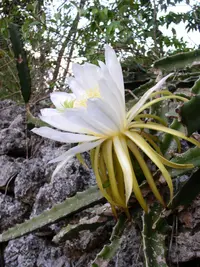
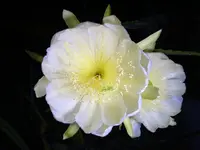
This species produces some of the largest flowers in the cactus family, often over 20 cm across, which open only at night and usually last for a single night before wilting by morning.
In its native Andean habitats, the flowers are primarily pollinated by nocturnal sphinx moths attracted by the white coloration and strong nocturnal fragrance, an adaptation known as moth pollination syndrome.
The bright yellow fruit is covered in stout spines that are mechanically removed after harvest, leaving a smooth rind around translucent, very sweet pulp widely marketed as yellow dragonfruit.

Despite being a climbing cactus adapted to dry tropical highlands, this species is cultivated commercially in several countries at elevations up to about 2,000 m, where cooler nights and strong light improve fruit sweetness and aroma.
This cactus is a natural climber and performs best with strong support, such as a trellis, post, or fence. Good support keeps stems off the ground, improves air flow, reduces rot risk, and simplifies harvesting.
Keep your plants happy and healthy with plant identification, disease detection, and easy care guidance.