


Winter moisture control
If plants overwinter outdoors in cold climates, place them on a slight gravel mound or slope so meltwater drains away quickly and the crown does not sit in icy moisture that causes rot.

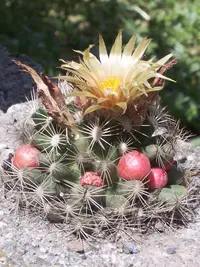
Missouri foxtail cactus, Escobaria missouriensis, is a small, cold-hardy cactus native to central North America, often found in rocky prairies and open grasslands. It grows as low, rounded clumps covered in short, bristly spines that resemble a foxtail. In spring, it produces showy flowers in shades of yellow, pink, or greenish cream, followed by small red fruits. This species tolerates poor, shallow soils and dry conditions, which makes it relatively easy in well-drained containers or rock gardens. Understanding how to care for Missouri foxtail cactus mainly involves providing strong light, sharp-draining mineral soil, and avoiding prolonged wetness around the roots.

Care Difficulty
Moderate Care

Light Preference
Full Sun

Water Requirements
Low Water

Temperature Preference
Cold Hardy

Hardiness Zone
4–9

Soil Texture
Sandy, Rocky, Loamy

Soil pH
Slightly acidic (6.5–7.0), Neutral (7.0)

Soil Drainage
Well-drained

Fertilization
Minimal (feed rarely)
Scan your plant to receive care tips personalized for your specific plant
Available on iOS and Android
This small prairie cactus thrives in bright, open conditions with strong sun exposure.
This species is highly drought tolerant and requires careful, infrequent watering to prevent root rot.
This hardy cactus tolerates a wide temperature range but grows best in moderate warmth with dry, cold winters.
Humidity is rarely a concern for Escobaria missouriensis if watering is controlled.
This species needs very fast-draining, mineral-heavy soil to prevent root and stem rot.
This species is well suited to container growing when drainage and stability are managed carefully.
This drought-adapted cactus needs only light feeding in containers; in the ground, Missouri foxtail cactus usually manages without added fertilizer.
Escobaria missouriensis requires minimal pruning, mainly for health and appearance rather than shaping.
This cactus grows slowly and rarely needs frequent repotting, but container plants or garden clumps may need attention over time.
Escobaria missouriensis is commonly propagated by seed and by separating offsets from mature clumps.
This species is notably cold hardy but still benefits from thoughtful winter management, especially in wet climates or containers.

Plant Health Check
Not sure what's wrong with your plant? Check your plant's health inside the app.
This species survives natural winter freezes in parts of the central United States, tolerating sustained subfreezing temperatures that would kill many other cacti.
It naturally occurs on rocky prairies, limestone glades, and open plains from the central U.S. into northern Mexico, often in very shallow, stony soils with high drainage.
Instead of having prominent ribs, it has short conical tubercles (small projections) that help shed excess water away from the growing point and reduce sun exposure on the stem surface.

In some northern parts of its range, this cactus spends much of winter contracted and almost sunken into the soil surface, which reduces exposure to cold, drying winds and helps it survive harsh prairie winters.
Growth is slow. In good outdoor conditions, expect only a few millimeters to about 1 cm of new height per year. Clumps enlarge gradually over many seasons, so visible size changes are modest from year to year.
Keep your plants happy and healthy with plant identification, disease detection, and easy care guidance.

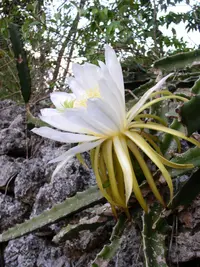
Strawberry Pear
Selenicereus triangularis
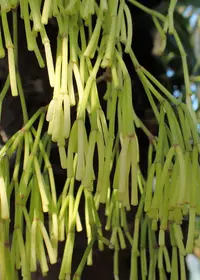
Rhipsalis clavata
Rhipsalis clavata
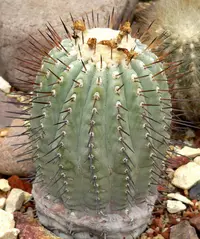
Copiapoa cinerea
Copiapoa cinerea
Road Kill Cactus
Consolea rubescens
whitecolumn foxtail cactus
Escobaria tuberculosa
underground copiapoa
Copiapoa hypogaea
Big Bend foxtail cactus
Escobaria dasyacantha
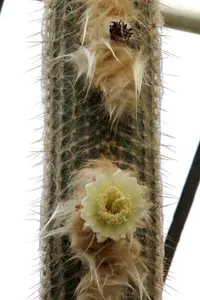
Espostoa melanostele
Espostoa melanostele