Chile cocopalm Care (Jubaea chilensis)

Also known as: Chilean wine palm, Coquito palm, honey palm
Chile cocopalm

About Chile cocopalm

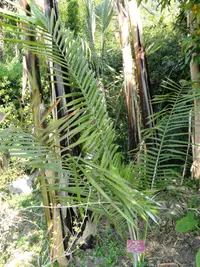
The Chile cocopalm, Jubaea chilensis, is a slow-growing, long-lived palm tree known for its thick, smooth trunk and stiff, gray-green feather-like leaves. It develops a single, massive trunk and a broad crown, giving a striking architectural look in mature landscapes.

This species is native to central Chile, where it grows in dry, Mediterranean-type valleys and hillsides. Its natural origin makes it tolerant of drought and cooler conditions compared with many tropical palms.

Growth is very slow, so it takes many years to reach its full size, which can make it both a long-term investment and relatively low maintenance. Those who want to care for Chile cocopalm should note that it prefers full sun, well-drained soil, and moderate moisture without constant wetness.

Main Plant Requirements

Care Difficulty

Moderate Care

Light Preference

Full Sun

Water Requirements

Low Water

Temperature Preference

Cold Hardy

Hardiness Zone

8–11

Soil Texture

Sandy, Loamy, Rocky

Soil pH

Slightly acidic (6.5–7.0), Neutral (7.0)

Soil Drainage

Well-drained

Fertilization

Minimal (feed rarely)

Get Personalized Care Plan

Scan your plant to receive care tips personalized for your specific plant

Available on iOS and Android

How to Care for the Chile cocopalm

This slow-growing palm prefers strong light and benefits from full sun once established.

  • Provide 6–8 hours of direct sun daily; in very hot inland areas, give morning sun with light afternoon shade to reduce leaf scorch.
  • Young Chile cocopalm plants handle bright, filtered light or light shade, but long-term deep shade causes weak, stretched growth and sparse fronds.
  • In summer, monitor for pale, crispy leaflet tips from intense sun; in winter, trim nearby trees only if needed to keep at least 4–5 hours of direct light.

This palm prefers deep, infrequent watering once its roots are established.

  • Allow the top 5–8 cm of soil to dry before watering; in most climates this means thorough soaking every 7–14 days during warm, dry weather.
  • Use well-drained soil or a sloped site so water does not pool around the trunk; persistent soggy soil, sour smell, or soft crown tissue suggests overwatering and root stress.
  • Reduce watering in cool or rainy seasons, giving only enough to prevent prolonged dryness signaled by folding leaflets and dull, gray-green fronds.

This species is more cold-tolerant than many palms but still responds strongly to temperature extremes.

  • Best growth occurs around 65–80°F (18–27°C), with steady warmth promoting stronger fronds and faster trunk development in younger plants.
  • Mature Jubaea chilensis can tolerate short drops to about 15–20°F (-9 to -6°C) once established, but young specimens benefit from protection during hard frosts.
  • It copes with dry summer heat up to about 95–100°F (35–38°C) if soil moisture is adequate; prolonged heat plus drought can cause leaflet browning and growth slowdown.

This species tolerates relatively dry air and rarely needs special humidity control outdoors.

  • Ideal relative humidity is around 30–50%, similar to many arid and Mediterranean climates where it is grown.
  • Leaves may show brown tips or edges under prolonged very dry, hot winds combined with water stress rather than humidity alone.
  • In very dry, exposed sites, windbreaks and a thick mulch layer help reduce transpiration and protect fronds from desiccation.

This palm needs deep, sharply drained soil to establish a long-lived root system.

  • Use a gritty mix with roughly 50–60% coarse sand or fine gravel, 20–30% loam, and 10–20% compost for nutrients.
  • Aim for slightly acidic to neutral pH, about 6.0–7.5, avoiding very acidic or strongly alkaline substrates that can limit nutrient uptake.
  • Improve drainage and aeration by mounding the planting area, incorporating pumice or perlite, and breaking up compacted layers before planting Jubaea chilensis.
  • Avoid heavy clay, standing water, and dense peat-rich mixes that hold constant moisture around the root zone, which increases root rot risk.

This slow-growing palm can be grown in containers for many years, especially while young.

  • Choose a tall, heavy container that resists tipping and provides depth for the strong taproot to develop downward.
  • Use a very free-draining mineral-rich mix so water passes through quickly but the heavy pot does not stay wet for long periods.
  • Position the container where wind exposure is reduced to prevent leverage on the root ball and wobbling that can damage anchoring roots.

This very slow-growing palm needs only light, infrequent feeding, especially in the ground.

  • Use a balanced slow-release NPK palm fertilizer or well-aged compost in early spring for Chile cocopalm in poor soils or containers.
  • Feed container plants 1–2 times during the growing season, never more than label rates.
  • Dilute liquid feeds to 1/2 strength if used, applying to moist soil to prevent root burn.
  • Stop feeding in late summer so new tissue hardens before winter.

Pruning Jubaea chilensis is minimal and focuses on safety and plant health rather than shaping.

  • Carry out pruning in late winter or early spring, before strong new growth.
  • Remove only dead, brown, or badly damaged fronds, cutting close to the trunk without nicking it.
  • Leave green fronds in place, as they support growth and trunk thickening.
  • Use clean, sharp loppers or a pruning saw and disinfect blades between trees.

This palm dislikes disturbance, so transplanting or repotting should be rare and carefully planned.

  • Transplant when roots circle the container or growth slows despite good care, usually every 3–5 years in youth.
  • Choose late spring, once soil warms and frost risk has passed, for moving young trees outdoors.
  • Shift to only 1 pot size larger and keep the original root ball intact to limit stress.
  • Water deeply after planting, then keep soil evenly moist and shaded for 2–4 weeks while roots re-establish.

Jubaea chilensis is propagated almost exclusively from seed and germination is slow and uneven.

  • Sow fresh, cleaned seeds in late winter to spring in a deep container with very well-drained, sandy mix.
  • Scarify thick seed coats lightly and soak seeds 2–7 days in lukewarm water, changing water daily.
  • Maintain 75–85°F bottom heat and consistent, light moisture; germination can take 4–18 months.
  • Leave seedlings undisturbed in deep pots so taproots develop straight and strong.

Mature plants are quite cold hardy, but young Jubaea chilensis benefit from simple winter precautions in colder regions.

  • Established trees tolerate brief drops near 10–15°F once acclimated, especially in dry conditions.
  • Apply 5–10 cm of organic mulch around the root zone, keeping it off the trunk, to buffer freeze–thaw cycles.
  • For young plants, wrap the crown lightly with breathable frost cloth during severe cold.
  • Move container-grown palms into a bright, cool, frost-free space when hard freezes are forecast.

Care Tips

Protect juvenile trunk

Install a light-colored tree guard or wrap breathable shade cloth loosely around the base of young plants for the first 3–5 years to prevent sunscald and mechanical damage while the trunk is still forming.


Stage wind exposure

Plant in a somewhat sheltered spot for the first few years, then gradually thin surrounding windbreaks so the palm adapts to stronger winds without sudden frond breakage.

Mulch for root stability

Maintain a 5–8 cm ring of coarse, woody mulch over the root zone, keeping it 5–8 cm away from the trunk, to moderate soil temperature and encourage a deep, stable root system.

Support heavy fronds

On young or recently transplanted palms, tie especially long or heavy fronds together in a loose bundle using soft horticultural tape to reduce wind leverage on the crown until the root system anchors firmly.

Plan long-term spacing

Allow at least 5–7 m of clear space around each plant at maturity, keeping hardscape and structures outside this radius, since caring for Chile cocopalm is easier and safer when tools and people can move freely around the expanding crown and trunk.

Common Pests and Diseases

Palm scale

This pest forms small, rounded or oval shells on leaf stalks and trunks, sucking sap and weakening the palm over time. Symptoms include yellowing fronds, sticky honeydew, and sooty mold growth on affected areas.

Solution

Physically scrape or wipe off scale with a soft brush or cloth dipped in water and a small amount of mild soap, then rinse well. For heavier infestations on outdoor palms, use a horticultural oil spray labeled for palms, applied thoroughly to trunk and leaf bases during mild weather, and repeat as needed according to label directions.

Red palm mite

These insects are tiny red mites that feed on the undersides of fronds, causing fine yellow speckling, bronzing, and premature leaf decline. Symptoms include dusty webbing and a dull, off-color canopy, especially during hot, dry conditions.

Solution

Hose down fronds regularly to knock off mites and reduce dust, focusing on the undersides of leaves. If populations remain high, apply a miticide or horticultural oil labeled for palms, treating all fronds thoroughly and repeating at intervals recommended by the product label while monitoring for improvement as part of Jubaea chilensis care instructions.

Fusarium wilt

This disease is caused by a soil- or wound-borne fungus that blocks water transport in the vascular system. Symptoms include one-sided yellowing and browning of fronds, wilting, and eventual death of affected leaves, often starting on older fronds first.

Solution

Remove and destroy affected fronds promptly using disinfected tools, and avoid wounding the trunk or roots. Do not replant palms in the same soil if a confirmed Fusarium infection has occurred, and focus on prevention with good drainage, clean pruning tools, and avoiding overhead irrigation that keeps leaf bases wet for long periods.

Ganoderma butt rot

This disease is caused by the wood-decaying fungus Ganoderma, which attacks the base of the trunk and internal tissues. Symptoms include gradual canopy thinning, reduced new growth, and appearance of hard, shelf-like conks at the trunk base.

Solution

There is no effective cure once the fungus is established, so management relies on prevention and early removal. Avoid trunk wounds, do not bury the trunk base or keep soil piled against it, and if conks appear, consult a certified arborist; remove severely affected palms and as much infected stump material as possible to reduce spread to nearby palms.

Palm aphids

These insects cluster on young fronds and flower stalks, sucking sap and excreting honeydew that encourages sooty mold. Symptoms include distorted new growth, sticky residues, and increased presence of ants tending the aphids.

Solution

Spray colonies off with a firm stream of water and prune out heavily infested flower stalks if practical. For persistent infestations, apply an insecticidal soap or horticultural oil to thoroughly coat the aphids on all sides of the fronds, repeating every 7–10 days until populations decline, while also controlling nearby ant activity to reduce reintroduction.

Interesting Facts

Exceptionally slow growth

This species is one of the slowest-growing large palms, often taking several decades to form a visible trunk, which contributes to its vulnerability in the wild because it cannot quickly recover from disturbance.

Cold-tolerant feather palm

Unlike many palms, it tolerates cool, Mediterranean-type climates and can survive short frosts well below 20°F, which makes Jubaea chilensis care unusual among large, tropical-looking palms.

Historically tapped for sap

In its native Chile, trees were traditionally felled to obtain large volumes of sweet sap used to make palm honey, a practice that greatly reduced natural populations and is now heavily restricted to aid conservation.

Botan icon

Did you know?

Mature individuals can live for several centuries and develop massive, bottle-shaped trunks that may exceed 1 m in diameter, making this species one of the most massive palms known by trunk girth.

FAQs about Chile cocopalm

Growth is very slow. In suitable outdoor conditions, it may add only 5–15 cm of trunk height per year, sometimes less when young. Patience is essential when growing Chile cocopalm as a landscape specimen.

Grow Healthy Plants with Botan Care

Keep your plants happy and healthy with plant identification, disease detection, and easy care guidance.

Botan plant care app — identify plants on mobile

Explore More Plants