Polynesian arrowroot Care (Tacca leontopetaloides)

Also known as: batflower, Fiji arrowroot, masoa, taka, Arrowroot
Polynesian arrowroot

About Polynesian arrowroot

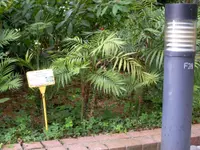
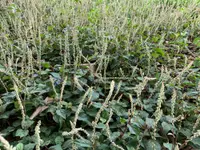
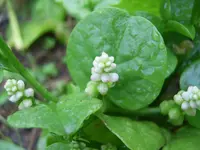
Polynesian arrowroot, Tacca leontopetaloides, is a tropical, tuber-forming perennial grown for its large, pleated leaves and starchy underground rhizomes. It forms a leafy clump that can resemble a small ornamental foliage plant.

This species occurs naturally across tropical Asia and the Pacific, often in coastal or open woodland habitats. In cultivation it prefers warm conditions, filtered light, and consistently moist but well-drained soil.

The plant can be slow to establish and dislikes cold, waterlogging, and long dry periods, which makes it moderately challenging outside tropical climates. Gardeners who learn how to care for Polynesian arrowroot usually find it reliable once its basic needs are met.

Main Plant Requirements

Care Difficulty

Moderate Care

Light Preference

Partial Shade

Water Requirements

Regular Water

Temperature Preference

Tropical / Frost Sensitive

Hardiness Zone

11–12

Soil Texture

Sandy, Loamy, Organic-rich

Soil pH

Acidic (5.5–6.5), Slightly acidic (6.5–7.0)

Soil Drainage

Moist but well-drained

Fertilization

Light (every 4–6 weeks)

Get Personalized Care Plan

Scan your plant to receive care tips personalized for your specific plant

Available on iOS and Android

How to Care for the Polynesian arrowroot

This species prefers bright, filtered light that mimics dappled tropical shade.

  • Provide 3–5 hours of gentle morning sun with bright shade or filtered light for the rest of the day, avoiding harsh midday and late-afternoon exposure.
  • Polynesian arrowroot tolerates partial shade but growth slows and leaves stretch if light stays very low, especially under dense tree canopies.
  • In hot summers, increase shade or use 30–50% shade cloth; in cooler seasons, allow a bit more direct morning sun to support tuber strength.

This tuberous plant needs steadily moist but not waterlogged soil around its root zone.

  • Water when the top 3–5 cm of soil feel slightly dry, then soak the root area thoroughly so moisture reaches the tuber but drains away within a few hours.
  • In warm active growth, aim for consistently damp soil; reduce frequency in cooler months as Tacca leontopetaloides slows, letting the surface dry a bit deeper between waterings.
  • Watch for yellowing, soft stems as a sign of overwatering or poor drainage, and for limp, curling leaves or dry leaf edges as indicators of underwatering.

This tropical species thrives in warm, stable conditions without cold drafts or frost.

  • Aim for 70–85°F (21–29°C) during active growth, which supports strong foliage and tuber development in most warm, humid climates.
  • Protect from temperatures below 55°F (13°C); brief dips to 45–50°F (7–10°C) may be survived but can stunt growth and damage leaves.
  • In hot spells above 90°F (32°C), provide extra shade and soil moisture, as intense heat plus full sun can scorch foliage and stress the plant.

This species prefers consistently moist, warm air and reacts quickly to dry conditions.

  • Aim for 60–80% humidity, as Polynesian arrowroot becomes stressed in very dry, centrally heated rooms.
  • Crisping leaf edges, folding leaves, and stalled growth indicate humidity is too low rather than watering issues.
  • Increase humidity with a nearby humidifier, grouped plants, or a pebble tray, avoiding misting that keeps leaves wet for long periods.

Tacca leontopetaloides needs loose, aerated, organic-rich soil that drains quickly but does not dry out too fast.

  • Use a mix such as 50% peat- or coco-based potting mix, 30% compost, and 20% perlite or coarse sand to balance moisture retention and drainage.
  • Maintain a slightly acidic to neutral pH around 6.0–7.0, which supports nutrient availability and healthy tuber development.
  • Break up any compaction and avoid heavy clay, as poorly aerated soil suffocates roots and increases rot risk.
  • In containers or raised beds, ensure excess water can exit freely to prevent waterlogging around the tubers.

This species can grow successfully in containers when moisture control and stability are managed carefully.

  • Choose a deep, wide pot to give the spreading tuber and roots space to expand without circling tightly.
  • Select a slightly heavy container material, such as ceramic, to stabilize tall foliage against wind or accidental bumps.
  • Elevate the pot on feet or a stand so drainage holes stay clear and excess water cannot pool under the container.

Tacca leontopetaloides benefits from modest, steady nutrition rather than heavy feeding.

  • Use a balanced liquid fertilizer (around 10-10-10) at 1/2 strength every 4–6 weeks during active growth in spring and summer.
  • Apply a thin layer of compost over the root zone once per growing season to support soil life and slow nutrient release.
  • Pause or reduce feeding to 1 light application in late winter if the plant partially rests or growth slows.
  • Avoid high-salt synthetic products and never apply fertilizer to dry soil; water first to limit root burn.

Pruning needs for Tacca leontopetaloides are light and mainly hygienic.

  • In late winter or early spring, remove dead, yellowing, or diseased leaves at the base with clean, sharp scissors or pruning shears.
  • Cut back damaged flower stalks after they fade to direct energy back into the tuber and new foliage.
  • Thin out overcrowded shoots slightly to improve air movement and reduce fungal problems, keeping the plant’s natural shape.
  • Disinfect tools with alcohol before and after use to lower the risk of transmitting pathogens between plants.

This species is usually grown in the ground, but container plants benefit from occasional repotting to maintain healthy tuber growth.

  • Check for roots circling the pot, slow growth, or frequent wilting as signs the tuber has filled its container.
  • Plan repotting or outdoor transplanting in late spring once soil stays above about 60°F and frost risk has passed.
  • Shift to a container only 1–2 in wider, using a loose, well-drained mix and keeping the tuber at the same depth as before.
  • Water thoroughly after moving, keep in bright shade for 5–7 days, and avoid heavy feeding until new growth appears to reduce stress.

Polynesian arrowroot is most reliably propagated by dividing mature tubers rather than from seed.

  • Carry out division in late spring when soil is warm and new shoots are just emerging.
  • Lift the clump carefully, then separate firm, healthy tubers, ensuring each piece has at least 1 visible bud or eye.
  • Plant divisions in well-drained, slightly moist soil, placing tubers horizontally and covering with 5–8 cm of mix.
  • Maintain warm conditions (70–80°F), bright shade, and evenly moist but not waterlogged soil until strong new shoots develop.

This tropical species is frost sensitive and needs protection in regions with cold winters.

  • In USDA zones colder than 10, grow Tacca leontopetaloides in containers and move indoors before temperatures drop below 50°F.
  • For in-ground plants in mild climates, apply 5–8 cm of dry mulch over the root zone in late fall to insulate the tuber.
  • If foliage is killed by a light frost, cut it back when dry and keep the tuber in barely moist soil until spring regrowth.

Care Tips

Tuber rotation

Lift and divide large, crowded tubers every 2–3 years at the start of warm, wet weather, spacing replanting holes 30–45 cm apart so each clump has room to expand and produce stronger foliage and flowers.

Mulch for tubers

Apply a 5–8 cm layer of coarse organic mulch around but not directly on top of the tuber zone to keep the root area cool, reduce weed competition, and protect shallow feeder roots from drying or mechanical damage.

Wind and leaf support

In breezy or exposed sites, place low, discreet stakes or a semicircular plant support ring around the clump to prevent the tall petioles from bending or snapping during storms.

Targeted slug control

Set up beer traps or iron phosphate pellets around emerging shoots at the start of the rainy season, since young leaves are highly attractive to slugs and snails and early protection prevents disfigured growth.

Harvest timing

For those growing Polynesian arrowroot for starch, mark planting dates and begin checking tubers for harvest 8–10 months after planting, choosing firm, fully swollen tubers and re-covering smaller ones to continue developing.

Common Pests and Diseases

Taro planthopper

This pest feeds on plant sap, causing leaf yellowing, curling, and general decline, especially in warm, humid conditions. These insects are commonly associated with Tacca and related aroid crops in tropical areas.

Solution

Remove heavily infested leaves and discard away from the planting area. For remaining foliage, rinse both sides of leaves with a strong stream of water, then apply an insecticidal soap or neem oil spray every 7–10 days until new growth appears clean, and reduce excess nitrogen fertilization that encourages soft, vulnerable tissue.

Spider mites

This pest thrives in hot, dry spots and causes pale stippling on leaves, fine webbing, and gradual loss of vigor. Symptoms include bronzing or dull, dusty-looking foliage, especially on plants grown in containers or under cover.

Solution

Increase humidity around the plant, then hose down foliage thoroughly, paying attention to leaf undersides. Repeat washing every few days and use insecticidal soap or horticultural oil if mites persist, keeping plants out of direct harsh sun while treated leaves recover.

Leaf spot

This disease causes dark, water-soaked or tan spots on leaves that may enlarge and merge, leading to premature leaf drop. Symptoms include more severe spotting in crowded, shaded, or poorly ventilated plantings.

Solution

Promptly remove and discard affected leaves, avoid overhead watering, and water at soil level in the morning so foliage dries quickly. Improve spacing and airflow, and if spotting continues, apply a copper-based or other labeled fungicide according to Tacca leontopetaloides care instructions, monitoring new growth for clean leaves.

Soft rot

This disease affects corms and lower stems, which become soft, foul-smelling, and water-soaked, often following injury or prolonged waterlogging. Symptoms include sudden collapse of foliage and mushy tissue at or just below the soil surface.

Solution

Dig up and discard all affected corms and any surrounding soft tissue, and do not compost infected material. Replant only firm, healthy corms into well-drained soil or containers with drainage holes, avoid mechanical injury, and manage irrigation so the planting medium stays moist but never saturated.

Interesting Facts

Traditional Polynesian staple

The starchy underground corm of this species has long been used across Pacific islands as a traditional staple food, processed carefully to remove natural bitterness and then baked or boiled.

Specialist pollinator reliance

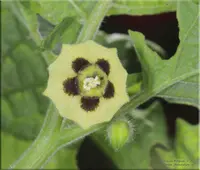
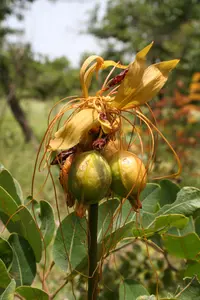
Its greenish flowers have a complex structure with bracts and whisker-like filaments that are thought to guide specific insect pollinators, an adaptation that helps ensure effective cross-pollination in its native habitats.

Beach and scrub survivor

This plant commonly grows in coastal scrub, open forests, and sandy soils near beaches, showing good tolerance of salt spray and nutrient-poor substrates compared with many other tropical root crops.

Botan icon

Did you know?

This species was intentionally transported by early seafaring peoples across large parts of the Pacific and Indian Oceans as a canoe crop, making it part of one of the oldest known human-assisted plant dispersal networks in tropical island ecosystems.

FAQs about Polynesian arrowroot

This species spreads by underground tubers and can slowly form clumps, but it is not usually aggressive in home gardens. In frost-free, ideal conditions, it may naturalize, so give it space and monitor unwanted offsets.

Grow Healthy Plants with Botan Care

Keep your plants happy and healthy with plant identification, disease detection, and easy care guidance.

Botan plant care app — identify plants on mobile

Explore More Plants