Train Young Framework
In the first 2–3 years, selectively tip‑prune and lightly stake the main leader to develop a clear, balanced framework that will support future canopy weight and reduce storm breakage risk.

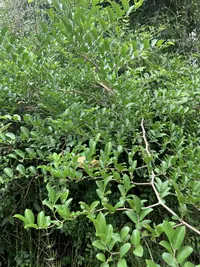
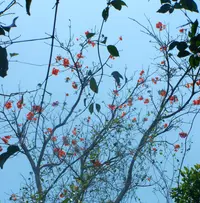
Iguana hackberry (Celtis iguanaea) is a woody shrub or small tree from the hemp family, often forming a dense, branching canopy with thorny twigs. Its small leaves, inconspicuous flowers, and tiny orange to red fruits give it a discreet but functional look for wildlife plantings.
This species is native to tropical and subtropical regions of the Americas, where it grows in dry forests, thickets, and open scrub. It is generally hardy, drought tolerant once established, and adapts to different soils, which makes it relatively easy to care for iguana hackberry in suitable warm climates.

Care Difficulty
Easy Care

Light Preference
Full Sun

Water Requirements
Moderate Water

Temperature Preference
Tropical / Frost Sensitive

Hardiness Zone
10–12

Soil Texture
Sandy, Loamy, Rocky

Soil pH
Acidic (5.5–6.5), Slightly acidic (6.5–7.0)

Soil Drainage
Well-drained

Fertilization
Minimal (feed rarely)
Scan your plant to receive care tips personalized for your specific plant
Available on iOS and Android
Celtis iguanaea grows best in bright, warm climates with plenty of direct sun.
Celtis iguanaea prefers moderately dry conditions once established and does not like standing water.
This species is a warm-climate tree that prefers stable, frost-free conditions for best growth.
Celtis iguanaea handles a wide humidity range and usually does not need special humidity management.
Celtis iguanaea prefers moderately fertile, well‑aerated soil that drains quickly but does not dry out instantly.
This species can be grown in containers when provided with adequate root space and stable support.
This species grows acceptably in average soil, but targeted feeding improves container or young iguana hackberry growth.
Pruning Celtis iguanaea is mainly used to maintain structure, remove defects, and manage size.
This species is usually grown in the ground, so management focuses more on careful transplanting than on frequent repotting.
Celtis iguanaea is most often propagated from seed, with cuttings used less commonly.
This warm-climate tree has low frost tolerance and needs some winter consideration in cooler regions.

Plant Health Check
Not sure what's wrong with your plant? Check your plant's health inside the app.
This shrub or small tree is a documented natural food source for several iguana species in dry and coastal forests, which is why it is commonly called iguana hackberry.
Its thin, often zigzagging twigs and small, simple leaves help reduce water loss, allowing the plant to persist in seasonally dry tropical and subtropical habitats.
The plant produces small, sweet, orange to reddish drupes that are eaten by birds, which then disperse the seeds through their droppings and help maintain populations across its native range.

Celtis iguanaea is naturally widespread from Mexico and the Caribbean through Central America into large parts of South America, yet it remains relatively understudied compared with other Celtis species, so many aspects of its ecology and genetics are still only briefly documented in regional floras and checklists.
Growth is typically moderate. Young plants may add 30–60 cm per year under warm conditions with adequate water and space. Poor soil, drought, or container restriction slow growth. Regular light pruning can direct structure but does not drastically speed growth.
Keep your plants happy and healthy with plant identification, disease detection, and easy care guidance.