Dyckia encholirioides Care

Dyckia encholirioides

About Dyckia encholirioides

Dyckia encholirioides is a terrestrial bromeliad that forms dense rosettes of stiff, narrow, heavily spined leaves. The foliage often shows gray-green tones with a silvery, armored look.

This species comes from rocky, sun-exposed habitats in Brazil, where it endures strong light, heat, and periodic drought. Its flowers rise on tall stalks and are usually warm-toned, attracting pollinators in its native range.

The plant is tough and long-lived but grows slowly and has sharp spines, which makes handling and repotting more demanding. It suits growers who prefer low to moderate watering, very free-draining soil, and plenty of sun, and who want to learn how to care for Dyckia encholirioides with some patience.

Main Plant Requirements

Care Difficulty

Moderate Care

Light Preference

Full Sun

Water Requirements

Low Water

Temperature Preference

Warm Climate

Hardiness Zone

9–11

Soil Texture

Sandy, Loamy, Rocky

Soil pH

Acidic (5.5–6.5), Slightly acidic (6.5–7.0)

Soil Drainage

Well-drained

Fertilization

Minimal (feed rarely)

Get Personalized Care Plan

Scan your plant to receive care tips personalized for your specific plant

Available on iOS and Android

How to Care for the Dyckia encholirioides

This terrestrial bromeliad thrives in strong light that mimics open, rocky habitats.

  • Provide 6–10 hours of direct sun daily, ideally full morning sun with some protection from intense midafternoon rays in hot climates.
  • It tolerates light partial shade, but prolonged shade leads to elongated growth, dull foliage color, and fewer blooms.
  • In summer heat waves, use light shade cloth or plant near rocks that cast brief shade; in winter, ensure the site is as bright and open as possible for Dyckia encholirioides.

This species is drought-tolerant but stays healthier with measured, infrequent watering.

  • Allow the top 3–5 cm of soil to dry fully before watering, then soak so water runs through freely, especially in rocky or sandy beds.
  • Reduce watering in cool seasons, giving only enough to prevent complete soil desiccation; growth slows below about 60°F (16°C).
  • Watch for leaves yellowing and turning soft at the base as a sign of overwatering, or crisp, folding leaf tips as an indicator that Dyckia encholirioides is staying too dry.

This hardy bromeliad tolerates a wide temperature range but dislikes extended frost.

  • Aim for active growth around 70–90°F (21–32°C); short peaks up to 100°F (38°C) are tolerated if soil drains quickly and airflow is good.
  • The plant can survive brief drops to about 25°F (−4°C) when dry, but repeated freezes damage foliage and can kill the crown.
  • In regions with winters below 30°F (−1°C), provide frost cloth or grow in a spot with reflected heat from rocks or walls to stabilize Dyckia encholirioides.

This species prefers dry to moderately dry air and usually does not need extra humidity indoors.

  • Aim for 30–50% humidity, similar to typical heated or air-conditioned homes.
  • Dry, brown leaf tips or soft basal rot indicate excess humidity combined with poor air movement.
  • Use a fan for gentle air circulation instead of humidifiers, which are rarely necessary for Dyckia encholirioides.

This terrestrial bromeliad needs very fast-draining, mineral-rich soil to prevent root and crown rot.

  • Use a gritty, sandy mix such as 50–60% inorganic material (pumice, coarse sand, small gravel) with the rest cactus potting mix.
  • Keep pH slightly acidic to neutral, around 6.0–7.0, avoiding strongly alkaline mixes based on large amounts of lime.
  • Increase aeration by adding extra pumice or perlite until water runs through freely within seconds of watering.
  • Avoid heavy peat, clay, or compacted garden soil, which hold water around the roots and quickly cause rot in Dyckia encholirioides.

This species is well suited to container culture when planted in a very free-draining mix.

  • Choose a wide, shallow, heavy pot to balance the stiff, spiny rosette and reduce tipping in wind or accidental knocks.
  • Select unglazed terracotta if possible, as its porous walls let excess moisture evaporate faster than plastic or glazed ceramic.
  • Ensure large, unobstructed drainage holes and elevate the pot slightly so water cannot pool under the base after watering.

This terrestrial bromeliad benefits from light, controlled feeding during active growth for compact rosettes and stronger color.

  • Use a balanced liquid fertilizer at 1/4–1/2 strength or a very light application of slow-release granules suitable for succulents.
  • Feed Dyckia encholirioides every 4–6 weeks in spring and summer when growth is active.
  • Avoid organic compost mixed into the pot because it can retain excess moisture; use a gritty, mineral substrate instead.
  • Stop feeding or reduce to 1 light dose for the whole period during fall and winter dormancy.

Pruning Dyckia encholirioides focuses on hygiene and safe handling rather than reshaping the plant.

  • Best timing is late winter or early spring before strong new growth starts.
  • Remove dead, dried, or damaged leaves at the base, and thin out congested outer leaves only if needed for access or air flow.
  • Use long-handled scissors or pruners and sturdy gloves to avoid injury from the sharp spines.
  • Limited pruning maintains the natural rosette form and helps reduce pest harborage without stressing the plant.

Container-grown plants need infrequent repotting, mainly to refresh the gritty mix and manage offsets.

  • Repot every 3–4 years or when roots circle the pot, growth slows, or offsets crowd the container.
  • Plan repotting for late spring, when Dyckia encholirioides resumes active growth and recovery is fastest.
  • Use a pot only 2–3 cm wider, with excellent drainage and a very coarse, mineral-rich medium.
  • Handle the root ball gently, keep roots slightly barely disturbed, and water lightly after repotting to limit stress and rot.

Propagation is commonly done by division of offsets, with seeds used mainly for breeding or larger-scale production.

  • Separate offsets in late spring or early summer once they have several firm leaves and a good root base.
  • Use thick gloves and a clean, sharp knife to cut pups from the parent rosette, keeping as many roots as possible.
  • Plant divisions into a fast-draining, gritty mix, keep bright light, and water sparingly until roots establish.
  • For seeds, sow on the surface of sterile, barely moist mix at 70–80°F with bright, indirect light and good air movement.

This species tolerates brief light frost but benefits from simple precautions in colder areas.

  • In-ground plants in mild climates handle short drops to around 25–28°F if soil drains quickly.
  • Apply a thin gravel or mineral mulch around the crown to keep the neck dry rather than warm.
  • Move containers under cover or indoors in regions with prolonged freezing or heavy winter rain.
  • Provide as much light as possible indoors and keep the mix almost dry to avoid cold-related rot, which is key for Dyckia encholirioides care.

Care Tips

Safe handling technique

Use thick gloves and tongs or a folded towel to move or repot the plant so the stiff, spiny leaves are not damaged and your hands are protected, which helps keep the rosette intact and attractive over time.

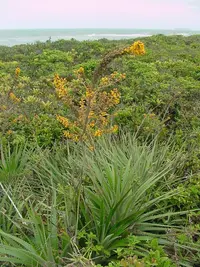
Rock-mulch topdressing

Apply a thin layer of coarse gravel or small rocks on the soil surface to stabilize the plant, reduce soil splash, and keep leaf bases dry, which lowers the risk of rot in heavy rains or overhead watering.

Seasonal sun hardening

When moving a plant from indoors or shade into higher light, increase sun exposure over 10–14 days so the leaves can adapt and develop good color without sunburn, especially in late spring and early summer.

Offset management

Every 2–3 years, remove and replant offsets with a clean, sharp knife once they have several leaves and visible roots, which prevents overcrowding in the pot and provides vigorous new plants for expanding a collection.

Winter moisture control

In cool, low-light winter conditions, keep the plant in the brightest, airiest spot available and gently tilt or raise the pot after watering so any water trapped in the leaf rosette can drain out, reducing cold-related rot when growing Dyckia encholirioides.

Common Pests and Diseases

Mealybugs

This pest feeds on leaf bases and in the tight rosettes, sucking sap and leaving cottony clusters in sheltered spots. Symptoms include distorted new growth, sticky honeydew, and sometimes sooty mold on the leaves or nearby surfaces.

Solution

Remove visible insects with a cotton swab dipped in 70% isopropyl alcohol, then rinse the rosette thoroughly with a strong stream of water, taking care to flush between the spines. For persistent infestations, use a systemic insecticide labeled for ornamental bromeliads or apply repeated treatments of insecticidal soap, and reduce excess nitrogen fertilization that encourages soft, susceptible growth.

Scale insects

These insects appear as small, hard, shell-like bumps along the leaves and at the leaf bases, where they feed on sap and weaken the plant. Symptoms include yellowing patches, slowed growth, and honeydew that may lead to sooty mold.

Solution

Gently scrape off accessible scales with a soft brush or cloth and wash the plant thoroughly with water and insecticidal soap, focusing on leaf axils. For heavier infestations, apply a horticultural oil or an appropriate systemic insecticide, and improve air movement and light levels to support plant vigor and reduce reinfestation while following Dyckia encholirioides care instructions.

Fungal leaf spots

This disease produces small, water-soaked or tan lesions that may darken and develop purple or brown margins on the stiff leaves. Symptoms include cosmetic spotting that can coalesce into larger dead patches under persistently wet or humid conditions.

Solution

Remove and discard heavily spotted leaves and avoid overhead watering, especially in the evening, to keep the foliage as dry as possible. Improve airflow around the plant, space multiple plants apart, and if spotting continues, use a broad-spectrum fungicide labeled for ornamental foliage, applying according to label directions.

Bacterial soft rot

This disease often starts at damaged leaf bases or wounds and causes a rapidly spreading, mushy, foul-smelling decay. Symptoms include collapsing leaves around the rosette center and wet, discolored tissue that breaks down quickly in warm, humid conditions.

Solution

Cut out all affected tissue with sterile tools, removing entire rosettes if necessary, and discard infected material in the trash rather than compost. Allow remaining tissue to dry well, reduce watering, increase air circulation, and avoid water sitting in leaf axils; prevent future infection by minimizing mechanical damage and keeping tools and pots clean.

Spider mites

These insects are tiny sap-feeding mites that thrive in hot, very dry conditions and can be hard to see without magnification. Symptoms include fine stippling on leaves, dull or bronzed foliage, and very fine webbing in protected areas of the rosette or between spines.

Solution

Rinse the plant thoroughly with a strong but controlled stream of water, targeting the undersides of leaves and tight crevices, then maintain slightly higher humidity without keeping the plant wet. For ongoing problems, use repeated applications of insecticidal soap or a miticide labeled for ornamental use, and avoid placing the plant in extremely hot, stagnant air where mites proliferate quickly.

Interesting Facts

Rocky outcrop specialist

This species is naturally restricted to rocky inselbergs and steep granitic slopes in southern Brazil, where it anchors in shallow crevices with very little organic soil.

Fire-adapted rosette

The stiff, tightly packed rosettes can tolerate occasional grassland or scrub fires, with new growth emerging from the protected central meristem after the surrounding vegetation burns.

Sun-loving bromeliad

Unlike many bromeliads that prefer shade or tree canopies, this plant evolved for intense sun exposure and seasonal drought, forming dense clumps on exposed rock faces.

Botan icon

Did you know?

Encholirioid Dyckia species, including this one, are important nectar sources for hummingbirds in their native Brazilian habitats, supporting specialized pollination networks on otherwise sparse rocky outcrops.

FAQs about Dyckia encholirioides

This species performs best outdoors in full sun and excellent drainage. Indoors it often grows slower and looks less compact. Dyckia encholirioides indoor care is possible only with very bright light, low humidity, and a fast-draining mineral mix.

Grow Healthy Plants with Botan Care

Keep your plants happy and healthy with plant identification, disease detection, and easy care guidance.

Botan plant care app — identify plants on mobile

Explore More Plants