

Controlled clump division
Every 3–4 years, lift and divide congested clumps in early spring, replanting only the firm outer sections to maintain compact growth and strong flowering when growing Love-restoring Stonecrop.

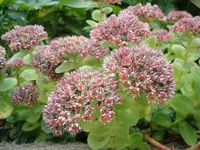
Love-restoring Stonecrop, Hylotelephium anacampseros, is a compact, clump-forming succulent perennial in the stonecrop group. It stores water in its fleshy leaves, which are often rounded to oval and arranged along short, upright stems.
This species is native to rocky slopes and dry habitats in parts of Europe and Asia, where it copes with poor, shallow soils. Its drought tolerance, slow to moderate growth, and low nutrient needs make it relatively easy to manage in pots or rock gardens.
It prefers bright light, good drainage, and only occasional watering, which simplifies how to care for Love-restoring Stonecrop for most home growers.

Care Difficulty
Easy Care

Light Preference
Full Sun

Water Requirements
Low Water

Temperature Preference
Cold Hardy

Hardiness Zone
3–9

Soil Texture
Sandy, Loamy, Rocky

Soil pH
Slightly acidic (6.5–7.0), Neutral (7.0)

Soil Drainage
Well-drained

Fertilization
Minimal (feed rarely)
Scan your plant to receive care tips personalized for your specific plant
Available on iOS and Android
This sun-loving succulent needs bright conditions to stay compact and color up well.
This drought-tolerant succulent prefers infrequent, deep watering in sharply drained soil.
This hardy perennial tolerates a wide temperature range but grows best in moderate conditions.
This species is highly tolerant of dry indoor air and does not need elevated humidity.
This succulent prefers very fast-draining, mineral-rich soil that dries quickly between waterings.
This species is very suitable for container growing outdoors or on balconies.
Hylotelephium anacampseros is a low-feeding succulent that only needs light fertilization during active growth.
Pruning Hylotelephium anacampseros is useful for keeping compact shape and encouraging healthy new growth.
This species tolerates being root-bound and usually needs repotting or transplanting only occasionally.
Hylotelephium anacampseros is commonly propagated by stem cuttings and division of mature clumps.
This hardy succulent usually needs minimal winter care in most temperate climates.

Plant Health Check
Not sure what's wrong with your plant? Check your plant's health inside the app.
This species often shifts from blue-green to reddish or purplish tones when exposed to strong sun and cooler late-season temperatures, due to increased production of protective pigments called anthocyanins that help shield tissues from stress.
In parts of its European range, it flowers relatively late in the season, providing nectar and pollen for bees, hoverflies, and other insects at a time when many earlier-blooming species have already finished.
Hylotelephium anacampseros naturally grows on rocky slopes and stone outcrops, where its fleshy leaves and thick roots store water and allow it to anchor into shallow, mineral-rich crevices with very little soil.
Poor flowering usually comes from insufficient light, overly rich or wet soil, or heavy spring fertilizing. Ensure full sun, very well-drained, lean soil, and avoid high-nitrogen feed. Mature, unstressed clumps bloom more reliably.
Keep your plants happy and healthy with plant identification, disease detection, and easy care guidance.

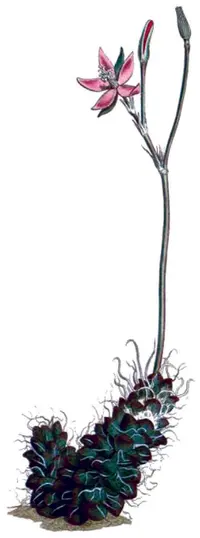
Anacampseros filamentosa
Anacampseros filamentosa
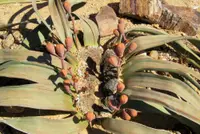
Tree Tumbo
Welwitschia mirabilis

Sedum mendozae
Sedum mendozae
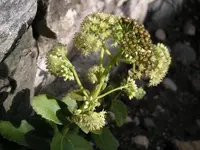
Great Stonecrop
Hylotelephium maximum

cottontop cactus
Echinocactus polycephalus

Beschorneria yuccoides
Beschorneria yuccoides

Brandegee's Hedgehog Cactus
Echinocereus brandegeei
Cuming crown cactus
Rebutia neocumingii