


Mounting strategy
Use cork bark or hardwood slabs with a thin pad of long-fiber sphagnum around the roots to secure the plant, which keeps the root zone airy while allowing frequent, fast-drying watering.

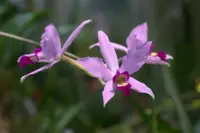
Laelia anceps is an epiphytic orchid, usually growing on trees or rocks, known for its elegant, star-shaped flowers on tall, slender spikes. Blooms often appear in cool seasons and come in shades of lilac, pink, or white with a contrasting lip.
In nature it occurs from Mexico to Honduras, typically in bright, airy mountain forests with distinct wet and dry periods. This background makes it moderately easy for experienced beginners, as it adapts well if light, temperature, and airflow are stable.
It prefers bright light, good air movement, and a fast-draining orchid mix, which are key points when learning how to care for Laelia anceps.

Care Difficulty
Moderate Care

Light Preference
Partial Sun

Water Requirements
Moderate Water

Temperature Preference
Tropical / Frost Sensitive

Hardiness Zone
10–11

Soil Texture
Sandy, Rocky, Organic-rich

Soil pH
Acidic (5.5–6.5)

Soil Drainage
Well-drained

Fertilization
Moderate (every 2–4 weeks)
Scan your plant to receive care tips personalized for your specific plant
Available on iOS and Android
This species thrives in bright, filtered light with some direct sun at cooler times of day.
Watering should balance regular moisture with fast drainage and a short dry period between soakings.
This orchid prefers intermediate to warm conditions with a distinct but not extreme temperature range across seasons.
This orchid prefers moderate to high humidity but tolerates typical home levels with care.
This epiphytic orchid needs a very airy, fast-draining medium rather than dense soil.
This species is well suited to container culture, including mounted or potted setups.
This orchid benefits from light, regular feeding during active growth for balanced Laelia anceps care.
Pruning needs are minimal and focus on hygiene rather than shaping for Laelia anceps.
This orchid prefers slightly tight conditions but benefits from periodic repotting to maintain a healthy root system.
Propagation of Laelia anceps is most practical by division rather than seed for home growers.
Winter care is important for this frost-sensitive orchid, which performs best with cool but not freezing conditions.

Plant Health Check
Not sure what's wrong with your plant? Check your plant's health inside the app.
This species often flowers in late fall to winter in its native Mexican range, producing long-lasting blooms when many other orchids are not in flower.
Its relatively tall, narrow pseudobulbs store both water and nutrients, helping the plant tolerate short dry spells and moderate temperature swings in its montane habitats.
In the wild it grows both as an epiphyte on trees and as a lithophyte on rocks, showing strong adaptability to different substrates and air movement conditions.

Laelia anceps has been a key parent in many classic Cattleya alliance hybrids, valued by breeders for its strong flower spikes, cool-season blooming habit, and ability to pass on good vigor and resilience to offspring.
Lack of flowers often comes from insufficient light, too-warm winter nights, or fertilizer high in nitrogen. Provide a distinct cooler, brighter winter rest and use a balanced, orchid-specific fertilizer to support bud formation and reliable flowering.
Keep your plants happy and healthy with plant identification, disease detection, and easy care guidance.

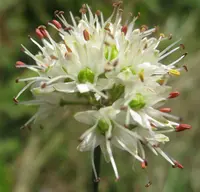
Allium ericetorum
Allium ericetorum

false sunflower
Heliopsis helianthoides
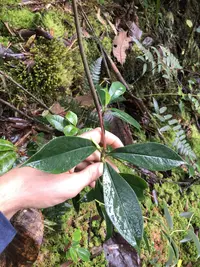
Peperomia acuminata
Peperomia acuminata
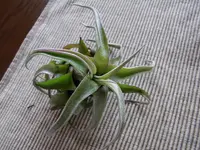
Tillandsia streptophylla
Tillandsia streptophylla
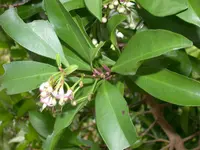
Siebold Ardisia
Ardisia sieboldii
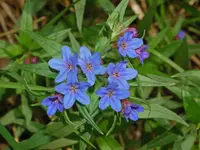
Purple Gromwell
Aegonychon purpurocaeruleum
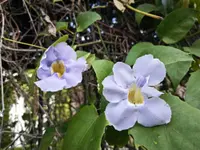
Blue sky vine
Thunbergia grandiflora

Calathea
Goeppertia crocata 'Tassmania'