Staking Tall Stems
Install slender stakes or a low hoop support in early summer and loosely tie taller stems before they lean, especially in windy or exposed beds.

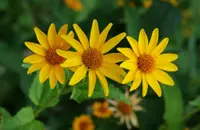
False sunflower, Heliopsis helianthoides, is a hardy herbaceous perennial in the aster family, grown mainly for its long-lasting yellow daisy-like flowers. It forms upright clumps with branching stems, coarse toothed leaves, and abundant blooms that often appear from mid-summer into fall.
This species is native to prairies and open woodlands in North America and adapts well to many garden settings. It is valued for its reliability, strong stems that usually do not need staking, and good tolerance of heat and short dry spells.
False sunflower generally prefers full sun, moderate moisture, and well-drained soil. These traits make it straightforward to care for false sunflower in typical home gardens and low-maintenance borders.

Care Difficulty
Easy Care

Light Preference
Full Sun

Water Requirements
Moderate Water

Temperature Preference
Cold Hardy

Hardiness Zone
3–9

Soil Texture
Sandy, Loamy, Clay

Soil pH
Acidic (5.5–6.5), Slightly acidic (6.5–7.0)

Soil Drainage
Moist but well-drained

Fertilization
Minimal (feed rarely)
Scan your plant to receive care tips personalized for your specific plant
Available on iOS and Android
This perennial thrives in full sun but accepts light shade in hotter regions.
This species prefers moderately moist, well-drained soil and dislikes prolonged soggy conditions.
This hardy perennial tolerates a wide range of outdoor temperatures once established.
Humidity is rarely a limiting factor for Heliopsis helianthoides in typical outdoor conditions.
Heliopsis helianthoides prefers moderately fertile, well-drained soil that does not stay waterlogged after rain or irrigation.
This species is suitable for container growing when the pot is large and stable enough to support its tall, branching stems.
This native perennial usually flowers well in average soil, so fertilizer needs for false sunflower are modest.
Heliopsis helianthoides responds well to thoughtful pruning that maintains shape and encourages flowering.
This perennial is most often grown in garden beds, so care focuses on transplanting clumps rather than frequent repotting.
This species is commonly propagated by division, seeds, and softwood cuttings, making it straightforward to increase plantings.
This cold-hardy perennial usually needs minimal winter care in most temperate climates.

Plant Health Check
Not sure what's wrong with your plant? Check your plant's health inside the app.
Despite the common name false sunflower, this species is a long-lived, clump-forming perennial native to central and eastern North America, not an annual like many true sunflowers in the genus Helianthus.
The stems are unusually stiff and rarely need staking, which makes the plant able to hold masses of flowers upright in windy or exposed prairie conditions.
Its long flowering season from mid-summer into fall provides nectar and pollen for a wide range of bees, butterflies, and other pollinators at a time when some native species have already finished blooming.

Botanical studies have shown that this species is genetically and morphologically distinct enough from true sunflowers that it sits in a separate genus, yet its flower heads so closely mimic Helianthus that it is considered a classic case of convergent evolution within the aster family.
Poor flowering usually comes from too much shade, excess nitrogen fertilizer, or old, overcrowded stems. Ensure at least 6–8 hours of sun, avoid high-nitrogen lawn runoff, and divide congested clumps every 3–4 years to renew vigor.
Keep your plants happy and healthy with plant identification, disease detection, and easy care guidance.