Mark Dormant Bulbs
Flag or label clumps right after flowering so the exact bulb positions are known once foliage dies back, which helps avoid disturbing bulbs when cultivating or planting around them later.

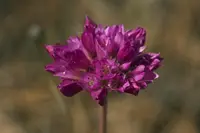
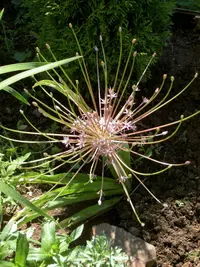
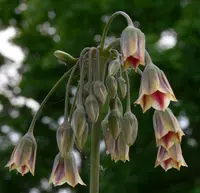
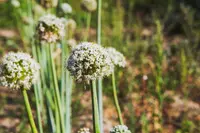
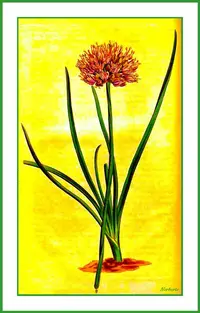
Jeweled onion, Allium serra, is a small bulb-forming perennial in the onion family, valued for its nodding clusters of pink, bell-shaped flowers. It usually grows in loose clumps, with slender grass-like leaves and delicate flowering stems that create a light, airy look.
This species is native to parts of western North America, where it often appears in rocky or well-drained sites. It suits gardeners seeking a compact, drought-tolerant ornamental that returns yearly from bulbs.
For those learning how to care for jeweled onion, the main considerations are good drainage, moderate moisture, and a sunny, open position that mimics its natural habitat.

Care Difficulty
Moderate Care

Light Preference
Full Sun

Water Requirements
Low Water

Temperature Preference
Cool Climate

Hardiness Zone
7–10

Soil Texture
Sandy, Loamy, Rocky

Soil pH
Slightly acidic (6.5–7.0), Neutral (7.0)

Soil Drainage
Well-drained

Fertilization
Minimal (feed rarely)
Scan your plant to receive care tips personalized for your specific plant
Available on iOS and Android
This small bulb prefers bright, open conditions similar to its native rocky slopes.
This species prefers dry to moderately dry soil and is sensitive to excess moisture.
This bulb is adapted to mild, dry-summer climates with cool, wet winters.
Humidity is not a significant factor for this dry-adapted bulb and typical indoor air is usually suitable for jeweled onion.
Allium serra needs sharply drained, lean substrate that mimics dry, rocky slopes.
This species can be grown in containers if fast drainage and a dry rest are maintained.
Allium serra typically needs only light feeding, especially in reasonably fertile, well-drained soil.
Allium serra needs minimal pruning, focused on cleaning up spent and damaged growth to maintain vigor.
This species is more often grown in the ground, so transplanting clumps is more common than repotting individual bulbs.
Allium serra is commonly propagated by bulb division and, less often, by seed in suitable conditions.
In climates with mild, dry winters, Allium serra usually needs little special winter care.

Plant Health Check
Not sure what's wrong with your plant? Check your plant's health inside the app.
This species is native to a narrow band of coastal central California, where it grows on rocky slopes and open grasslands, often in thin, seasonally dry soils influenced by maritime fog.
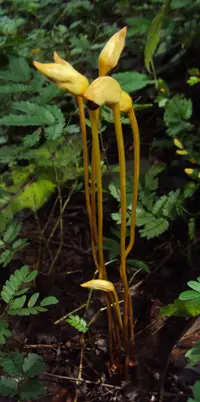
The plant produces loose, nodding clusters of bell-shaped pink flowers on slender, arching stalks, an adaptation that helps protect pollen from direct rain and harsh sun in its exposed habitats.
Allium serra survives Mediterranean-type summer drought by retreating into a small underground bulb, remaining dormant until cool, moist conditions return in winter and early spring.

This species is considered locally uncommon and is monitored in parts of its range because its limited coastal distribution makes it vulnerable to habitat loss from development, invasive grasses, and changes in fire regimes.
Lack of flowers usually comes from insufficient sun, overcrowded bulbs, or nutrient-poor, very dry soil. Divide congested clumps, improve drainage, provide full light, and avoid heavy nitrogen fertilizers that push foliage instead of blooms.
Keep your plants happy and healthy with plant identification, disease detection, and easy care guidance.