Seasonal Dormancy Handling
Once foliage yellows and dies back, gradually reduce watering, move the pot to a cool, shaded spot, and keep the medium just barely moist to protect the underground tubers during dormancy.

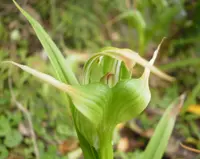
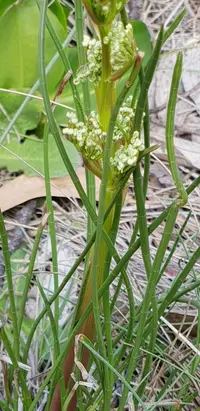
Pterostylis banksii, commonly called tutukiwi, is a terrestrial orchid from New Zealand’s forests and scrublands. It usually grows in cool, damp, shaded habitats. The plant forms ground-level rosettes of leaves and sends up elegant, translucent green and white hooded flowers on slender stems. It often appears in small colonies where conditions stay consistently moist. This species is a seasonal grower, with a clear rest period when foliage may die back, which can make it challenging for beginners to keep alive. Those who want to care for Tutukiwi should focus on cool temperatures, gentle filtered light, and evenly moist, free-draining, humus-rich substrate.

Care Difficulty
Hard Care

Light Preference
Partial Shade

Water Requirements
Regular Water

Temperature Preference
Cool Climate

Hardiness Zone
8–10

Soil Texture
Loamy, Sandy, Organic-rich

Soil pH
Acidic (5.5–6.5)

Soil Drainage
Moist but well-drained

Fertilization
Minimal (feed rarely)
Scan your plant to receive care tips personalized for your specific plant
Available on iOS and Android
This terrestrial orchid prefers cool, bright conditions with gentle, filtered light rather than direct sun.
Pterostylis banksii needs consistently moist but not waterlogged soil during active growth, with reduced moisture in dormancy.
This species prefers cool to mild temperatures with marked seasonal variation but limited exposure to extremes.
This terrestrial orchid prefers moderately moist air but usually adapts to typical indoor humidity.
This species grows best in a loose, humus-rich, sharply drained mix that mimics a moist forest floor.
This orchid is well suited to container growing when given a deep, stable pot with excellent drainage.
This terrestrial orchid needs only light feeding, as Pterostylis banksii is adapted to low‑nutrient soils.
Pruning needs are minimal and focus on hygiene rather than shaping Pterostylis banksii.
This species prefers infrequent disturbance, so repot or transplant Pterostylis banksii only when clearly necessary.
Propagation of Pterostylis banksii is mainly done by tuber division rather than from seed in home settings.
This cool-growing terrestrial orchid has good cold tolerance but still benefits from thoughtful winter care.

Plant Health Check
Not sure what's wrong with your plant? Check your plant's health inside the app.
This species spends much of the year as a small ground-hugging rosette, then sends up a separate flowering stem later, allowing the plant to photosynthesize and store resources before investing in its tall, translucent flower spike.
Its hooded green-and-white flower has a long, twisted labellum (lip) that resembles a tongue, a structural adaptation that helps guide visiting insects into the flower for effective pollination.
In the wild it commonly grows in shaded, damp New Zealand forests and scrub, often among leaf litter and moss, indicating a preference for cool, moist, low-light microhabitats compared with many other orchids.

This orchid forms a symbiotic association with specific soil fungi (mycorrhizae), which are essential for its seed germination and early growth; without these fungal partners, its dust-like seeds cannot develop into mature plants in nature.
Lack of flowers usually comes from inadequate winter rest, insufficient light during the growing season, or plants that are still immature. Ensure a cool, drier dormancy and stable moisture and light when shoots emerge to support flowering.
Keep your plants happy and healthy with plant identification, disease detection, and easy care guidance.