Early leader training
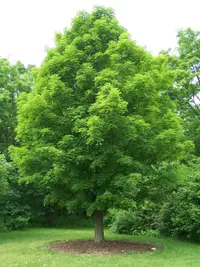
In the first 3–5 years, select one strong central leader and remove or shorten competing upright stems to build a stable, wind-resistant canopy for long-term health.

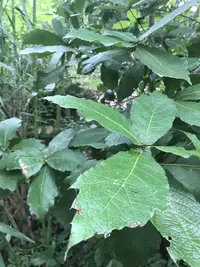
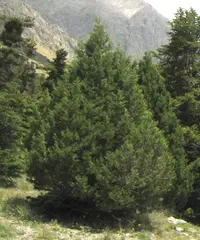
Loquat leaf oak (Quercus rysophylla) is an evergreen oak tree valued for its elongated, glossy leaves that resemble loquat foliage. It forms a dense, upright crown and develops into a medium to large landscape tree over time. New growth often emerges coppery or bronze, creating strong seasonal interest. The species is native to northeastern Mexico, where it grows in mild, relatively moist mountain climates. It adapts best to well-drained soil and benefits from consistent moisture, especially while young. Once established, it shows reasonable drought tolerance and moderate cold hardiness, which influences how easy it is to site successfully. Gardeners who learn how to care for loquat leaf oak can use it as a structural specimen in larger gardens and parks.

Care Difficulty
Moderate Care

Light Preference
Full Sun

Water Requirements
Moderate Water

Temperature Preference
Warm Climate

Hardiness Zone
7–10

Soil Texture
Sandy, Loamy, Clay

Soil pH
Acidic (5.5–6.5), Slightly acidic (6.5–7.0)

Soil Drainage
Well-drained

Fertilization
Minimal (feed rarely)
Scan your plant to receive care tips personalized for your specific plant
Available on iOS and Android
This evergreen oak prefers bright, open conditions to develop a dense canopy and healthy foliage.
This species prefers evenly moist but not saturated soil, especially during establishment.
This oak is adapted to warm-temperate climates with mild winters and hot summers.
This oak handles a wide humidity range and usually does not need special humidity management outdoors.
This species prefers deep, structured soil that stays evenly moist but drains freely.
This species is only moderately suitable for container growing and usually performs best in the ground.
This evergreen oak grows steadily in average soil and only benefits from modest, targeted feeding.
Pruning for Quercus rysophylla focuses on structural strength and clearance rather than frequent shaping.
This oak is usually grown in the ground, so care centers on correct planting and occasional transplanting of young trees.
Propagation of this species is mainly done from seed and is considered slow and specialized for home gardeners.
This evergreen oak is moderately cold hardy in suitable climates and usually needs only basic winter attention.

Plant Health Check
Not sure what's wrong with your plant? Check your plant's health inside the app.
This species keeps its thick, glossy leaves year-round in mild climates, unlike many temperate oaks that are deciduous, giving it a broadleaf evergreen appearance similar to some subtropical trees.
It is naturally found in humid mountain forests of northeastern Mexico, where it grows on cooler slopes and ridges that capture frequent mists and orographic clouds.
This species has been used by breeders to create ornamental hybrids with other oaks, passing on its dense evergreen canopy and attractive red-tinged new growth to garden and street trees in mild regions.

In parts of its native Mexican range, this oak plays a structural role in mixed cloud forests, where its dense evergreen canopy helps buffer understory plants and epiphytic mosses from rapid temperature and moisture swings, contributing to a more stable microclimate within the forest.
This species is evergreen to semi-evergreen in mild climates, holding foliage through winter and replacing leaves gradually. In colder areas it may drop more leaves, but fresh growth usually appears in spring once temperatures stabilize.
Keep your plants happy and healthy with plant identification, disease detection, and easy care guidance.