canyon live oak Care (Quercus chrysolepis)

Also known as: Canyon Oak, Maul Oak, Goldcup Oak, Golden Cup Oak
canyon live oak

About canyon live oak

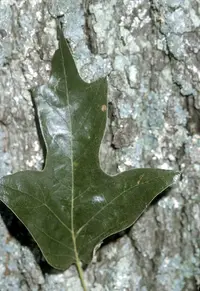
Canyon live oak (Quercus chrysolepis) is a long-lived evergreen oak tree native to canyons and mountain slopes of California and the southwestern United States. It often forms dense, rounded crowns and can grow as either a large shrub or a substantial shade tree, with thick, leathery leaves that vary from smooth-edged to finely toothed. Acorns are an important wildlife food source and add to its ecological value. The species tolerates drought, rocky soils, and temperature swings, which generally makes it tough once established but slower to adapt when first planted. Understanding how to care for canyon live oak starts with providing sun, good drainage, and moderate, not excessive, moisture.

Main Plant Requirements

Care Difficulty

Moderate Care

Light Preference

Full Sun

Water Requirements

Low Water

Temperature Preference

Cold Hardy

Hardiness Zone

8–11

Soil Texture

Sandy, Loamy, Rocky

Soil pH

Slightly acidic (6.5–7.0), Neutral (7.0)

Soil Drainage

Well-drained

Fertilization

Minimal (feed rarely)

Get Personalized Care Plan

Scan your plant to receive care tips personalized for your specific plant

Available on iOS and Android

How to Care for the canyon live oak

This evergreen oak prefers bright exposure with some protection from extreme afternoon heat.

  • Provide 6–8 hours of direct sun daily; in hotter inland areas, aim for morning sun with light afternoon shade.
  • Young canyon live oak trees benefit from filtered light under taller trees for the first 2–3 years to reduce leaf scorch.
  • Too little sun (under 4 hours) leads to sparse, elongated growth, while intense all-day summer sun on shallow soils can cause leaf burn and drought stress.

This drought-tolerant oak needs careful watering while young, then minimal supplemental water once established.

  • During the first 2–3 years, water deeply when the top 5–8 cm of soil are dry, letting water soak 30–45 cm into the root zone.
  • Ensure fast-draining soil; prolonged puddling, sour smell, or yellowing leaves suggest overwatering and possible root rot.
  • Mature Quercus chrysolepis in the ground often needs only deep irrigation every 3–6 weeks in summer and usually none in cool, rainy seasons.

This species is adapted to mild, dry climates with warm summers and cool, not severe, winters.

  • Active growth occurs around 60–85°F (16–29°C), with best performance in regions that have warm days and cooler nights.
  • Established trees tolerate about 10–15°F (-12 to -9°C), but young plants are more vulnerable and benefit from frost protection below 25°F (-4°C).
  • Handles dry heat up to about 100–105°F (38–41°C) if soil is not soggy; during heat waves, avoid pruning stress and ensure roots are mulched.

This species handles low atmospheric moisture well, so humidity management is rarely critical.

Quercus chrysolepis prefers mineral, well-drained soil that stays aerated and does not remain waterlogged.

  • Use a gritty mix such as 50–60% sandy or loamy topsoil blended with 20–30% coarse sand and 10–20% fine bark or compost.
  • Aim for slightly acidic to neutral pH around 6.0–7.0, avoiding strongly acidic or alkaline substrates that limit nutrient uptake.
  • Improve drainage and root aeration by incorporating coarse particles (pumice, crushed granite, or perlite ≥5 mm) rather than fine peat-heavy mixes.
  • Avoid compacted, clay-heavy, or constantly wet ground, which promotes root rot and weak, shallow rooting.

This species can be grown in containers for its juvenile stages, but long-term growth is limited by root size and weight.

  • Select a deep, wide, heavy container to stabilize the plant’s eventually woody, top-heavy canopy in strong winds.
  • Use a mineral-based mix that drains quickly yet has enough weight to prevent the pot from tipping or shifting.
  • Place the container where runoff can escape freely, ensuring no saucer or tray holds standing water under the pot.

This native oak usually needs little feeding in the ground, but young or container-grown canyon live oak benefits from light, targeted fertilization.

  • Use a balanced slow-release fertilizer (for example 8-8-8 or 10-10-10) or a thin layer of compost in early spring.
  • Feed young or potted trees 1–2 times during the growing season, not more.
  • Apply at half the label rate for woody plants to avoid excessive, weak growth.
  • Stop fertilizing in late summer so new growth hardens before winter dormancy.

Pruning Quercus chrysolepis focuses on safety, structure, and plant health rather than heavy shaping.

  • Schedule main pruning in late winter to very early spring, before active growth.
  • Remove dead, diseased, crossing, or storm-damaged branches using clean, sharp bypass pruners or a pruning saw.
  • Thin congested interior branches slightly to improve light and airflow without over-opening the canopy.
  • Establish a single strong leader and sound branch structure while the tree is young to guide long-term form.

This oak is rarely a long-term container plant, so care centers on transplanting young trees to a permanent site with minimal root disturbance.

  • Transplant in late fall or very early spring when the tree is dormant and temperatures are mild.
  • Move a container plant when roots circle the pot, drainage is poor, or growth slows noticeably.
  • Shift up containers only 1–2 sizes, keeping as much of the root ball intact as possible.
  • Water deeply before and after planting, mulch 5–8 cm, and shade the tree from intense sun for 1–2 weeks to limit transplant shock.

Sexual propagation of this species is done mainly from seed, while vegetative methods are rarely successful or used.

  • Collect healthy acorns in fall, discarding any that float in water, which usually indicates damage or emptiness.
  • Sow acorns promptly in deep containers or outdoor nursery beds with well-drained soil.
  • Provide cool, moist conditions over winter to satisfy natural cold stratification, which triggers spring germination.
  • Protect emerging seedlings from rodents, heavy foot traffic, and drought while they develop a strong taproot.

Mature trees are quite cold hardy in much of their range and need little active winter care in the landscape.

  • Young or newly planted trees benefit from 5–8 cm of mulch over the root zone, kept away from the trunk.
  • In areas with severe freezes, shield small stems from drying winds using burlap or a breathable tree wrap.
  • Container-grown plants in colder climates should be moved to a sheltered, frost-free but unheated space for winter.

Care Tips

Establish deep roots

For young trees, apply slow, infrequent soakings that penetrate 30–45 cm into the soil during the first 2–3 years to encourage a deep, drought-resilient root system rather than frequent shallow watering.

Wind and slope placement

On exposed or sloped sites, plant slightly upslope of natural water flow and provide a temporary windbreak (such as a permeable fence or shrub screen) for the first 3–5 years to reduce wind rock and root loosening.

Train for single trunk

During the first 5–7 years, selectively remove competing leaders and narrow branch crotches with clean cuts to develop a strong single trunk and wide-angled scaffold branches that better resist storm damage.

Mulch for root zone

Maintain a 5–8 cm deep mulch ring extending at least 60–120 cm from the trunk, keeping mulch 8–10 cm away from the bark, to moderate soil temperature, suppress weeds, and protect the shallow feeder roots.

Monitor acorn load

Inspect limb structure in late summer in heavy acorn years and, where limbs are long and thin, install temporary, padded branch supports or reduce weight with careful thinning cuts to prevent breakage under crop load when growing canyon live oak.

Common Pests and Diseases

Goldspotted oak borer

This pest is a flatheaded wood-boring beetle whose larvae tunnel under the bark, disrupting water and nutrient flow. Symptoms include thinning foliage, branch dieback, bark cracking, and D-shaped exit holes on the trunk or major limbs.

Solution

Prune and destroy heavily infested branches to remove larvae and reduce spread, and avoid any trunk injury or soil compaction that stresses the tree. Provide regular deep watering during drought, apply mulch over the root zone (kept away from the trunk), and consult a certified arborist about systemic treatments if early infestation is confirmed.

Oak pit scale

These insects are tiny, dome-shaped scale pests that attach to twigs and branches, feeding on sap and weakening the tree. Symptoms include twig dieback, rough or pitted bark, and sooty mold growing on their sugary excretions.

Solution

Prune out and discard heavily infested twigs, then treat remaining colonies with horticultural oil during the dormant season to smother scale. Maintain good tree vigor through correct watering and avoid high-nitrogen fertilization, which can encourage scale outbreaks.

Oak leaf blister

This disease is caused by a Taphrina fungus that creates raised, thickened, pale or yellow-green blisters on leaves, which may later turn brown. Symptoms include distorted foliage and early leaf drop, though established canyon live oaks usually survive without long-term damage.

Solution

Rake and remove fallen leaves to reduce fungal spores, and water correctly so the tree is not stressed during dry periods. In landscapes with repeated severe infections, a copper-based fungicide applied just before bud break can reduce blister severity, but this is rarely necessary for otherwise healthy trees.

Sudden oak death

This disease is caused by the water mold Phytophthora ramorum and leads to bleeding cankers on the trunk, twig dieback, and rapid decline. Symptoms include dark oozing patches on the bark, canopy thinning, and death of branches or the entire tree over a relatively short period once girdling cankers form.

Solution

Avoid overhead irrigation that wets the trunk and foliage, and do not move infected plant material, mulch, or soil from affected areas. At the first suspicion of infection, contact local forestry or extension services, follow their sanitation guidance, and consider professional application of recommended phosphonate treatments to help protect high-value, uninfected trees nearby.

Oak twig girdler

This pest is a longhorn beetle whose females chew girdling notches around small branches, causing affected twigs to die and break off. Symptoms include scattered dead branch tips and many fallen twigs with smooth, cut ends beneath the canopy.

Solution

Collect and destroy fallen twigs and small dead branches during late summer and fall to remove developing larvae and reduce future populations. Light pruning of damaged outer branches can improve appearance and structure, and maintaining tree vigor with proper watering helps canyon live oak tolerate moderate damage.

Interesting Facts

Golden-scaled acorn cups

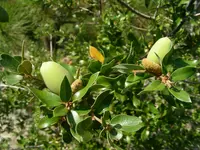
The acorn cups and young twigs often have a dense layer of golden to yellow hairs, which is the feature behind the species name chrysolepis, meaning golden scale in Greek.

Evergreen among oaks

Unlike most North American oaks, this species keeps its thick leaves year-round, allowing it to photosynthesize through mild winters in its native California and southwestern habitats.

Extreme habitat tolerance

This tree naturally occurs from hot, exposed chaparral slopes to cooler canyon bottoms and montane forests, showing high tolerance to varied temperatures, light levels, and soil types.

Botan icon

Did you know?

Some individuals of this species are estimated, based on ring counts of fallen trunks and growth rates, to reach ages of well over 300 years, making them long-lived structural anchors of many western North American woodland ecosystems.

FAQs about canyon live oak

This species is evergreen in most climates, keeping foliage year-round, though older leaves shed gradually as new ones form. In colder or exposed sites, some trees may look briefly semi-evergreen after harsh winters or drought stress.

Grow Healthy Plants with Botan Care

Keep your plants happy and healthy with plant identification, disease detection, and easy care guidance.

Botan plant care app — identify plants on mobile

Explore More Plants