Windfirm training
In the first 3–5 years, selectively prune and lightly shorten competing leaders after storms so the tree develops a single sturdy central leader that resists wind and reduces breakage risk later.

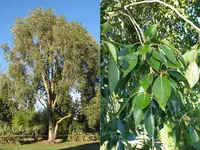
Simon poplar (Populus simonii) is a fast-growing deciduous tree valued for its narrow, upright crown and fine-textured foliage. It is often used in windbreaks, shelterbelts, and screens. Native to northern China and Mongolia, it tolerates cold climates and exposed sites better than many other poplars. The tree shows strong apical growth, forming tall, columnar lines rather than wide shade canopies. Growth is vigorous but lifespan is moderate, so it suits functional plantings more than long-term specimen use. It generally prefers full sun, moist but well-drained soil, and benefits from consistent moisture during establishment, which helps clarify how to care for Simon poplar in managed landscapes.

Care Difficulty
Moderate Care

Light Preference
Full Sun

Water Requirements
Regular Water

Temperature Preference
Cold Hardy

Hardiness Zone
3–7

Soil Texture
Sandy, Loamy, Clay

Soil pH
Acidic (5.5–6.5), Slightly acidic (6.5–7.0)

Soil Drainage
Moist but well-drained

Fertilization
Minimal (feed rarely)
Scan your plant to receive care tips personalized for your specific plant
Available on iOS and Android
This fast-growing tree prefers bright, open conditions to develop a sturdy crown and healthy foliage.
This species favors consistently moist but not saturated soil, especially during its establishment years.
This hardy tree tolerates a wide temperature range but grows best in cool to moderately warm climates.
This hardy poplar tolerates a wide humidity range and rarely needs special humidity management outdoors.
Populus simonii prefers deep, moist, well‑structured soil that drains freely but does not dry out quickly.
This fast-growing tree is generally unsuitable for long-term container growing due to vigorous roots and large mature size.
This fast-growing tree benefits from moderate feeding to support strong shoot and root development.
Pruning helps keep Populus simonii structurally sound and manageable in size.
This species is usually field-grown and transplanted young rather than kept long term in containers.
Propagation of Populus simonii is commonly done from cuttings rather than seed for predictable growth.
Mature trees are cold hardy and usually require minimal winter care in most temperate climates.

Plant Health Check
Not sure what's wrong with your plant? Check your plant's health inside the app.
This species is naturally distributed across northern China and adjacent regions of Mongolia, where it tolerates long, freezing winters better than many other poplars used in cultivation.
In its native climate, this poplar is known to break bud and leaf out early in spring, which helps it quickly capture light and start photosynthesis after snowmelt.
It has been widely planted in northern China in windbreaks and shelterbelts to reduce wind speed, stabilize soils, and protect crops, reflecting its fast growth and good adaptability to exposed sites.
This species is very fast-growing, often adding 60–120 cm per year under good conditions. Growth slows with age. Adequate moisture, fertile soil, and space for roots are key factors influencing vigor and long-term structure.
Keep your plants happy and healthy with plant identification, disease detection, and easy care guidance.