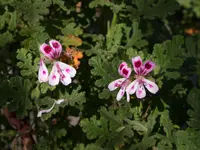
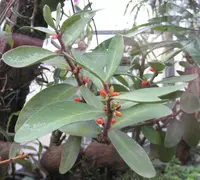
Slender Peperomia Care (Peperomia leptostachya)

Also known as: hairy peperomia
Slender Peperomia

About Slender Peperomia

Slender peperomia, Peperomia leptostachya, is a compact tropical houseplant from Central and South American forests, where it grows as an understory plant in warm, shaded habitats. It belongs to the pepper family and stays relatively small, which makes it suitable for shelves, desks, and mixed plant displays.

The plant typically forms upright to slightly trailing stems with small, smooth leaves arranged along the shoots, giving it a fine, airy look rather than a bushy mass. Its modest size, slow to moderate growth, and tolerance of typical indoor humidity make it relatively easy to manage.

Understanding how to care for Slender Peperomia mainly involves providing bright, indirect light, moderate moisture, and a free-draining potting mix that never stays waterlogged for long periods.

Main Plant Requirements

Care Difficulty

Easy Care

Light Preference

Bright Indirect Light

Water Requirements

Moderate Water

Temperature Preference

Tropical / Frost Sensitive

Hardiness Zone

11–12

Soil Texture

Loamy, Peaty, Organic-rich

Soil pH

Acidic (5.5–6.5), Slightly acidic (6.5–7.0)

Soil Drainage

Well-drained

Fertilization

Light (every 4–6 weeks)

Get Personalized Care Plan

Scan your plant to receive care tips personalized for your specific plant

Available on iOS and Android

How to Care for the Slender Peperomia

This species prefers bright, indirect light with brief gentle sun rather than intense exposure.

  • Provide 6–8 hours of bright, filtered light each day, such as near an east or lightly shaded south window for Slender Peperomia.
  • Tolerates partial shade, but in low light stems may stretch and leaves lose color; move it closer to a bright window if growth becomes thin.
  • Avoid harsh midday sun, especially in summer, since direct rays can scorch leaves; use sheer curtains or place slightly back from the window.

Watering should mimic a light, periodic rainforest pattern rather than constant moisture.

  • Allow the top 2–4 cm of soil to dry before watering Peperomia leptostachya, then water thoroughly so excess drains away.
  • In spring and summer, expect to water more often as growth speeds up; in fall and winter, extend the dry period slightly to prevent root rot.
  • Watch leaves as indicators: soft, yellowing, and sometimes translucent leaves suggest overwatering, while limp, curling, or drooping leaves with very dry soil indicate underwatering.

This plant prefers stable, warm conditions without strong temperature fluctuations.

  • Aim for 65–80°F (18–27°C) for steady growth, with slightly cooler nights still acceptable within this range.
  • Protect from cold; growth slows below 60°F (16°C), and damage may occur near 50°F (10°C), especially with prolonged exposure or wet soil.
  • Avoid drafts from heaters, air conditioners, or open doors, and in hot spells above 85°F (29°C), increase air movement and shade from direct sun to limit heat stress.

This species prefers moderately moist air but usually adapts to typical indoor humidity.

  • Aim for 40–60% humidity to support steady growth and reduce leaf-edge browning.
  • It tolerates short spells of drier air, but prolonged levels below 30% may cause curled, crispy leaf tips.
  • If caring for Slender Peperomia in very dry rooms, group plants, use a small humidifier, or place pots on a pebble tray.

Use a loose, airy, fast-draining mix that mimics a fine, organic-rich forest floor.

  • Combine roughly 50% peat or coco coir with 30% perlite and 20% fine orchid bark to create a light, chunky structure.
  • Ensure excess water drains quickly; water should flow through within seconds, not sit pooled on the surface.
  • Keep pH slightly acidic to neutral (6.0–7.0), which supports nutrient uptake and prevents micronutrient lockout.
  • Avoid dense garden soil or mixes dominated by fine compost, which compact easily and suffocate the shallow roots of Peperomia leptostachya.

This species is well-suited to container culture for shelves and small spaces.

  • Choose a shallow, wide pot to match its relatively fine, surface-skimming roots and spreading habit.
  • Select breathable materials like unglazed terracotta when extra moisture evaporation is needed in cool, dim rooms.
  • Stabilize lightweight pots in hanging or high positions so trailing stems do not tip the container as they elongate.

Peperomia leptostachya is a light feeder but benefits from modest nutrition during active growth.

  • Use a balanced liquid fertilizer (for example 10-10-10 or 20-20-20) diluted to 1/4–1/2 strength.
  • Feed every 4–6 weeks in spring and summer, skipping applications if growth is slow or light is low.
  • Do not fertilize in late fall and winter, when growth naturally tapers indoors.
  • Avoid compost-heavy mixes or frequent slow-release pellets, which can cause excess salts in small pots.

Peperomia leptostachya responds well to light, targeted pruning that maintains a compact form.

  • Best time is late winter to early spring, just before active growth starts.
  • Use clean, sharp scissors or snips to remove dead, damaged, or yellowing leaves at the base.
  • Pinch or cut back leggy stems above a node to encourage branching and denser foliage.
  • Thin crowded stems slightly to improve light penetration and air movement around the plant.

This compact peperomia prefers slightly tight pots and only occasional repotting.

  • Repot every 2–3 years, or when roots circle the pot, drainage slows, or growth stalls despite good light.
  • Aim for early spring, shifting into a container just 2–3 cm wider with fresh, airy potting mix.
  • Water lightly before repotting, then gently loosen the root ball to reduce circling roots without tearing.
  • After moving Peperomia leptostachya, water once to settle soil, then keep slightly drier and shaded for 5–7 days.

This species is commonly multiplied by stem or leaf cuttings under warm, stable conditions.

  • Take 5–8 cm stem cuttings in spring or early summer, each with several leaves and at least 1 node.
  • Root in moist, well-drained mix at 70–80°F with bright, indirect light and high humidity.
  • Insert nodes just below the surface and keep the medium barely moist, not wet, to avoid rot.
  • Optionally divide dense clumps when repotting, keeping healthy roots and foliage on each section.

As a tropical houseplant, this peperomia needs protection from cold, especially in drafty homes.

  • Keep indoor temperatures around 65–75°F and avoid dips below 55°F, where chill damage starts.
  • Move any outdoor containers inside before nights reach 50°F, choosing bright but indirect light.
  • Reduce watering so the top 2–3 cm of soil dry between waterings, as growth slows in winter.
  • Keep foliage away from cold windows and heating vents to limit temperature swings and stress.

Care Tips

Use light staking

Provide a thin, unobtrusive stake or small trellis and loosely tie longer stems with soft plant ties to prevent breakage and keep the plant compact as it matures.

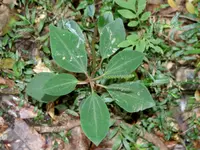
Regular stem pinching

Pinch back just the soft tips of overly long stems with clean fingers or scissors to encourage bushier side branching and prevent the plant from becoming sparse at the base.

Rotate for symmetry

Rotate the pot 90° every 1–2 weeks so all sides receive similar light, which keeps the plant evenly full instead of leaning heavily to one side.

Gentle leaf cleaning

Wipe the leaves and petioles occasionally with a slightly damp, soft cloth to remove dust that can reduce photosynthesis and to help you spot early signs of pests while caring for Slender Peperomia.

Check roots by feel

Gently squeeze the nursery pot or slide the root ball out every few months to check for circling, dense roots, and repot to a slightly larger container if the root mass is tight and water starts running straight through.

Common Pests and Diseases

Mealybugs

This pest hides in leaf joints and along stems, sucking sap and causing distorted, yellowing foliage and sticky honeydew deposits. Symptoms include cottony white clusters, especially on sheltered parts of the plant.

Solution

Isolate the plant, then dab visible insects with cotton swabs dipped in 70% isopropyl alcohol and gently wipe affected areas. Rinse foliage with lukewarm water, repeat alcohol spot-treatments weekly until no new clusters appear, and improve light and air circulation to discourage reinfestation.

Spider mites

These insects are tiny sap-feeders that thrive in warm, dry indoor air, causing stippled, dull leaves and fine webbing between stems and foliage. Symptoms include slow decline and dry, speckled patches on the upper leaf surface.

Solution

Shower the plant with lukewarm water to wash off mites and webbing, then raise humidity around the plant and avoid placing it near heat vents. For persistent infestations, apply insecticidal soap or a neem oil spray to both leaf surfaces every 7–10 days, monitoring new growth closely.

Fungus gnats

This pest is attracted to consistently moist potting mix, with adults flying around the plant and larvae feeding on fine roots. Symptoms include soggy soil, slow growth, and small black flies emerging when the pot is disturbed.

Solution

Allow the top 2–3 cm of the mix to dry between waterings, then use yellow sticky traps to capture adults and reduce breeding. If larvae are present, drench the soil with a biological control containing Bacillus thuringiensis israelensis or use a sand or fine gravel top-dressing to make the surface less suitable for egg-laying.

Oedema

This disease-like physiological disorder occurs when roots absorb more water than leaves can transpire, leading to water-soaked blisters that turn corky on the undersides of leaves. Symptoms include rough, bumpy patches without signs of pests or fuzzy mold.

Solution

Reduce watering frequency so the mix dries slightly between waterings and avoid sudden changes in light or temperature. Provide bright, indirect light, maintain stable indoor temperatures, and prune severely affected leaves if they do not improve, while adjusting watering long term as part of Peperomia leptostachya care.

Bacterial leaf spot

This disease causes small, water-soaked lesions that enlarge into brown or black spots with a yellow halo, often starting on lower, more crowded leaves. Symptoms include irregular patches that may coalesce, leading to partial leaf collapse in humid, poorly ventilated conditions.

Solution

Remove and discard affected leaves, cleaning scissors with alcohol between cuts, and avoid wetting the foliage during watering. Improve air movement, space plants so leaves do not touch, and keep the potting mix slightly drier; if spread continues, discard severely affected plants to protect nearby specimens.

Interesting Facts

Epiphytic forest dweller

This species is naturally found growing as an epiphyte on tree trunks and branches in humid tropical forests, anchoring its roots in moss and organic debris rather than in deep soil.

Slender rat-tail spikes

Its distinctive thin, tail-like flowering spikes carry many tiny, tightly packed flowers that are mainly pollinated by small flying insects in its native range.

Succulent-like leaf tissue

The leaves contain semi-succulent tissues that can store water, an adaptation that helps the plant tolerate brief drying of the substrate in its airy, epiphytic habitats and is central to Peperomia leptostachya plant care.

FAQs about Slender Peperomia

This species performs best indoors in stable, warm, draft-free conditions with moderate humidity. Outdoors, it only suits frost-free, shaded, very mild climates. For most households, Slender Peperomia indoor care offers more predictable, controlled growth and appearance.

Grow Healthy Plants with Botan Care

Keep your plants happy and healthy with plant identification, disease detection, and easy care guidance.

Botan plant care app — identify plants on mobile

Explore More Plants