Basket planting
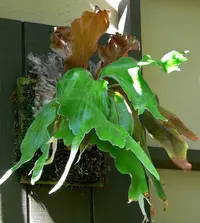
Grow this species in a hanging basket with a coarse, fast-draining mix so the arching, spiny leaves and fruiting spikes can hang freely without crowding or mechanical damage.

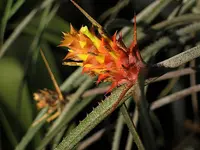
Acanthostachys strobilacea is a small terrestrial or epiphytic bromeliad known for its arching, spiny leaves and compact rosette form. It often produces pinecone-like flower spikes with bright, ornamental bracts.
This species is native to subtropical regions of South America, where it grows on trees or in well-drained, rocky soils. Its growth habit stays relatively low and clumping, making it suitable for containers and mixed plant displays.
It is considered moderately easy to grow when given bright, filtered light, good air circulation, and a fast-draining mix. Understanding how to care for Acanthostachys strobilacea mainly involves balancing moisture without waterlogging the roots or rosette.

Care Difficulty
Moderate Care

Light Preference
Partial Sun

Water Requirements
Moderate Water

Temperature Preference
Tropical / Frost Sensitive

Hardiness Zone
10–11

Soil Texture
Sandy, Loamy, Organic-rich

Soil pH
Acidic (5.5–6.5)

Soil Drainage
Well-drained

Fertilization
Light (every 4–6 weeks)
Scan your plant to receive care tips personalized for your specific plant
Available on iOS and Android
This terrestrial bromeliad thrives with bright, indirect light and some gentle direct sun each day.
This bromeliad prefers light, consistent moisture with excellent drainage and brief drying between waterings.
This species prefers warm, frost-free conditions and reacts quickly to cold extremes.
This bromeliad prefers moderately humid air but tolerates average home conditions if not extremely dry.
This species prefers a loose, airy mix that drains quickly yet holds slight, even moisture around the roots.
This bromeliad is well suited to container cultivation due to its compact, clumping habit.
This bromeliad benefits from light, targeted feeding rather than heavy fertilization.
Pruning needs are minimal and mainly focus on cleanliness and maintaining a tidy rosette.
This compact bromeliad grows well in small containers and only needs repotting occasionally.
Propagation of this species is most reliable through division of offsets, called pups.
This bromeliad is frost-sensitive and needs protection in regions with cold winters.

Plant Health Check
Not sure what's wrong with your plant? Check your plant's health inside the app.
This bromeliad forms dense, cone-shaped flower spikes that resemble miniature pineapples, with bright yellow to orange bracts that can last for several months under suitable conditions.
In nature, its stiff, spiny leaf rosettes often trap organic debris and sometimes harbor ants, which can increase nutrient availability to the plant as the trapped material and insect waste decompose.
It naturally grows both as an epiphyte on trees and on rocky or sandy substrates on the ground in parts of Brazil, Paraguay, and Argentina, showing notable adaptability to different microhabitats.

This species was first described in the 19th century and belongs to a very small genus within the bromeliad family, making it of particular interest to botanists studying the evolution and diversification of Neotropical bromeliads.
This bromeliad usually flowers only once per mature rosette, then produces pups that will bloom later. Sparse flowering often comes from insufficient light, poor nutrition, or stress from repotting or cold. Be patient and keep conditions stable.
Keep your plants happy and healthy with plant identification, disease detection, and easy care guidance.