Bud load control
Thin crowded flower buds so clusters are spaced 3–5 cm apart along the twig, which reduces post-bloom stress and helps maintain branch strength for future flowering when growing Yellow Mai.

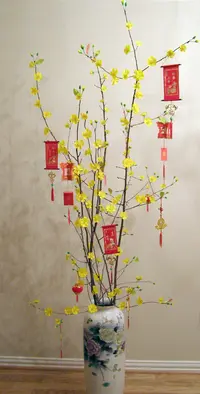
Yellow Mai (Ochna integerrima) is a small evergreen tree or shrub valued for its bright yellow spring flowers and decorative, changing fruits. It is widely grown in Southeast Asia and is especially associated with Lunar New Year displays. Plants have a fairly upright, branching habit with small, glossy leaves that give a neat, compact look when pruned. Flowering can be more reliable in warm, sunny climates, so it may be challenging in cooler regions or low light homes. It prefers bright light, steady warmth, and well-drained soil, which guides most ways to care for Yellow Mai.

Care Difficulty
Moderate Care

Light Preference
Full Sun

Water Requirements
Moderate Water

Temperature Preference
Tropical / Frost Sensitive

Hardiness Zone
10–11

Soil Texture
Sandy, Loamy, Organic-rich

Soil pH
Acidic (5.5–6.5), Slightly acidic (6.5–7.0)

Soil Drainage
Well-drained

Fertilization
Light (every 4–6 weeks)
Scan your plant to receive care tips personalized for your specific plant
Available on iOS and Android
Ochna integerrima needs strong light to flower well but benefits from some protection from intense midday sun.
Ochna integerrima prefers evenly moist, well-drained soil with slight drying between waterings.
This species thrives in warm, frost-free conditions and reacts poorly to cold snaps.
This species benefits from moderate air moisture but usually adapts to typical indoor humidity.
This species prefers a loose, slightly acidic, sharply drained medium that still holds moderate moisture.
This species is suitable for container growing when the pot is chosen to match its woody, shrubby root system.
Ochna integerrima benefits from moderate feeding to support flowering and healthy foliage.
Ochna integerrima responds well to light structural pruning that maintains a compact, flowering form.
This species is often grown as a landscape shrub, but container-grown plants benefit from periodic root attention.
Ochna integerrima can be propagated, but success improves when timing and conditions are controlled carefully.
This tropical shrub is frost-sensitive and needs thoughtful winter management in cooler climates.

Plant Health Check
Not sure what's wrong with your plant? Check your plant's health inside the app.
In southern Vietnam, this species is a traditional Tet New Year ornamental tree, prized for its profuse yellow blossoms that symbolize prosperity and good fortune.
After flowering, the plant develops bright red, fleshy pedicels that contrast strongly with the attached glossy black drupes, creating a distinctive tri‑color display that attracts birds as seed dispersers.
In its native habitats, the plant grows as a woody shrub or small tree with tough, glossy leaves and a deep root system that help it withstand dry, sunny conditions in tropical monsoon climates.

In traditional Vietnamese bonsai art, this species is one of the most highly valued native trees, and some carefully trained specimens are reported to be passed down for many decades as family heirlooms, being shaped and timed to bloom exactly for the Tet holiday each year.
Lack of flowering is often linked to insufficient light, heavy pruning at the wrong time, or nutrient imbalance with too much nitrogen. Mild winter chill and a short dry rest period often help trigger flower bud formation.
Keep your plants happy and healthy with plant identification, disease detection, and easy care guidance.