Rock garden placement
Position plants so stems can spill over edges of rocks, walls, or raised beds, which keeps foliage drier, reduces rot at the crown, and shows the flowering mat to best effect.

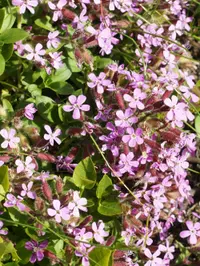
Rock soapwort, Saponaria ocymoides, is a low-growing perennial often used as a groundcover or trailing plant in rock gardens and walls. It forms dense, spreading mats of small leaves topped with many pink, star-shaped flowers in late spring to early summer.
This species is native to rocky slopes and alpine areas of southern and central Europe, which explains its good tolerance of poor, stony soils and dry conditions once established. It is generally easy to grow for beginners, as long as it has good drainage and plenty of light. Understanding how to care for Rock soapwort mainly involves avoiding soggy soil and heavy shade.

Care Difficulty
Easy Care

Light Preference
Full Sun

Water Requirements
Low Water

Temperature Preference
Cold Hardy

Hardiness Zone
3–8

Soil Texture
Sandy, Loamy, Rocky

Soil pH
Slightly acidic (6.5–7.0), Slightly alkaline (7.0–7.5)

Soil Drainage
Well-drained

Fertilization
Minimal (feed rarely)
Scan your plant to receive care tips personalized for your specific plant
Available on iOS and Android
This low-growing perennial prefers bright, open conditions to flower well.
This rock garden plant prefers slightly dry conditions and dislikes sitting in wet soil.
This hardy perennial tolerates a wide range of outdoor temperatures once established.
Humidity is rarely a concern for this species, which thrives in dry, open conditions.
This alpine groundcover prefers mineral, free-draining soil that dries quickly after rain.
This species can grow well in containers, especially troughs or rock-garden pots.
This alpine perennial needs only light feeding in lean, well-drained soil.
Pruning supports compact growth and extended flowering in Saponaria ocymoides.
This rock garden plant is usually grown in the ground and dislikes frequent disturbance.
Saponaria ocymoides is commonly propagated by seed, division, or softwood cuttings.
This perennial is cold hardy in most temperate climates and usually needs minimal winter care.

Plant Health Check
Not sure what's wrong with your plant? Check your plant's health inside the app.
The leaves and other green parts contain saponins, natural soap-like compounds that foam in water and were historically used in some regions for gentle washing of fabrics.
In the wild it often anchors itself in limestone screes, rocky ledges, and shallow crevices in the Alps and other European mountain ranges, forming low, spreading cushions that help stabilize thin soils.
Its mass of small pink flowers appears in late spring to early summer and can provide an important nectar source for early-season bees and hoverflies in its native habitats and in rock gardens.

Historical records from central and southern Europe describe this species being used in small quantities to wash delicate wool and lace, taking advantage of its mild saponin-based foaming action without the harshness of later chemical detergents.
This species forms low, spreading mats that can cover gaps between rocks or along borders, but it is not usually invasive. It spreads moderately by self-seeding and short stems, and is easy to control by light trimming.
Keep your plants happy and healthy with plant identification, disease detection, and easy care guidance.