Pinch Young Stems
Pinch out the soft tips of young stems once or twice in late spring to encourage a bushier plant with more flowering shoots and sturdier growth that is less likely to flop.

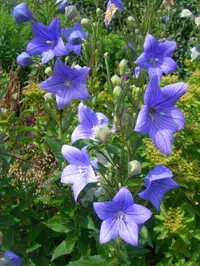
Balloon flower, Platycodon grandiflorus, is a compact, long-lived perennial grown mainly for its balloon-like flower buds that open into star-shaped blooms. It usually forms neat clumps of upright stems with blue, white, or pink flowers above simple, green leaves. Native to East Asia, it is commonly used in borders, rock gardens, and cottage-style plantings. This species is generally easy to grow, as it is cold hardy, tolerates a range of garden soils, and needs little maintenance once established. Gardeners who learn how to care for Balloon flower usually find it reliable in full sun to light shade with moderately moist, well-drained soil.

Care Difficulty
Easy Care

Light Preference
Full Sun

Water Requirements
Moderate Water

Temperature Preference
Cold Hardy

Hardiness Zone
3–8

Soil Texture
Sandy, Loamy, Clay

Soil pH
Acidic (5.5–6.5), Slightly acidic (6.5–7.0)

Soil Drainage
Well-drained

Fertilization
Minimal (feed rarely)
Scan your plant to receive care tips personalized for your specific plant
Available on iOS and Android
This perennial prefers bright outdoor sites with steady sun but not intense afternoon scorch.
This plant prefers evenly moist, well-drained soil that dries slightly between waterings.
This hardy perennial tolerates a wide temperature range but grows best in moderate conditions.
Humidity is usually not critical for Platycodon grandiflorus in typical home and garden conditions.
Platycodon grandiflorus grows best in loose, well-aerated, free-draining soil.
This species is suitable for container growing when given a deep, stable pot with reliable drainage.
Moderate feeding supports compact growth and abundant blooms in Balloon flower.
Thoughtful pruning keeps Platycodon grandiflorus tidy and encourages repeat flowering.
Platycodon grandiflorus forms a deep taproot, so transplanting must be done carefully and infrequently.
Propagation of Platycodon grandiflorus is most reliable from seed, with division used only for established clumps.
This perennial is cold hardy in much of the US and usually needs only basic winter care.

Plant Health Check
Not sure what's wrong with your plant? Check your plant's health inside the app.
The flower buds inflate like small balloons as air spaces form between the sepals and petals, then suddenly pop open into star-shaped blooms when the petal tissue splits along pre-formed lines of weakness.
This species is the only member of the genus Platycodon, making it taxonomically distinct among bellflower relatives in the Campanulaceae family.
It develops a thick, fleshy taproot that allows the plant to survive cold winters in USDA zones 3–8 and re-sprout reliably each spring from the same crown.

In East Asia, the root of this species has been used and formally documented for centuries in traditional medicine and modern pharmacological studies, mainly for its saponin compounds, which have been investigated for effects on inflammation and the immune system in controlled laboratory research.
Lack of flowers often comes from too much shade, excess nitrogen fertilizer, or young plants not yet mature. Overcrowding, drought stress, and heavy cutting back in spring can also reduce bud formation and seasonal display.
Keep your plants happy and healthy with plant identification, disease detection, and easy care guidance.