Dappled willow Care (Salix integra)

Also known as: hakuro nishiki, variegated willow
Dappled willow

About Dappled willow

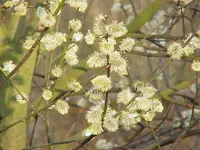
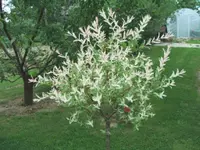
Dappled willow, Salix integra, is a compact deciduous shrub grown mainly for its colorful foliage rather than its flowers. It is often used in small gardens, borders, and as a focal shrub.

New leaves emerge pink, then mature to a soft mix of white and green, giving a variegated, dappled look. Young stems often show a reddish tone that adds winter interest.

This species is native to parts of East Asia, including Japan, and is adapted to cool to mild temperate climates. It grows quickly and responds well to pruning, which makes it relatively easy to shape and maintain.

It prefers full sun, consistent moisture, and well-drained soil, and these traits make it straightforward to care for Dappled willow in many residential landscapes.

Main Plant Requirements

Care Difficulty

Moderate Care

Light Preference

Full Sun

Water Requirements

Keep Soil Moist

Temperature Preference

Cold Hardy

Hardiness Zone

4–9

Soil Texture

Loamy, Clay, Silty

Soil pH

Acidic (5.5–6.5), Slightly acidic (6.5–7.0)

Soil Drainage

Moist but well-drained

Fertilization

Minimal (feed rarely)

Get Personalized Care Plan

Scan your plant to receive care tips personalized for your specific plant

Available on iOS and Android

How to Care for the Dappled willow

This shrub needs bright light to maintain strong growth and clear leaf variegation.

  • Provide 4–6 hours of direct sun daily, with a preference for morning sun and light afternoon shade, especially in hotter regions.
  • Tolerates partial shade, but Dappled willow develops best color in locations with dappled or east-facing light rather than deep shade.
  • In hot summers, strong afternoon sun can scorch leaves; in winter, plant in an open site where it still receives ample daylight to support spring growth.

This species prefers consistently moist soil and does not tolerate prolonged drying.

  • Aim for soil that feels evenly damp 5–10 cm down; do not let the root zone dry completely, especially during the first 2–3 growing seasons.
  • Increase watering during hot, windy periods when leaves wilt or curl slightly, and reduce input in cool, rainy weather to avoid waterlogged soil.
  • Provide soil with good structure and drainage; signs of overwatering include yellowing leaves and soft stems, while crisp leaf edges and slow growth indicate underwatering in Salix integra.

This shrub is cold hardy yet grows most vigorously in mild to moderately warm conditions.

  • Optimal growth occurs around 60–75°F (16–24°C), especially in spring and early summer when new shoots and variegated leaves develop.
  • Mature plants tolerate winter lows near -20°F (-29°C) in the ground, but young shrubs benefit from mulch over roots when temperatures fall below 10°F (-12°C).
  • Tolerates summer heat up to about 90°F (32°C) if soil stays moist; prolonged heat above this, combined with dry soil, can cause leaf scorch and stress.

This shrub is flexible about humidity but grows best in moderately moist air.

  • Aim for 40–60% humidity, which is typical outdoors in many regions where Dappled willow is grown.
  • Dry, hot winds can desiccate leaves, causing crisp edges and faster wilting even when soil is moist.
  • Increase local humidity by using windbreaks, grouping shrubs, or adding nearby water features rather than misting foliage.

Salix integra prefers consistently moist, structured soil that does not stay waterlogged.

  • Use a loamy, organic-rich soil that holds moisture yet feels springy rather than compacted when squeezed.
  • Ensure drainage that allows water to move through within a few minutes, using slightly raised beds or gentle slopes where possible.
  • Aim for slightly acidic to neutral pH around 6.0–7.0, incorporating compost to buffer minor pH issues and feed soil life.
  • Improve aeration and drainage by mixing in compost plus 10–20% coarse sand or fine pine bark, avoiding heavy clay that remains sticky after rain.

This willow can grow successfully in containers for several years if given a large, stable setup.

  • Choose a wide, heavy container that resists tipping as the top growth becomes dense and wind-sensitive.
  • Select a potting mix that combines moisture retention with drainage, such as peat- or coir-based mix amended with 20–30% pine bark or perlite.
  • Position the container where runoff can drain freely after heavy rain so the root zone does not sit in a constant water pool.

Salix integra responds well to modest feeding in garden soils but does not need heavy fertilization.

  • Apply a balanced slow-release fertilizer (e.g., 10-10-10) in early spring as new growth begins.
  • Use a light rate or half-strength dose, especially on young or container-grown Dappled willow.
  • Supplement with a thin layer of compost over the root zone once a year for soil health.
  • Stop feeding by late summer and avoid fertilizing during winter dormancy.

Pruning supports dense growth and good form in Salix integra.

  • Schedule main pruning in late winter or very early spring before buds break.
  • Remove dead, damaged, crossing, or crowded branches back to a healthy outward-facing bud.
  • Shorten long whips to maintain a compact, rounded shape and encourage colorful new shoots.
  • Use clean, sharp bypass pruners or loppers and make angled cuts just above buds.

This willow is most often grown in the ground, so focus on thoughtful transplanting or occasional container up-potting.

  • Transplant in early spring or early fall when temperatures are mild and soil is workable.
  • Move plants when growth slows, roots circle the pot, or the rootball dries out very quickly.
  • Replant at the same depth in a hole 2–3× wider than the rootball, loosening roots gently to reduce stress.
  • Water thoroughly after planting, keep soil evenly moist, and add mulch over the root zone to stabilize moisture.

Salix integra is most commonly propagated from cuttings taken during the growing season or while dormant.

  • Take softwood cuttings in late spring to early summer or hardwood cuttings in late winter.
  • Use 10–20 cm pieces with several nodes, removing lower leaves on softwood material.
  • Insert cuttings into moist, well-drained medium and keep evenly damp in bright, indirect light.
  • For hardwood cuttings, plant directly in garden soil or pots outdoors, ensuring at least 2 buds remain above soil.

Established Salix integra in the landscape is generally cold hardy and needs little winter care.

  • Apply 5–8 cm of mulch over the root zone in late fall, keeping it slightly away from the trunk.
  • In very cold or exposed sites, shield young stems from drying winds with burlap or windbreak fabric.
  • Move container-grown plants to a sheltered, unheated but frost-moderated area and water sparingly when soil is almost dry.

Care Tips

Renewal coppicing

Every 2–3 years, cut all stems back to 15–20 cm from the ground in late winter to stimulate strong, colorful new shoots and maintain a compact, uniform shrub.

Color-maximizing thinning

In early spring, selectively remove a few of the oldest, thickest stems at the base so more light reaches younger growth, which improves variegation and pink tones on new leaves.

Wind and snow support

In exposed sites, install 2–3 discreet stakes outside the root zone and loosely loop soft ties around the outer stems to reduce wind rock and snow breakage while still allowing natural movement.

Root zone cooling

Apply a 5–8 cm layer of organic mulch out to the drip line but keep it 5 cm away from the stems to keep roots cool, reduce water stress, and minimize competition from turf grass.

Vigilant sawfly checks

From spring through midsummer, inspect the undersides of leaves weekly for green caterpillar-like sawfly larvae and remove infested shoots by hand or prune them out early to prevent rapid defoliation when growing Dappled willow.

Common Pests and Diseases

Willow leaf beetle

This pest feeds on young leaves, causing shot holes, skeletonizing, and in heavy infestations near-complete defoliation of new growth. Symptoms include ragged foliage and clusters of small metallic blue or black beetles and larvae on shoots.

Solution

Hand-pick beetles and wipe off larvae from foliage, then hose the plant to dislodge remaining insects. If damage is ongoing, target larvae with a labeled spinosad or pyrethrin product, and reduce future problems by clearing leaf litter and pruning dense, low branches to improve light and airflow around the shrub.

Willow aphids

These insects cluster on tender shoots and undersides of leaves, sucking sap and causing curling, distortion, and sticky honeydew that can lead to sooty mold. New growth often appears stunted and covered with ants attracted to the honeydew.

Solution

Spray infested shoots with a strong stream of water every few days to knock aphids off, and prune heavily infested soft tips. For persistent colonies, use insecticidal soap or horticultural oil, ensuring thorough coverage of the undersides of leaves and young stems while avoiding application during high heat above 85°F.

Willow anthracnose

This disease causes irregular brown or black leaf spots, distorted new foliage, and dieback of young shoots, especially during cool, wet spring weather. Symptoms include blighted leaf tips, small cankers on twigs, and premature leaf drop on affected branches.

Solution

Prune out and discard blighted shoots several inches below visible damage, and remove fallen leaves to reduce fungal spores. Improve airflow by thinning congested interior stems, irrigate at soil level instead of overhead, and in repeatedly affected landscapes consider a preventive fungicide labeled for anthracnose at bud break following local extension guidance on Salix integra care instructions.

Willow scab

This disease leads to olive to black lesions along midribs and veins, causing leaves to wilt, curl, and turn brown, often in combination with other leaf blight fungi. Severe infections can kill young shoots and create a scorched, blighted appearance along branch tips.

Solution

Cut out infected shoots during dry weather, sterilizing pruners between cuts, and dispose of debris away from the planting area. Support recovery by keeping the shrub vigorous with regular watering during dry spells, avoiding overhead irrigation, and, in sites with a history of scab, using a labeled fungicide at leaf emergence if recommended by local extension resources.

Crown gall

This disease produces rough, corky galls at the base of stems or along lower branches where the bacterium enters through wounds. Symptoms include restricted sap flow, reduced vigor, and slow dieback when galls are extensive around the crown area.

Solution

Avoid injuring trunks and lower branches, and do not plant new willows into soil where infected plants were removed. For mild cases, carefully prune out and discard small galls and affected twigs, but in plants with large galls at the base, removal and replacement in a different location is often the most reliable long-term solution.

Interesting Facts

Natural variegated foliage

This species is one of the few willows that naturally produces stable white and pink variegation on young leaves, especially in ornamental cultivars like Salix integra 'Hakuro Nishiki'. The variegation comes from sectors of leaf tissue with reduced chlorophyll, which makes the foliage appear mottled or speckled.

Eastern Asia floodplain native

It is naturally distributed in Japan, Korea, northeastern China, and parts of Russia, where it grows along rivers, streams, and moist lowlands. This floodplain origin explains its strong tolerance for wet soils and periodic flooding compared with many other ornamental shrubs.

Fine-textured shrub structure

Unlike many tree-form willows, it usually develops as a multi-stemmed shrub with dense, slender twigs and relatively small leaves. This fine branching pattern makes it suitable for light screening, hedging, and small-garden use compared with larger willow trees.

Botan icon

Did you know?

In traditional Japanese gardens, selected forms of this species have long been used for their seasonal color changes, with spring growth often showing the strongest pink and white tones before maturing to greener summer foliage, which creates a deliberate contrast with darker evergreens and stones in garden compositions.

FAQs about Dappled willow

This shrub is considered fast-growing, often adding 30–90 cm of new growth per year under good conditions. Young plants establish quickly, forming a small shrub in a few seasons and reaching near-mature size within several years.

Grow Healthy Plants with Botan Care

Keep your plants happy and healthy with plant identification, disease detection, and easy care guidance.

Botan plant care app — identify plants on mobile

Explore More Plants