


Renewal pruning cycle
Every 3–4 years, remove about one-third of the oldest stems at ground level in late winter to keep shrubs dense, floriferous, and less prone to dieback in the center.

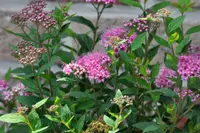
Japanese meadowsweet, Spiraea japonica, is a compact, deciduous shrub valued for its dense clusters of small pink or white flowers. It usually forms a low, rounded mound with fine-textured leaves that create a soft, tidy look in borders and foundation plantings.
This species is native to eastern Asia but is widely planted in North American and European gardens as an easy, reliable ornamental shrub. Its tolerance of pruning, varied soil types, and urban conditions makes it relatively simple to care for Japanese meadowsweet.
It prefers full sun to light shade, moderately moist, well-drained soil, and benefits from basic maintenance to keep its shape and flowering performance strong.

Care Difficulty
Easy Care

Light Preference
Full Sun

Water Requirements
Moderate Water

Temperature Preference
Cold Hardy

Hardiness Zone
4–9

Soil Texture
Sandy, Loamy, Clay

Soil pH
Acidic (5.5–6.5), Slightly acidic (6.5–7.0)

Soil Drainage
Moist but well-drained

Fertilization
Minimal (feed rarely)
Scan your plant to receive care tips personalized for your specific plant
Available on iOS and Android
This shrub prefers full sun for best flowering but tolerates some light shade.
This shrub prefers evenly moist but not saturated soil, especially during its first growing seasons.
This hardy shrub tolerates a wide temperature range but grows best in moderate conditions.
Spiraea japonica tolerates a wide humidity range and usually does not need special humidity management outdoors.
Spiraea japonica grows best in loose, well-drained mineral soils that still retain moderate moisture.
This shrub is suitable for container growing when provided with stable, well-drained conditions.
This shrub benefits from light feeding but often performs reasonably well in average garden soil.
Pruning maintains compact form and supports strong flowering on Spiraea japonica.
This species is most often grown in the ground and only occasionally maintained long-term in containers.
Spiraea japonica is commonly propagated to create uniform flowering hedges and mass plantings.
This shrub is generally cold hardy and needs minimal winter attention in most temperate climates.

Plant Health Check
Not sure what's wrong with your plant? Check your plant's health inside the app.
Individual flower clusters often open deep pink and then fade to light pink or almost white as they age, so a single shrub can show multiple shades at once during peak bloom.
This shrub tolerates hard pruning down to the woody crown and responds by producing dense new shoots and flowers on the same season’s growth, which is why it is widely used in managed landscapes.
Mature plants can produce many small seeds each season that are dispersed short distances by wind and water, which contributes to its spread and invasive behavior in parts of North America.

Several horticultural forms of this species, such as 'Goldflame' and 'Goldmound', were selected specifically for their golden spring foliage, which arises from natural variation within wild populations rather than from hybridization with other species.
Lack of flowers often comes from too much shade, heavy spring pruning, or excess nitrogen fertilizer. Old, congested stems also reduce flowering. Lightly thin older branches in late winter and ensure at least partial sun and balanced nutrition.
Keep your plants happy and healthy with plant identification, disease detection, and easy care guidance.

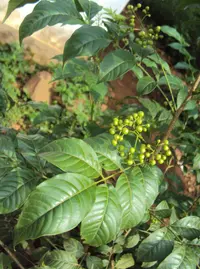
Cipadessa
Cipadessa baccifera

Oakleaf Hydrangea
Hydrangea quercifolia Snow Queen
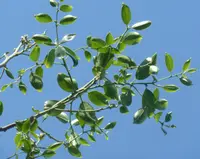
False Buffalo Thorn
Ziziphus rivularis
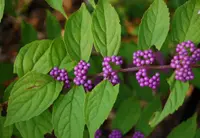
purple beautyberry
Callicarpa dichotoma
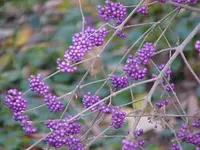
Bodinier's beautyberry
Callicarpa bodinieri
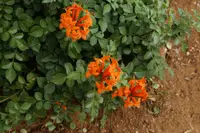
Cape honeysuckle
Tecomaria capensis
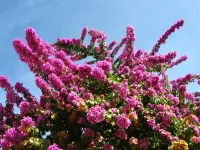
Great bougainvillea
Bougainvillea spectabilis
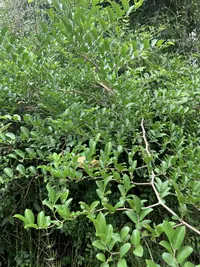
iguana hackberry
Celtis iguanaea