Bodinier's beautyberry Care (Callicarpa bodinieri)

Bodinier's beautyberry

About Bodinier's beautyberry

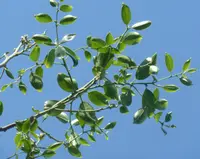
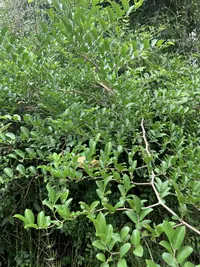
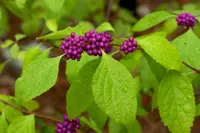
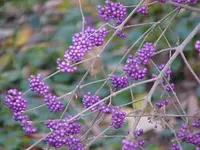
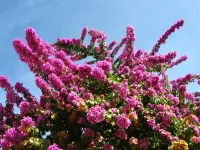
Callicarpa bodinieri, commonly called Bodinier beautyberry, is a deciduous shrub valued for its vivid clusters of purple berries in autumn and winter. It typically forms an upright, bushy shape with arching branches and simple green leaves that may take on soft fall color before dropping.

This species is native to central China and is often used in temperate gardens as a structural and seasonal highlight shrub. It is generally considered easy to grow, as it tolerates a range of soils and adapts to different garden conditions once established.

In practice, gardeners who want to know how to care for Callicarpa bodinieri should focus on providing sun to light shade, moderate moisture, and reasonably well-drained soil.

Main Plant Requirements

Care Difficulty

Easy Care

Light Preference

Full Sun

Water Requirements

Moderate Water

Temperature Preference

Cold Hardy

Hardiness Zone

5–8

Soil Texture

Sandy, Loamy, Clay

Soil pH

Acidic (5.5–6.5), Slightly acidic (6.5–7.0)

Soil Drainage

Moist but well-drained

Fertilization

Minimal (feed rarely)

Get Personalized Care Plan

Scan your plant to receive care tips personalized for your specific plant

Available on iOS and Android

How to Care for the Bodinier's beautyberry

This shrub needs generous light to fruit well without scorching foliage.

  • Provide 6–8 hours of direct sun daily, with preference for morning sun and some light afternoon shade in hotter regions to protect leaves from scorch.
  • Plant Callicarpa bodinieri in an open site; it tolerates partial shade (about 3–4 hours sun), but berry production and autumn color decline with less light.
  • In cooler climates, a full-sun position is best, while in hot summers a location with filtered light after 2–3 p.m. helps reduce heat stress.

This species prefers consistently moist, well-drained soil rather than frequent shallow watering.

  • Water when the top 3–5 cm of soil feels dry, applying a slow, deep soak so moisture reaches the root zone instead of brief surface splashes.
  • During the first 1–2 growing seasons, monitor closely in late spring and summer, watering more often during hot, dry spells and less in cool, rainy periods.
  • Watch for yellowing, soft leaves or dieback on young stems as signs of overwatering, and crisp, drooping leaves as an indicator that the shrub is too dry.

This shrub is cold-hardy yet grows best within a moderate temperature range during the active season.

  • Optimal growth occurs around 60–80°F (16–27°C) in spring and summer, supporting strong shoot growth and reliable flowering and fruit set.
  • Established plants tolerate winter lows down to about -10°F to -15°F (-23°C to -26°C), though young specimens benefit from mulch over the root zone in colder areas.
  • Short periods above 90°F (32°C) are tolerated if soil moisture is maintained, but prolonged extreme heat or sudden severe frosts after mild spells can damage new growth.

This deciduous shrub tolerates a wide humidity range and rarely needs special humidity management outdoors.

This shrub prefers moderately fertile, loose, well-drained ground that does not stay waterlogged.

  • Use a loam or sandy-loam soil with plenty of organic matter to hold moisture yet stay open in structure.
  • Aim for slightly acidic to neutral pH, roughly 6.0–7.0, which supports nutrient availability and healthy root growth in Callicarpa bodinieri.
  • In heavy clay, improve drainage and aeration by working in coarse sand, fine gravel, and well-rotted compost through the top 20–30 cm.
  • Avoid compacted, waterlogged, or very alkaline soils, which can lead to poor growth, root decline, and nutrient imbalance.

This species can be grown in containers for patios or small gardens if the pot is chosen carefully.

  • Select a deep, heavy container to provide stability for the woody framework and prevent the shrub from tipping in wind.
  • Use a free-draining shrub or tree mix and raise the pot slightly on feet so drainage holes never sit in standing water.
  • Position the container where it will not overheat on hard surfaces, since hot pots dry out rapidly and stress the root system.

This shrub grows well in average garden soil and only benefits from light feeding to support berry and shoot production.

  • Use a balanced slow-release granular fertilizer (for example 10-10-10) in early spring as new growth starts.
  • Apply a thin layer of compost around the root zone once a year to improve soil structure and nutrients.
  • Feed during the growing season only; avoid fertilizing in late fall or winter when the plant is dormant.
  • Use fertilizer at half the label rate to reduce the risk of root burn, especially in containers.

Pruning helps maintain shape, encourage new flowering wood, and keep Callicarpa bodinieri healthy.

  • Carry out main pruning in late winter or very early spring before buds break.
  • Remove dead, damaged, crossing, or very weak stems at the base using clean, sharp bypass pruners.
  • Thin out the oldest stems to open the center and stimulate strong new shoots that bear better fruit.
  • Lightly shorten long, leggy branches to maintain a balanced, compact shrub outline.

This species is usually grown in the ground, so transplanting young shrubs correctly is more important than frequent repotting.

  • Transplant in early spring or early fall when temperatures are mild and soil is workable.
  • Look for signs such as roots circling the container, poor drainage, or slow growth to decide when to shift a nursery plant up one pot size.
  • Set the shrub at the same soil level as in its pot, spreading roots outward and backfilling with well-drained soil, then water thoroughly.
  • Mulch and keep soil evenly moist for the first growing season to limit transplant shock and support root establishment.

Callicarpa bodinieri is commonly propagated from semi-ripe cuttings and sometimes from seed.

  • Take semi-ripe cuttings in mid to late summer, 8–10 cm long, from non-flowering shoots.
  • Remove lower leaves, dip the base in rooting hormone, and insert cuttings into a free-draining mix of sand and peat-free compost.
  • Maintain high humidity and gentle bottom warmth around 68–75°F with bright, indirect light until roots form.
  • Sow cleaned seeds in fall or late winter, keeping them cool and evenly moist, as they may need a natural cold period to germinate.

Mature shrubs are generally cold hardy, but young plants and container specimens benefit from simple winter care.

  • In zones with freezing winters, apply a 5–8 cm mulch layer over the root zone after the ground cools.
  • Avoid heavy pruning in fall so stems help shield lower buds through winter.
  • Move container plants to a sheltered, unheated area where temperatures stay above about 20°F and soil does not freeze solid.

Care Tips

Encourage Dense Framework

In late winter, select 3–5 strong basal shoots and lightly shorten them while removing weak, crossing, or inward-facing stems to build an open, goblet-shaped framework that carries heavier berry clusters with less breakage.

Boost Berry Display

For stronger fruit set, plant at least two genetically different beautyberries within 1–3 m to improve cross-pollination, and avoid heavy pruning of all new wood in the same year so there is enough young growth to flower.

Underplant For Contrast

Install low, evergreen groundcovers or grasses around the shrub to visually support the arching branches and make the purple berries stand out while also shading the root zone and keeping soil moisture more stable.

Use Temporary Support

In very exposed or windy sites, use discreet, soft ties to a low stake or nearby shrub during the first 1–2 years to prevent wind rock, then remove supports once the root system is well anchored.

Planned Renewal Cycle

Every 3–4 years, remove 1–3 of the oldest, thickest stems at ground level rather than cutting the whole shrub back at once, which maintains structure, reduces stress, and supports long-term success when growing Callicarpa bodinieri.

Common Pests and Diseases

Aphids

These insects cluster on young shoots and leaf undersides, sucking sap and causing distorted growth and sticky honeydew deposits that can attract sooty mold. This pest is most common on soft new growth and can weaken fruiting and flowering if populations are heavy.

Solution

Prune off heavily infested shoot tips, then hose the plant with a strong water spray to dislodge remaining insects. For persistent infestations, use insecticidal soap or a ready-to-use horticultural oil, applied thoroughly to shoot tips and leaf undersides on a cool, dry day, and repeat as needed according to label directions.

Scale insects

These insects appear as small, dome-shaped or flattened bumps on stems and sometimes leaves, feeding on sap and excreting honeydew that can lead to black sooty mold. This pest often settles along young woody stems of beautyberry and can reduce vigor if left unchecked.

Solution

Gently scrape or wipe off individual scales on light infestations using a soft brush or cloth, then dispose of debris. For larger populations, treat during the crawler stage with horticultural oil or insecticidal soap, making sure to coat stems thoroughly, and repeat at intervals recommended on the product label.

Leaf spot

This disease causes scattered tan to brown spots on leaves, sometimes with purple margins, which may coalesce and lead to early leaf drop in wet seasons. Symptoms include more severe spotting on crowded, shaded, or constantly damp plants.

Solution

Remove and discard affected fallen leaves to reduce fungal spore levels and avoid overhead watering that keeps foliage wet. Improve air circulation by thinning congested stems, and if spotting is severe for several seasons in a row, consider a preventative fungicide labeled for ornamental shrubs applied in spring as new foliage emerges.

Powdery mildew

This disease produces white, powdery patches on leaf surfaces, especially in shaded or poorly ventilated positions, leading to slightly distorted or yellowing foliage. Symptoms include cosmetic damage that can be more noticeable late in the season but rarely kills the shrub.

Solution

Increase light and airflow by light pruning of nearby plants and thinning crowded stems, and avoid overhead watering in the evening. Remove heavily affected leaves if practical, and where the problem recurs every year, apply a sulfur or potassium bicarbonate fungicide labeled for ornamentals at first sign of white patches, repeating as directed.

Spider mites

These pests are tiny sap-feeding arachnids that thrive in hot, dry conditions, causing fine stippling, dull foliage, and sometimes fine webbing between leaves and stems. This pest can make leaves look dusty or bronzed, particularly on plants growing near heat-reflective surfaces like walls or paving.

Solution

First, spray the shrub with a firm jet of water, especially on leaf undersides, to knock down mite numbers and remove dust. If populations remain high, use insecticidal soap or a light horticultural oil labeled for mites, applied thoroughly to both sides of the leaves in cooler parts of the day, and repeat at 7–10 day intervals until new growth appears clean; this is an effective base approach for Callicarpa bodinieri care instructions.

Interesting Facts

Unusual winter color

This species is notable for its dense clusters of glossy violet to purple berries that often persist into winter, providing strong color when most deciduous shrubs are bare.

Chinese mountain origins

It is native to central China, especially Sichuan and Hubei, where it grows in thickets and forest edges on mountain slopes, adapting to a range of temperate conditions.

Bird-dispersed seeds

The bright purple fruits are an important food source for birds in late season, and the seeds are spread through bird droppings, which helps the shrub colonize new sites.

Botan icon

Did you know?

The cultivated form Callicarpa bodinieri 'Profusion', selected in the early 20th century, has become one of the most widely grown beautyberry shrubs in temperate gardens because of its exceptionally heavy fruiting and vivid berry color compared with typical wild plants.

FAQs about Bodinier's beautyberry

Poor flowering and berry set usually come from too much shade, heavy pruning at the wrong time, or lack of a second compatible shrub for cross‑pollination. Stress from drought or nutrient-poor soil also reduces floral display.

Grow Healthy Plants with Botan Care

Keep your plants happy and healthy with plant identification, disease detection, and easy care guidance.

Botan plant care app — identify plants on mobile

Explore More Plants