Tamarisk Care (Tamarix gallica)

Also known as: French tamarisk, tamarix
Tamarisk

About Tamarisk

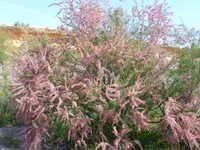
Tamarisk, or Tamarix gallica, is a deciduous shrub or small tree known for its feathery foliage and soft pink flower spikes. It often forms airy, fountain-like shapes. This species is native to coastal and riverine regions of southern Europe, North Africa, and western Asia, where it tolerates wind, salt, and drought. Its toughness and strong root system make it relatively easy to establish in challenging, dry, or sandy sites. However, it can spread aggressively in some climates and may be considered invasive. Gardeners who want to care for Tamarisk should provide full sun, well-drained soil, and enough space for its mature size.

Main Plant Requirements

Care Difficulty

Easy Care

Light Preference

Full Sun

Water Requirements

Low Water

Temperature Preference

Cold Hardy

Hardiness Zone

6–9

Soil Texture

Sandy, Loamy

Soil pH

Slightly acidic (6.5–7.0), Slightly alkaline (7.0–7.5)

Soil Drainage

Well-drained

Fertilization

Minimal (feed rarely)

Get Personalized Care Plan

Scan your plant to receive care tips personalized for your specific plant

Available on iOS and Android

How to Care for the Tamarisk

This sun-loving shrub needs strong, direct light to flower and maintain compact growth.

  • Provide 6–8 hours of full sun daily; coastal or windy sites are ideal for Tamarisk, which tolerates bright, exposed positions.
  • Accepts light partial shade, especially with morning sun and light afternoon shade, but flowering and density decline as shade increases.
  • In very hot inland summers, protect from extreme late-afternoon sun on reflective sites; in winter, ensure unshaded exposure so low-angle sun still reaches the canopy.

This plant is naturally drought-tolerant and prefers infrequent, deep watering over frequent light doses.

  • In the first growing season, water when the top 5–8 cm of soil are dry; apply a slow soak so water penetrates 20–30 cm deep, then allow soil to dry again.
  • Once established, Tamarix gallica usually relies on rainfall; water only during extended dry spells when foliage dulls, tips wilt slightly, or new growth stalls.
  • Use fast-draining, sandy or gravelly soil; watch for yellowing leaves and dieback as signs of prolonged drought, and pale, soft, dropping foliage as signs of overwatering.

This hardy shrub tolerates a wide temperature range but grows best with moderate warmth and cold winters for dormancy.

  • Optimal growing-season temperatures are about 60–80°F (16–27°C), with good air movement to reduce heat stress on fine foliage and stems.
  • Established plants tolerate winter lows near 0°F (−18°C) in many regions; young plants benefit from protection from severe, drying freezes and icy winds.
  • In hot climates with summer highs above 95°F (35°C), ensure soil does not stay waterlogged, since heat plus excess moisture increases root stress and decline.

Humidity is rarely a limiting factor for Tamarix gallica, which is well adapted to dry outdoor air.

  • Thrives in 30–50% humidity and typically does not need any artificial humidity increase outdoors.
  • Shows humidity stress mainly when roots are waterlogged rather than from dry air, leading to yellowing and dieback of young shoots.
  • In very arid, hot sites, reduce leaf moisture loss by applying mulch over the root zone rather than misting the foliage.

Tamarix gallica grows best in light, fast-draining mineral soils that never stay saturated for long.

  • Choose sandy or sandy-loam soil with low to moderate organic matter, avoiding dense, peat-heavy mixes that hold water.
  • Ensure very sharp drainage; on heavy ground, create a raised bed or mound with 60–80% coarse sand or grit mixed into the top 20–30 cm.
  • Tolerates a wide pH range from slightly acidic to strongly alkaline (about pH 6.0–8.5), including coastal, slightly saline soils.
  • For container mixes, combine roughly 2 parts sandy topsoil, 1 part coarse sand, and 1 part fine gravel to keep pores open and prevent compaction.

This shrub can be grown in large outdoor containers if provided with enough root space and excellent stability.

  • Use a deep, heavy container (such as thick-walled clay or concrete) to counterbalance the tall, airy canopy in windy sites.
  • Select a pot at least 45–60 cm wide so structural roots can spread, which reduces tipping and stress in summer heat.
  • Elevate the container on feet or bricks so drainage holes stay clear and runoff leaves quickly after storms, preventing root-zone stagnation.

This salt-tolerant shrub needs only modest feeding to maintain healthy growth and flowering.

  • Use a balanced slow-release fertilizer (around 10-10-10) or a light layer of compost in early spring.
  • Apply once at the start of the growing season; in poor soils a second light dose in midsummer is enough.
  • Dilute liquid feeds to half strength if used, and water well afterward to prevent root burn.
  • Stop feeding Tamarisk in late summer and avoid fertilizing during winter dormancy.

Pruning supports a tidy shape and good flowering on Tamarix gallica.

  • Carry out main pruning in late winter or very early spring before new growth starts.
  • Remove dead, damaged, crossing, or very weak stems back to the base or a strong side branch.
  • Shorten older flowering branches to encourage vigorous new shoots that bear next season’s flowers.
  • Use clean, sharp bypass pruners or loppers, making angled cuts just above a bud or junction.

This shrub is usually grown in the ground, so focus on careful transplanting when relocating plants.

  • Transplant in late fall or early spring when growth is slow and temperatures are mild.
  • Move when growth declines, roots circle a container, or the plant clearly outgrows its space.
  • Dig a wide hole, disturb roots as little as possible, and plant at the same soil depth as before.
  • Water thoroughly after planting, mulch 5–8 cm deep, and keep soil lightly moist until re-established.

Tamarix gallica is commonly propagated from cuttings for consistent, vigorous new plants.

  • Take semi-ripe or hardwood stem cuttings in late summer or late winter.
  • Use 10–20 cm cuttings with several nodes, removing lower leaves and any flowers.
  • Insert cuttings into a free-draining mix, keep evenly moist, and maintain bright, indirect light.
  • For seed, sow fresh seed on the surface of moist, sandy compost and keep slightly warm.

Established plants are quite cold hardy and usually need minimal winter care.

  • Mature shrubs tolerate typical temperate frosts once established in well-drained soil.
  • Apply a 5–8 cm mulch around the root zone in late fall, keeping it away from the stems.
  • In very cold or exposed sites, shelter young plants with a breathable shrub cover or windbreak.
  • Move container-grown plants to a sheltered, frost-free area and avoid waterlogged soil in winter.

Care Tips

Salt-tolerant placement

Use this shrub as a windbreak or frontline planting in coastal or roadside sites where salt spray or de-icing salt damage other species, but still mound soil slightly to keep the root crown from sitting in standing water.

Wind-shaping strategy

In very windy locations, plant in the direction of prevailing winds and lightly thin interior branches on the windward side so the canopy lets wind pass through rather than snapping major limbs.

Bank and dune stabilizer

On slopes, riverbanks, or sandy ground, plant in staggered rows and avoid frequent deep cultivation so the root system can knit the soil together and reduce erosion over several seasons.

Rejuvenation cycle planning

Every 3–5 years, schedule a hard renewal cutback in late winter, removing older stems close to the base to keep the shrub compact, floriferous, and easier to manage when growing Tamarisk in small gardens.

Volunteer seedling control

Inspect surrounding soil and nearby bare ground at least twice a year and pull young self-sown seedlings while they are under 15 cm tall to prevent unwanted spread and simplify long-term caring for Tamarisk.

Common Pests and Diseases

Tamarisk scale

This pest consists of small, immobile insects that form crusty white or brown patches on stems and branches, often causing twig dieback and reduced vigor. Symptoms include rough encrustations on younger wood and sticky honeydew in heavy infestations.

Solution

Prune out and destroy heavily infested twigs, then scrub reachable stems with a soft brush and water to remove scale coverings. For remaining insects, use a horticultural oil spray during the plant’s dormant or early growth period, ensuring thorough coverage of stems and branch crotches while monitoring for reinfestation as part of broader Tamarix gallica care.

Tamarisk aphid

These insects cluster on young shoots and foliage, sucking sap and causing leaf curling, distortion, and sticky honeydew that can lead to sooty mold growth. This pest often builds up quickly on sheltered, lush growth.

Solution

Dislodge colonies with a strong stream of water and remove heavily distorted shoots. If populations remain high, apply insecticidal soap or a light horticultural oil to new growth, repeating as needed and encouraging natural predators such as lady beetles by avoiding broad-spectrum insecticides nearby.

Leafhopper feeding damage

These insects feed on sap and create small pale or yellow flecks on leaves, which can lead to a stippled, washed-out appearance and reduced photosynthesis. Symptoms include quick movement of small wedge-shaped insects when branches are disturbed.

Solution

Reduce nearby tall weeds and grasses that harbor leafhoppers and inspect new growth regularly. If damage becomes significant, use insecticidal soap or a low-impact systemic product labeled for ornamental shrubs, applying in the evening and avoiding spray drift onto flowering plants that support pollinators.

Canker and dieback

This disease causes sunken, discolored lesions on stems and branch junctions, leading to progressive twig dieback and sparse, weakened crowns. Symptoms include dead tips that fail to leaf out and sometimes oozing or cracked bark along affected areas.

Solution

Cut back affected branches well into healthy wood, disinfecting pruning tools between cuts with alcohol or a 10% bleach solution. Improve plant vigor with proper watering and avoid trunk injuries, and in humid or high-rainfall areas increase spacing and airflow so stems dry quickly after rain, which helps limit further infection.

Fungal leaf spot

Symptoms include small brown to dark spots on leaves that may merge into larger blotches, causing premature leaf yellowing and drop in prolonged wet conditions. This disease is more common where foliage remains damp from overhead irrigation or poor air movement.

Solution

Rake and discard fallen leaves, and prune to open the canopy so foliage dries faster after rain or watering. Shift to ground-level or drip irrigation, and where leaf spot recurs, use a preventative ornamental shrub fungicide labeled for leaf spot early in the season, following label directions closely.

Interesting Facts

Native Mediterranean halophyte

This species naturally occurs along Mediterranean coasts and estuaries, where it thrives in salty, periodically flooded soils that would damage many other shrubs.

Distinctive summer flowering

Unlike some related tamarisk species that bloom earlier, this plant typically produces its dense, pale pink flower spikes in mid to late summer, providing nectar and pollen when many coastal shrubs have already finished.

Early French cultivation

It has a long history of cultivation in France, where it was planted along Atlantic and Mediterranean shores as an ornamental and windbreak shrub from at least the 18th–19th centuries.

Botan icon

Did you know?

In some coastal areas of western Europe, old plantings of this species have formed semi-natural windbreak belts along dunes and sea walls, where their flexible, fine-textured branches help diffuse strong onshore winds and trap airborne sand without forming rigid barriers.

FAQs about Tamarisk

Sparse or absent flowering often comes from pruning at the wrong time, excessive nitrogen fertilizer, too much shade, or drought stress. Lightly prune right after flowering, avoid heavy summer cuts, and keep soil moisture consistent without waterlogging.

Grow Healthy Plants with Botan Care

Keep your plants happy and healthy with plant identification, disease detection, and easy care guidance.

Botan plant care app — identify plants on mobile

Explore More Plants