Shape Young Framework
In the first 2–3 years, selectively head back overly long shoots by 10–20 cm in late winter to build a strong, evenly spaced branch framework that can support heavy flowering later.

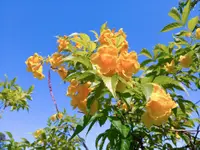
Esperanza, Tecoma stans, is a sun-loving flowering shrub or small tree known for its bright yellow, trumpet-shaped blooms. It has a naturally upright, bushy habit and can form a loose hedge or specimen plant in warm climates.
This species is native to the southern United States, Mexico, and parts of Central and South America, where it thrives in hot, dry locations. It is generally easy to grow, as it tolerates heat, drought, and poor soils once established.
Gardeners who want to care for Esperanza should know it performs best in full sun, with well-drained soil and only occasional extra water after it has rooted in well.

Care Difficulty
Easy Care

Light Preference
Full Sun

Water Requirements
Low Water

Temperature Preference
Tropical / Frost Sensitive

Hardiness Zone
8–11

Soil Texture
Sandy, Loamy, Rocky

Soil pH
Slightly acidic (6.5–7.0), Slightly alkaline (7.0–7.5)

Soil Drainage
Well-drained

Fertilization
Minimal (feed rarely)
Scan your plant to receive care tips personalized for your specific plant
Available on iOS and Android
Tecoma stans needs abundant direct sun to flower heavily and stay compact.
Tecoma stans prefers deep, infrequent watering once established, with time to dry between soakings.
This species thrives in warm climates and reacts poorly to freezing conditions.
Tecoma stans tolerates a wide humidity range and usually does not need special humidity management outdoors.
Tecoma stans prefers lean, well-drained soil that does not stay wet after watering or rain.
This species adapts well to container growing when given enough root space and very sharp drainage.
Tecoma stans benefits from moderate feeding during its active growing season for abundant flowering.
Tecoma stans responds well to mindful pruning that maintains shape and encourages heavy bloom.
Tecoma stans is more often grown in-ground, so focus on correct transplanting and limited container up-potting.
Tecoma stans is commonly propagated from semi-hardwood cuttings and seeds under warm conditions.
Tecoma stans needs winter protection in climates with freezing temperatures, especially when grown in containers.

Plant Health Check
Not sure what's wrong with your plant? Check your plant's health inside the app.
This species is native from the southern United States through Mexico and Central America into northern South America and the Caribbean, which helps explain its strong adaptability to varied warm climates when people grow Tecoma stans in gardens.
Tecoma stans forms associations with nitrogen-fixing soil bacteria, allowing it to improve low-fertility soils and sometimes act as a pioneer species on disturbed or degraded land.
In several tropical and subtropical regions such as parts of Africa, Asia, and the Pacific, this plant is listed as an environmental weed because it can escape cultivation, form dense thickets, and outcompete native vegetation.

In dry habitats, Tecoma stans can maintain flowering over much of the year, with its bright tubular blooms providing a critical nectar source for hummingbirds, bees, and butterflies during seasons when few other shrubs are in bloom.
Lack of blooms usually comes from too little sun, excessive nitrogen fertilizer, or heavy pruning at the wrong time. Ensure full light, use balanced or low-nitrogen fertilizer, and avoid cutting new wood that would carry flower buds.
Keep your plants happy and healthy with plant identification, disease detection, and easy care guidance.