oriental hawthorn Care (Crataegus orientalis)

oriental hawthorn

About oriental hawthorn

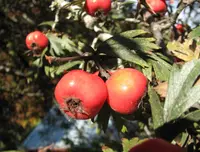
Oriental hawthorn, Crataegus orientalis, is a small deciduous tree or large shrub known for its dense branching, thorny stems, and attractive white spring blossoms. Later in the season it carries clusters of orange to red berries that are often used in traditional food and herbal preparations.

This species is native to rocky hillsides and open woodlands in southeastern Europe and western Asia, so it tolerates poor, stony soils and summer heat quite well. Its natural toughness and drought resistance make it relatively easy to grow once established, though it prefers full sun and well-drained soil. Understanding how to care for oriental hawthorn starts with recognizing that it is a hardy landscape plant rather than a delicate ornamental.


Main Plant Requirements

Care Difficulty

Easy Care

Light Preference

Full Sun

Water Requirements

Moderate Water

Temperature Preference

Cold Hardy

Hardiness Zone

5–8

Soil Texture

Sandy, Loamy, Clay

Soil pH

Slightly acidic (6.5–7.0), Slightly alkaline (7.0–7.5)

Soil Drainage

Well-drained

Fertilization

Minimal (feed rarely)

Get Personalized Care Plan

Scan your plant to receive care tips personalized for your specific plant

Available on iOS and Android

How to Care for the oriental hawthorn

This sun-loving shrub performs best in bright, open positions with strong light exposure.

  • Provide full sun for 6–8 hours daily; light morning sun plus some afternoon sun promotes dense growth and heavy flowering in oriental hawthorn.
  • Tolerates light partial shade (3–4 hours sun), but flowering and fruiting decline and shoots may stretch if shade is too deep.
  • In hot climates, avoid intense late-afternoon sun on very dry, shallow soils to reduce leaf scorch; ensure open exposure in winter for maximum light.

This species prefers moderately dry, well-drained conditions rather than constantly moist soil.

  • Water established Crataegus orientalis only when the top 3–5 cm of soil feel dry and cracks start to appear on the surface.
  • During the first 1–2 growing seasons, water more often in dry spells, then reduce frequency as roots deepen and drought tolerance improves.
  • Ensure sharply drained soil to prevent standing water; yellowing soft leaves and dieback suggest overwatering, while crisp brown leaf edges and premature leaf drop indicate underwatering.

This hardy shrub tolerates a wide temperature range but grows best in moderate conditions.

  • Active growth is strongest around 60–75°F (16–24°C), with good performance in typical spring and early summer conditions.
  • Mature plants withstand winter cold down to about 0°F (−18°C) once established, though young plants benefit from protection in their first 1–2 winters.
  • Handles dry summer heat up to about 90–95°F (32–35°C) if soil is not waterlogged; prolonged extreme heat or sudden hard frosts can stress new shoots.

This species tolerates a wide humidity range and rarely needs special humidity management outdoors.

Crataegus orientalis prefers mineral, well-structured soil that resists waterlogging yet retains some moisture around the roots.

  • Use a moderately fertile, sandy or gravelly loam with 20–30% coarse sand or grit to keep pores open.
  • Aim for slightly acidic to neutral pH around 6.0–7.5, avoiding strongly acidic or saline conditions.
  • Blend 10–20% mature compost into the top 20–30 cm to provide nutrients without creating a heavy, soggy layer.
  • Avoid compacted clay, standing water, or thick peat-based mixes that reduce aeration and promote root rot.

This species can be grown in containers for several years if the pot is large, stable, and well drained.

  • Select a deep, heavy container that resists tipping as the woody canopy becomes denser and more top-heavy.
  • Fill the pot with a gritty, loam-based mix containing 30–40% mineral grit to prevent chronic moisture retention.
  • Raise the container on feet or spacers so drainage holes clear quickly and roots avoid sitting in runoff.

This species grows well in average soil and needs only light feeding to support steady growth and fruiting in oriental hawthorn.

  • Apply a balanced slow-release NPK fertilizer in early spring at label rates around the drip line, not against the trunk.
  • On poor soils, top-dress with 2–5 cm of well-rotted compost once a year to improve structure and micronutrients.
  • During late spring to midsummer, one additional light granular feeding may be used if growth is weak; avoid high-nitrogen products.
  • Stop feeding in late summer so new growth can harden before winter, and never fertilize dormant trees in winter.

Pruning Crataegus orientalis is useful for safety, structure, and flowering, but should be done with restraint.

  • Carry out main pruning in late winter to very early spring, before bud break, using sharp bypass pruners or loppers.
  • Remove dead, diseased, crossing, and inward-growing branches first to improve airflow and reduce fungal risk.
  • Thin congested interior shoots rather than shortening all tips, which maintains a natural outline and stable framework.
  • Limit summer work to light shaping and removal of water sprouts, avoiding heavy cuts that stimulate excessive, weak regrowth.

This hawthorn is usually grown in the ground; focus on careful transplanting rather than frequent repotting.

  • Plan transplanting for late winter to early spring while the tree is dormant and soil is workable but not waterlogged.
  • Look for signs such as circling roots in a container, slow growth, or soil drying very fast before deciding to move it.
  • Dig a wide planting hole, handle the root ball gently, and keep the root flare at soil level to limit transplant shock.
  • Water deeply after planting, then maintain even moisture and a 5–8 cm mulch ring, keeping mulch away from the trunk.

Propagation of Crataegus orientalis is possible but slow and often undertaken by experienced growers or nurseries.

  • Sow seeds in autumn outdoors or after 3–6 months of cold stratification, as the hard seed coat delays germination.
  • Use deep containers with free-draining, gritty substrate and keep evenly moist in a bright, cool location.
  • Semi-ripe cuttings taken in midsummer may root with hormone powder, bottom heat, and high humidity, though success rates are modest.
  • Label all seed lots or cuttings clearly, as growth is slow and young plants take several years to reach planting size.

This hawthorn is generally hardy in temperate climates and needs minimal winter care once established in the landscape.

  • Mulch the root zone with 5–8 cm of organic material in late fall to buffer soil temperature and moisture.
  • In very cold or exposed sites, use windbreaks or burlap screens to reduce desiccating winter winds on young trees.
  • Move container-grown plants to a sheltered, unheated but frost-free area, keeping the root ball just slightly moist.

Care Tips

Encourage strong framework

In the first 3–4 years, selectively retain 3–5 evenly spaced main branches and remove steeply upright or crossing shoots in late winter to build a stable, open framework that resists storm damage and supports heavier fruiting later.

Use graft-compatible rootstock

When establishing new plants, choose nursery trees grafted onto drought-tolerant hawthorn rootstocks adapted to local soils, as these provide better anchorage, disease resistance, and long-term vigor than own-root seedlings.

Monitor for fire blight

Inspect young shoots and blossom clusters in late spring for blackened, shepherd’s-crook tips and promptly prune 20–30 cm below any suspected fire blight infection, disinfecting tools between cuts with 70% alcohol to limit spread.

Underplant with tough groundcover

Install low, dry-tolerant groundcovers under the canopy instead of frequent cultivation to reduce soil moisture swings, limit weed competition, and protect the shallow feeder roots from mechanical damage.

Plan for fruit drop

When growing oriental hawthorn near paths, consider placing the tree where fallen fruit will not create a slipping hazard and schedule light raking during peak drop to discourage wasps and rodents that may be attracted to fermenting berries.

Common Pests and Diseases

Hawthorn leaf spot

This disease causes small purple spots on leaves that expand into brown lesions, often leading to early leaf drop in late summer. Symptoms include thinning foliage and reduced vigor over repeated seasons.

Solution

Remove and dispose of fallen leaves to reduce fungal spores, and avoid overhead watering to keep foliage dry. Improve air circulation by thinning crowded branches, and in severe, recurring cases apply a labeled copper or chlorothalonil fungicide in early spring as new leaves emerge, repeating according to product directions.

Fire blight

This disease leads to blackened, scorched-looking blossoms and shoots that bend into a characteristic shepherd’s crook. Symptoms include oozing cankers on branches and rapid dieback during warm, wet conditions.

Solution

Prune out infected shoots at least 20–25 cm below visible damage during dry weather, disinfecting tools between each cut with 70% alcohol or a 10% bleach solution. Avoid high-nitrogen fertilization that promotes soft, susceptible growth, and in high-risk areas consider spring applications of a labeled copper-based spray during bloom as part of broader Crataegus orientalis care instructions.

Hawthorn leafminers

These insects tunnel within leaves, creating pale, winding or blotchy mines that cause leaves to yellow and drop early. This pest weakens trees when infestations are heavy over several years.

Solution

Remove and destroy heavily mined leaves as soon as damage appears to reduce the number of developing larvae. Encourage natural predators, and if monitoring shows consistent heavy infestations, use a systemic insecticide labeled for leafminers, applied in early spring according to label directions.

Aphids

These insects cluster on young shoots and leaf undersides, sucking sap and causing curling, distortion, and sticky honeydew that can lead to sooty mold. This pest often appears during flushes of tender new growth.

Solution

Spray colonies off with a firm stream of water and prune heavily infested soft tips if practical. For persistent problems, use insecticidal soap or horticultural oil, making thorough contact with leaf undersides and repeating at 5–7 day intervals as needed, avoiding application during very hot or sunny periods.

Hawthorn lace bugs

This pest feeds on the underside of leaves, causing fine yellow stippling on the upper surface and leaving dark varnish-like spots of excrement below. Heavy infestations can cause bronzing, leaf drop, and general decline in appearance.

Solution

Inspect leaf undersides regularly and prune out small, localized infestations. For larger problems, apply horticultural oil or insecticidal soap directed to the undersides of leaves, and improve plant vigor with proper watering and mulching so the tree better tolerates feeding.

Interesting Facts

Eastern Mediterranean native

This hawthorn species is naturally distributed from the Balkans and Greece through Turkey to parts of the Caucasus and the Levant, where it typically grows on dry, rocky slopes and open woodlands in montane areas.

Variable fruit coloration

Its haws (fruits) can range from yellow-orange to deep red depending on genetic line and local conditions, which makes wild populations visually diverse in autumn.

Important wildlife food

In its native range, the shrub provides nectar and pollen for many spring-flying insects and its late-season fruits are an important food source for birds and small mammals when other resources are declining.

Botan icon

Did you know?

In parts of Anatolia and neighboring regions, the ripe fruits are traditionally eaten fresh or processed into jams and condiments, and the species has been intentionally left or encouraged in field margins and village landscapes as a locally valued wild fruit tree, illustrating long-term coexistence between traditional agriculture and native scrub vegetation.

FAQs about oriental hawthorn

Lack of flowers often comes from too much shade, heavy pruning at the wrong time, or excess nitrogen fertilizer. Poorly drained soil and drought stress also reduce bud formation. Restore sun, adjust pruning, and balance nutrients to improve flowering.

Grow Healthy Plants with Botan Care

Keep your plants happy and healthy with plant identification, disease detection, and easy care guidance.

Botan plant care app — identify plants on mobile

Explore More Plants