Grit mulch layer
Apply a 1–2 cm layer of sharp grit or small gravel around the crown to keep leaf bases dry, reduce rot risk, and mimic the natural alpine scree habitat.

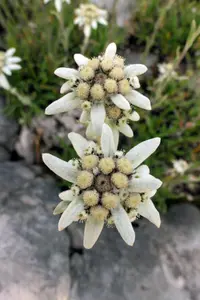
Antennaria rosea, also known as rosy pussytoes, is a low-growing perennial in the aster family that forms dense, mat-like groundcover. It produces soft, silvery-green foliage with small, woolly flower clusters held just above the leaves.
This species is native to dry, open habitats in North America and parts of Eurasia, where it thrives in rocky, well-drained soils and full sun. The related name Leontopodium leontopodioides is sometimes used in botanical literature.
Its slow, carpeting habit and tolerance of poor, dry soils make it suitable for rock gardens and naturalistic plantings. It is generally easy to care for Antennaria rosea when provided with good drainage and not overwatered.

Care Difficulty
Moderate Care

Light Preference
Full Sun

Water Requirements
Low Water

Temperature Preference
Cold Hardy

Hardiness Zone
3–7

Soil Texture
Sandy, Loamy, Rocky

Soil pH
Slightly acidic (6.5–7.0), Neutral (7.0)

Soil Drainage
Well-drained

Fertilization
Minimal (feed rarely)
Scan your plant to receive care tips personalized for your specific plant
Available on iOS and Android
Leontopodium leontopodioides prefers bright, open conditions that mimic alpine meadows with cool air and strong light.
Leontopodium leontopodioides prefers slightly dry, fast-draining conditions and is sensitive to waterlogged soil.
This species is a cool- to cold-hardy alpine that tolerates winter frost but dislikes prolonged heat and humidity.
This alpine species prefers cool, dry air and rarely needs special humidity management.
This plant needs lean, fast-draining, mineral-rich soil that mimics rocky alpine slopes.
This species is suitable for container growing when drainage and root conditions are carefully controlled.
Leontopodium leontopodioides is adapted to low‑nutrient alpine soils and needs only modest feeding compared with many garden perennials, similar to caring for Antennaria rosea.
Leontopodium leontopodioides benefits from light, timely pruning to maintain compact growth and flowering performance.
This species is usually grown in rock gardens or alpine beds, so focus on careful transplanting rather than frequent repotting.
Leontopodium leontopodioides is commonly propagated by division or seed under cool, bright conditions.
Leontopodium leontopodioides is generally cold hardy in temperate climates and needs only minimal winter care.

Plant Health Check
Not sure what's wrong with your plant? Check your plant's health inside the app.
This species naturally occurs along gravelly riverbanks and moist alpine meadows across parts of northeastern Asia, where it tolerates cold, snow cover, and periodic flooding better than many other edelweiss relatives.
The leaves and bracts are covered in dense, felt-like hairs that reduce water loss and protect tissues from high UV radiation and temperature swings typical of exposed mountain habitats.
Its flower heads form small, star-like clusters with whitish to pale yellow florets surrounded by woolly bracts, a more delicate and less showy structure compared with the iconic European edelweiss Leontopodium nivale.
This species is best suited to outdoor rock gardens or troughs. Indoors it often becomes weak and leggy due to low light and stagnant air. Antennaria rosea indoor care is challenging and rarely as successful as outdoor cultivation.
Keep your plants happy and healthy with plant identification, disease detection, and easy care guidance.