Optimize air movement
Place a small oscillating fan several feet away on a low setting to keep gentle air moving around the foliage and roots, which reduces fungal problems and helps the plant dry promptly after watering or misting.

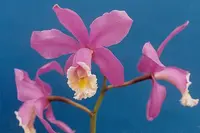
Harrison's Cattleya (Cattleya harrisoniana) is a classic epiphytic orchid, usually growing on trees with thick, cane-like pseudobulbs and showy, fragrant flowers. Each pseudobulb typically carries one or two leathery leaves, and flower clusters appear near the top in shades of pink to lavender with a contrasting lip.
This species is native to Brazil, where it experiences bright light, good air movement, and distinct wet and drier periods. Its preference for high light and regular airflow means it suits growers who can offer stable indoor or greenhouse conditions.
Understanding these natural conditions provides a good starting point for how to care for Harrison's Cattleya, especially regarding light exposure, watering rhythm, and open, fast-draining media.

Care Difficulty
Moderate Care

Light Preference
Bright Indirect Light

Water Requirements
Moderate Water

Temperature Preference
Tropical / Frost Sensitive

Hardiness Zone
12–13

Soil Texture
Sandy, Rocky, Organic-rich

Soil pH
Acidic (5.5–6.5)

Soil Drainage
Well-drained

Fertilization
Moderate (every 2–4 weeks)
Scan your plant to receive care tips personalized for your specific plant
Available on iOS and Android
This orchid prefers bright, indirect light with some gentle sun to flower well.
This species prefers a wet-dry cycle rather than constantly moist media.
This orchid grows best with warm days and slightly cooler nights.
This orchid prefers moderately high humidity for stable growth.
This species grows best in a very airy, fast-draining, organic-based orchid medium rather than traditional soil.
This orchid is very suitable for container growing when the pot supports fast drainage and root aeration.
This orchid benefits from modest, consistent feeding during active growth to support flowering.
Cattleya harrisoniana needs only light, targeted pruning to maintain health and flower performance.
This species prefers slightly tight pots but needs periodic repotting to keep the medium fresh and airy.
Division is the standard method for increasing Cattleya harrisoniana plants in home collections.
This orchid is frost-tender and must be kept above freezing in winter conditions.

Plant Health Check
Not sure what's wrong with your plant? Check your plant's health inside the app.
The flowers of this species produce a sweet, complex fragrance that is often strongest in the late afternoon and evening, which likely helps attract its natural pollinators during their most active period.
In the wild, this orchid grows mainly as an epiphyte on trees along river margins in southeastern Brazil, where high light and moving air help keep its roots healthy despite frequent humidity and mist.
This species is known for its naturally occurring color forms, ranging from lilac-pink to almost white, and plants from different Brazilian localities have been used by breeders to introduce distinct color traits into modern Cattleya hybrids.

Historically, this species has been considered a key parent in early large-flowered Cattleya breeding, and some classic hybrid lines still carry recognizable traits such as the flared lip pattern and flower shape inherited from C. harrisoniana.
Lack of blooms usually comes from insufficient seasonal temperature drop, inadequate light intensity, or not enough maturity on new pseudobulbs. A slight nighttime cool-down and strong, indirect light are key to Cattleya harrisoniana care and reliable flowering.
Keep your plants happy and healthy with plant identification, disease detection, and easy care guidance.