


Mark Dormant Clumps
Place discreet labels or stones where clumps grow before foliage dies back so you can avoid disturbing bulbs during summer soil work or replanting other perennials.

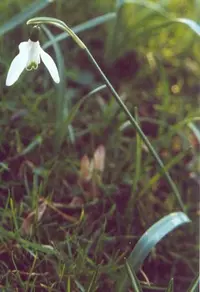
Common snowdrop, Galanthus nivalis, is a small bulb-forming perennial best known for its white, nodding, bell-shaped flowers that appear in late winter. Plants form low clumps of narrow, gray-green leaves.
This species is native to parts of Europe and naturalized in many temperate regions, often carpeting woodland edges, lawns, and borders. It spreads slowly by bulbs and self-seeding where conditions suit it.
Galanthus nivalis prefers cool conditions, moist but well-drained soil, and light shade, which makes it fairly easy to grow in many gardens. Understanding how to care for Common Snowdrop helps maintain healthy clumps that return reliably each year.

Care Difficulty
Easy Care

Light Preference
Partial Shade

Water Requirements
Regular Water

Temperature Preference
Cold Hardy

Hardiness Zone
3–8

Soil Texture
Loamy, Silty, Organic-rich

Soil pH
Acidic (5.5–6.5), Slightly acidic (6.5–7.0)

Soil Drainage
Moist but well-drained

Fertilization
Minimal (feed rarely)
Scan your plant to receive care tips personalized for your specific plant
Available on iOS and Android
This bulb prefers cool conditions with soft light rather than intense sun exposure.
This woodland bulb prefers consistently moist but not waterlogged soil.
This species is adapted to cold winters and cool springs rather than sustained heat.
Humidity is rarely a concern for Galanthus nivalis, which adapts well to typical outdoor conditions in temperate climates.
Galanthus nivalis prefers cool, moist, well‑structured ground that stays free‑draining year‑round.
This species can be grown in containers if the pot setup mimics its cool, moist but freely draining woodland conditions.
Galanthus nivalis is a low-feeding bulb that benefits from light nutrition in active growth on poorer soils.
Pruning for Galanthus nivalis is minimal and focuses on cleaning up foliage at the right time.
Common Snowdrop is usually grown in the ground and is moved by lifting and dividing clumps rather than frequent repotting.
Propagation of Galanthus nivalis is commonly done by division, with seeds used mainly for patient growers and breeding.
Galanthus nivalis is cold hardy in most temperate climates and generally requires little special winter care in the ground.

Plant Health Check
Not sure what's wrong with your plant? Check your plant's health inside the app.
This species often flowers while snow is still on the ground, using stored energy in its bulb to push leaves and buds through frozen soil and very low temperatures.
Its cells contain substances that act like antifreeze, helping prevent ice damage so flowers and leaves can survive repeated freeze–thaw cycles.
The seeds carry a small, fatty structure called an elaiosome that attracts ants, which transport the seeds to their nests, aiding dispersal and giving seeds a protected place to germinate.
An alkaloid first isolated from this species, galantamine, is now produced and used under strict medical supervision as an approved drug for treating cognitive symptoms in some forms of dementia, making this small spring bulb scientifically important far beyond horticulture.
Lack of flowers often comes from planting bulbs too shallow or too deep, crowding, or moving clumps too frequently. Nutrient-poor, very dry, or heavily waterlogged soil also reduces flowering, especially if foliage was removed too early the previous year.
Keep your plants happy and healthy with plant identification, disease detection, and easy care guidance.

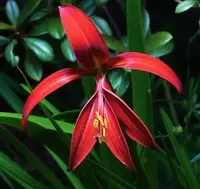
Jacobean lily
Sprekelia formosissima
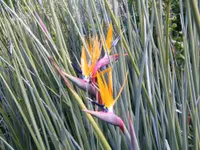
Narrow-leafed Bird of Paradise
Strelitzia juncea
Giant Leopard Plant
Farfugium japonicum var. giganteum
Autumn zephyrlily
Zephyranthes candida
narrowleaf onion
Allium amplectens
large camas
Camassia leichtlinii
American trailplant
Adenocaulon bicolor
prairie blazing star
Liatris pycnostachya