

Provide sturdy support
Install a rust-proof trellis or horizontal wires early in the season so stems can be loosely tied and spread, which keeps the plant upright, improves air movement around foliage, and encourages more flowering laterals.

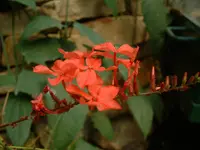
Whorled plantain, Plumbago indica, is an evergreen tropical shrub grown mainly for its bright red to deep pink tubular flowers and glossy green foliage. It usually forms a loose, branching clump that can be kept compact with pruning in gardens or large containers.
In nature it occurs in warm, humid regions of South and Southeast Asia, where it grows in light shade along forest edges. The plant prefers bright, filtered light, evenly moist but well-drained soil, and protection from cold. With stable warmth and humidity it is moderately easy to care for whorled plantain, but it can struggle in dry air or low light.

Care Difficulty
Moderate Care

Light Preference
Partial Sun

Water Requirements
Regular Water

Temperature Preference
Tropical / Frost Sensitive

Hardiness Zone
10–11

Soil Texture
Sandy, Loamy, Organic-rich

Soil pH
Acidic (5.5–6.5), Slightly acidic (6.5–7.0)

Soil Drainage
Moist but well-drained

Fertilization
Moderate (every 2–4 weeks)
Scan your plant to receive care tips personalized for your specific plant
Available on iOS and Android
Plumbago indica grows best with bright, gentle sun that avoids the harshest afternoon intensity.
Watering should keep the soil consistently moist but never saturated for healthy Plumbago indica growth.
Stable warmth with mild seasonal shifts supports reliable flowering and foliage quality.
Plumbago indica prefers moderately humid air but tolerates typical indoor ranges if not extremely dry.
Plumbago indica grows best in loose, well-drained, slightly acidic to neutral soil.
This species is suitable for container growing, especially on patios or in frost-prone regions.
Plumbago indica benefits from moderate, consistent feeding during its active growing season.
Plumbago indica responds well to thoughtful pruning that keeps it compact and blooming well.
Container-grown plants appreciate occasional repotting or transplanting to maintain healthy roots and vigor.
This species is commonly propagated from softwood or semi-ripe stem cuttings for consistent results.
This tropical shrub is frost sensitive and needs protection in regions with cold winters.

Plant Health Check
Not sure what's wrong with your plant? Check your plant's health inside the app.
The vivid red to deep pink flower color comes from naphthoquinone pigments such as plumbagin, which in this species are concentrated mainly in floral tissues rather than leaves and give the corollas their intense hue.
In parts of South and Southeast Asia, the shrub serves as a larval host plant for certain lycaenid butterflies, which lay eggs on the tender shoots so that emerging caterpillars can feed on the young foliage.
This species naturally occurs in the shaded understory of moist tropical forests from India through Southeast Asia, where it often grows at forest edges and clearings rather than in fully open, exposed sites.

Plumbago indica has been cultivated in Asian temple and courtyard gardens for centuries as an ornamental shrub, valued for its long blooming season and its ability to flower reliably in warm, monsoon-influenced climates even under relatively high humidity.
Poor flowering usually comes from insufficient light, nutrient imbalance, or lack of a short dry rest. Provide bright conditions, avoid heavy nitrogen fertilizer, and allow a brief drier period to encourage buds and repeat flowering.
Keep your plants happy and healthy with plant identification, disease detection, and easy care guidance.


northern brown pine
Podocarpus grayae
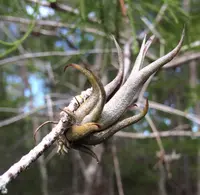
potbelly airplant
Tillandsia paucifolia
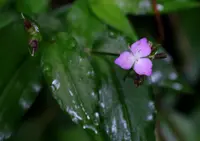
Dayflower tradescantia
Tradescantia commelinoides
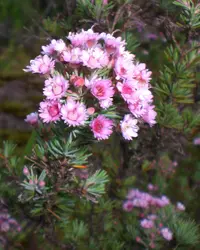
plumed featherflower
Verticordia plumosa
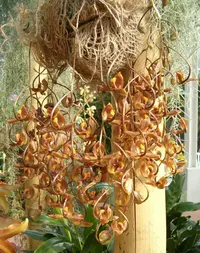
Gongora galeata
Gongora galeata
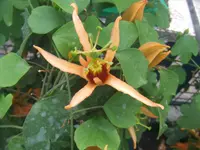
orangepetal passionflower
Passiflora aurantia
Bulbophyllum ngoyense
Bulbophyllum ngoyense
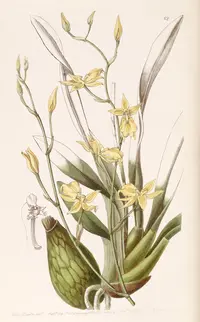
Golden Cyrtochilum
Cyrtochilum aureum