Use sturdy supports
Install a strong trellis, wire panel, or tensioned wires before planting, then gently tie new vines with soft ties every 15–20 cm to keep stems secure and reduce wind damage as they mature.

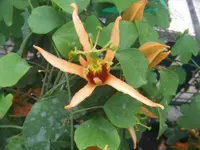
Orangepetal passionflower (Passiflora aurantia) is a twining, evergreen vine valued for its distinctive orange to salmon flowers and ornamental fruits. It naturally occurs in rainforests and coastal areas of eastern Australia and nearby Pacific regions.
The plant climbs using tendrils and suits trellises, fences, or large containers in mild climates. Flowers are smaller than many other passionflowers but appear over a long season, attracting pollinators.
Passiflora aurantia prefers bright light, moderate moisture, and well-drained soil, and it benefits from some humidity. With proper support and frost protection, it is moderately easy to grow once established, especially if the grower understands how to care for orangepetal passionflower in warm, sheltered sites.

Care Difficulty
Moderate Care

Light Preference
Partial Sun

Water Requirements
Moderate Water

Temperature Preference
Tropical / Frost Sensitive

Hardiness Zone
10–12

Soil Texture
Sandy, Loamy, Organic-rich

Soil pH
Acidic (5.5–6.5), Slightly acidic (6.5–7.0)

Soil Drainage
Moist but well-drained

Fertilization
Light (every 4–6 weeks)
Scan your plant to receive care tips personalized for your specific plant
Available on iOS and Android
This species prefers bright outdoor exposure with protection from harsh midday sun.
This vine prefers steadily moist but not saturated soil.
This subtropical vine grows best in warm, frost-free conditions.
This species prefers moderately humid air and reacts if conditions are too dry for long periods.
Passiflora aurantia grows best in loose, aerated soil that drains quickly yet holds some moisture.
This species is suitable for container growing when the pot supports its climbing, vigorous root system.
This subtropical vine benefits from light, consistent feeding during active growth for reliable flowering.
Pruning helps Passiflora aurantia stay manageable and encourages flowering on vigorous new growth.
In containers or the garden, this vine benefits from occasional transplanting to maintain strong root health.
Passiflora aurantia is commonly propagated from semi-ripe cuttings or seeds under warm, stable conditions.
This passionflower prefers mild, frost-free winters and needs protection in regions with freezing temperatures.

Plant Health Check
Not sure what's wrong with your plant? Check your plant's health inside the app.
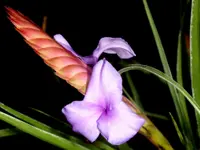
This species opens its vivid orange to salmon flowers mainly in the evening and night, releasing a noticeable fragrance that attracts nocturnal pollinators such as moths.
It is naturally distributed in rainforests and moist forests of eastern Australia and nearby Pacific islands, where it climbs through understory vegetation rather than growing in fully exposed sites.
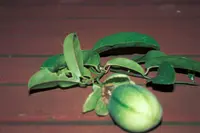
Its yellow to orange berries are technically edible and eaten locally in some areas, but they are relatively small with a mild flavor and are not widely cultivated as a fruit crop.

Unlike many large-flowered passion vines, this species has comparatively small, tubular flowers with reduced corona filaments, an adaptation linked to moth pollination rather than the bee and hummingbird pollination seen in many other Passiflora species.
This species is a twining vine that climbs using tendrils, rather than spreading along the ground. It performs best when given a trellis, fence, or other support, and will gradually cover the structure with foliage and flowers.
Keep your plants happy and healthy with plant identification, disease detection, and easy care guidance.