pheasants tail Care (Anthurium schlechtendalii)

Also known as: bird's nest anthurium
pheasants tail

About pheasants tail

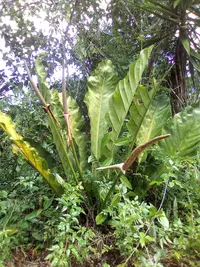
Pheasants tail (Anthurium schlechtendalii) is a tropical aroid grown mainly for its long, arching, textured leaves that resemble a feathered tail. It forms a clumping rosette that can become quite large over time. Native to humid forests of Central America and southern Mexico, it often grows as a terrestrial plant on the forest floor or on rocky slopes. Its bold foliage and somewhat slow growth make it more of a collector’s plant than a beginner’s choice. It prefers warm temperatures, high humidity, and airy, well-drained substrate similar to orchid or aroid mixes. With the right environment, it is not difficult to care for pheasants tail, but it reacts poorly to cold or waterlogged conditions.

Main Plant Requirements

Care Difficulty

Moderate Care

Light Preference

Bright Indirect Light

Water Requirements

Keep Soil Moist

Temperature Preference

Tropical / Frost Sensitive

Hardiness Zone

11–12

Soil Texture

Loamy, Peaty, Organic-rich

Soil pH

Acidic (5.5–6.5)

Soil Drainage

Moist but well-drained

Fertilization

Light (every 4–6 weeks)

Get Personalized Care Plan

Scan your plant to receive care tips personalized for your specific plant

Available on iOS and Android

How to Care for the pheasants tail

Anthurium schlechtendalii prefers bright, filtered light that mimics dappled tropical forest conditions.

  • Provide 4–6 hours of bright, indirect light each day, such as under shade cloth or beneath high tree canopies, which suits pheasants tail well.
  • Tolerates partial shade, but in very low light growth slows, leaves stretch, and new foliage emerges smaller and darker.
  • Avoid harsh mid‑afternoon sun; strong direct rays scorch leaves, causing yellow or brown patches, especially during late spring and summer at lower latitudes.

Water Anthurium schlechtendalii to maintain consistently lightly moist but never waterlogged soil.

  • Before watering, let the top 2–4 cm of soil dry; use a fingertip test rather than a fixed schedule, as frequency changes with light, heat, and potting mix.
  • In warm growing seasons, expect more frequent watering as soil dries faster; in cooler months, allow slightly longer drying intervals to reduce rot risk.
  • Watch for overwatering signs such as yellowing lower leaves and soft stems, and underwatering signs like dull, slightly curling leaves and dry, pulling-away soil; always use sharply draining, chunky mix.

This species prefers warm, stable conditions typical of lowland tropical forests.

  • Aim for 65–80°F (18–27°C) for steady growth, with brief peaks to 85°F (29°C) tolerated if humidity is moderate and soil does not stay soggy.
  • Avoid temperatures below 55°F (13°C); below this, growth slows sharply and leaf damage appears, and near 40°F (4°C) tissue injury and potential death occur.
  • Protect from frost and cold drafts outdoors, and from hot, dry winds; strong heat above 90°F (32°C) combined with low humidity can cause leaf edge browning and stress.

This species prefers warm, humid air and reacts quickly to very dry conditions.

  • Aim for 60–80% humidity for steady growth of pheasants tail foliage.
  • Tolerates brief dips to 40–50%, but prolonged dry air leads to brown leaf edges, curled tips, and stalled new leaves.
  • Increase humidity with a nearby humidifier, grouped plants, or a pebble tray kept below (not touching) the pot base.

Anthurium schlechtendalii grows best in a loose, chunky, fast-draining yet moisture-retentive medium.

  • Use a mix roughly 40% fine bark, 30% peat or coco coir, 20% perlite, and 10% compost for organic-rich structure.
  • Ensure the mix drains freely in seconds but still feels slightly springy and airy around the roots.
  • Target slightly acidic pH 5.5–6.5, which supports nutrient uptake and prevents micronutrient lockout.
  • Avoid dense garden soil, heavy peat without amendments, or any mix that compacts, stays soggy, or smells sour.

This species is well suited to container culture when the pot supports its spreading root system and foliage weight.

  • Choose a pot wide enough to allow lateral root spread, as very tall but narrow containers can trap moisture at the base.
  • Select a sturdy, heavier pot material if the plant becomes top-heavy so it does not tip when leaves lengthen.
  • Use a potting setup where drainage holes stay fully exposed above any decorative cachepot or saucer lip to let water exit instantly.

Anthurium schlechtendalii benefits from light, steady nutrition but is sensitive to excess salts.

  • Use a balanced liquid fertilizer (around 10-10-10 or 20-20-20) diluted to 1/4–1/2 strength for pheasants tail indoor care.
  • Feed every 4–6 weeks during the warm growing season when light and growth are strong.
  • Reduce feeding to 1 light application in late winter or stop entirely when growth slows.
  • Flush the pot with plain water every 1–2 months to prevent fertilizer salt buildup in the mix.

Pruning Anthurium schlechtendalii focuses on hygiene and maintaining an open, well-shaped clump.

  • Best time is late winter to early spring, just before active growth starts.
  • Remove yellowing, dead, or mechanically damaged leaves at the base with clean, sharp scissors or pruners.
  • Thin out crowded, crossing, or inward-facing stems to improve air flow and reduce disease risk.
  • Trim spent inflorescences near their base to direct energy into foliage and new growth rather than seed.

This species prefers a stable root environment and responds best to careful, infrequent repotting.

  • Repot every 2–3 years or when roots circle the pot, emerge from drainage holes, or growth becomes noticeably slow.
  • Aim for late winter to early spring so the plant can recover quickly as new growth begins.
  • Move only 1 pot size up, into a chunky aroid mix, keeping roots intact and at the same depth.
  • Water thoroughly after repotting, then keep slightly drier for 5–7 days to limit rot while damaged roots heal.

Anthurium schlechtendalii is most reliable to propagate by division of mature clumps rather than by seed.

  • Divide in late spring or early summer when roots are actively growing and temperatures are warm.
  • Unpot the plant, gently tease apart natural offsets, and ensure each division has healthy roots and at least 1–2 leaves.
  • Plant divisions into small pots with airy, well-drained aroid mix and firm lightly around the roots.
  • Maintain high humidity, bright indirect light, and evenly moist (not wet) mix until strong new growth appears.

This tropical species is frost tender and needs warm, stable indoor conditions in winter.

  • Move container plants indoors before temperatures drop below 55°F, keeping them away from drafts and heater vents.
  • Maintain 60–75°F with bright, indirect light and slightly reduced watering to match slower growth.
  • Avoid cold windowsills; insulate pots from cold surfaces with a tray, cork mat, or wooden stand.

Care Tips

Support heavy leaves

Install a low, sturdy support ring or discreet stakes around the base so the long strap leaves rest on the support instead of kinking or tearing at the petiole attachment as they gain size and weight.

Encourage larger foliage

Repot into a slightly wider but shallow container and allow a broad root run, which promotes stronger, larger leaves and a fuller rosette rather than tall, unstable growth.

Root-zone aeration check

Once or twice a year, gently slide the root ball halfway out of the pot to confirm that roots are firm, pale, and not circling tightly, then loosen only the outermost roots before returning or repotting to prevent future compaction.

Targeted pest scouting

Inspect the leaf bases and undersides, especially where leaves emerge from the stem, using a flashlight or magnifying lens, since scale and mealybugs often hide deep in these tight leaf axils on this species.

Seasonal rest adjustment

In late fall and winter, reduce handling and avoid repotting or dividing, as this plant benefits from a mild rest period where stable conditions and slightly slower growth help it recover from the higher demands of the active growing season.

Common Pests and Diseases

Mealybugs

This pest feeds on sap and often hides in leaf bases and along the midrib of the long, corrugated leaves. Symptoms include cottony clusters, sticky honeydew, and distorted or yellowing foliage.

Solution

Isolate the plant, then wipe or swab pests with cotton pads dipped in 70% isopropyl alcohol, focusing on leaf bases and undersides. Follow with a thorough rinse and repeat weekly, and if infestations persist, use a targeted insecticidal soap or neem oil spray while improving air movement and avoiding excess nitrogen fertilization.

Scale insects

These insects appear as small, dome-shaped bumps on petioles, leaf midribs, and sometimes on the inflorescences, causing gradual yellowing and reduced vigor. This pest often blends with the tough leaf texture, so colonies can become dense before being noticed.

Solution

Gently scrape or rub off visible scales with a soft cloth or toothbrush and 70% isopropyl alcohol. For remaining juveniles, apply horticultural oil or insecticidal soap to fully coat stems and leaf undersides, repeating every 7–10 days and pruning heavily infested parts if necessary.

Bacterial blight

This disease causes water-soaked, translucent patches along leaf margins that turn brown, often with a yellow halo and irregular shape that follows the veins. Symptoms include rapid spread in warm, humid, poorly ventilated conditions and can lead to collapse of whole leaves.

Solution

Remove and discard all affected leaves, cutting well into healthy tissue, and disinfect tools between cuts. Reduce overhead watering, keep foliage dry, increase airflow, and, for collections with recurrent problems, consider a labeled copper-based bactericide used exactly as directed to protect uninfected leaves.

Bacterial leaf spot

This disease produces small, dark, water-soaked spots that expand and sometimes show a yellow edge, especially on younger leaves. Symptoms include spotting that coalesces into irregular lesions, giving leaves a scorched or tattered appearance.

Solution

Promptly remove spotted leaves and avoid splashing water on the foliage, especially in warm conditions. Improve spacing and ventilation around plants, water at soil level in the morning, and use a copper-based bactericide preventively on remaining foliage if environmental conditions favor spread.

Anthracnose

This disease causes tan to dark-brown, sunken lesions along the long leaf blades and sometimes on petioles, often starting at the tip or edges where moisture lingers. Symptoms include dry, necrotic patches that may merge, giving the leaf a scorched look, especially under high humidity and poor air circulation.

Solution

Cut off and dispose of affected leaves, then reduce humidity around the foliage by improving airflow and avoiding prolonged leaf wetness. Keep the plant on a consistent but not excessive watering schedule, and in persistent cases use a labeled fungicide for anthracnose on a schedule while removing new lesions early as part of Anthurium schlechtendalii care.

Interesting Facts

Pheasant-tail leaf shape

The long, narrow leaves of this species develop a wavy, pleated margin that resembles a pheasant’s tail feather, which is the origin of its common name in Spanish and English.

Climbing forest epiphyte

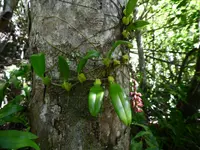
In its native Mesoamerican range, this plant often grows as an epiphyte on trees in humid forests, anchoring its roots on bark and collecting moisture and nutrients from rain, leaf litter, and organic debris rather than from soil alone.

Seed dispersal by birds

Its spadix produces small, fleshy berries that attract birds, which then disperse the seeds after feeding, helping maintain natural populations across its native habitat.

Botan icon

Did you know?

This species can develop exceptionally long leaves in ideal tropical conditions, with individual blades documented at well over 1 m in length, giving mature specimens a strongly architectural, almost palm-like presence in the forest understory.

FAQs about pheasants tail

Lack of flowering often relates to maturity, insufficient light intensity, or nutrient imbalance with too much nitrogen and not enough phosphorus. Stable warmth and humidity, along with balanced fertilizer, support Anthurium schlechtendalii care focused on reliable blooming.

Grow Healthy Plants with Botan Care

Keep your plants happy and healthy with plant identification, disease detection, and easy care guidance.

Botan plant care app — identify plants on mobile

Explore More Plants