Support upright growth
Use a narrow, smooth stake and soft garden ties to support the main stems, keeping the plant upright and reducing the risk of petiole breakage as leaves enlarge and become top-heavy.

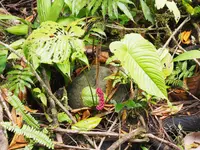
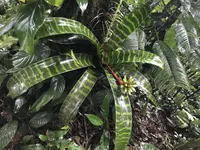
Anthurium cuspidatum is a tropical aroid grown mainly for its striking, often elongated leaves and decorative growth habit. It typically forms a compact clump with upright to arching foliage and slender flowering spikes.
This species occurs in humid forest habitats in Central or South America, where it grows as an epiphyte or terrestrial plant in airy, organic material. It tends to prefer warm, stable conditions, moderate to high humidity, and a loose, well-drained mix, which can make it somewhat sensitive in very dry homes.
With consistent conditions and careful watering, many indoor growers find it manageable once established, especially after learning how to care for Anthurium cuspidatum.

Care Difficulty
Moderate Care

Light Preference
Bright Indirect Light

Water Requirements
Keep Soil Moist

Temperature Preference
Tropical / Frost Sensitive

Hardiness Zone
11–12

Soil Texture
Loamy, Peaty, Organic-rich

Soil pH
Acidic (5.5–6.5)

Soil Drainage
Moist but well-drained

Fertilization
Light (every 4–6 weeks)
Scan your plant to receive care tips personalized for your specific plant
Available on iOS and Android
Provide bright, filtered light that mimics forest understory conditions.
Maintain lightly moist but never soggy soil for healthy root function.
Keep conditions warm and stable to support steady growth and flowering.
This species benefits from consistently humid air to maintain healthy foliage.
Anthurium cuspidatum prefers a loose, airy, organic-rich mix that drains rapidly yet retains light moisture.
This species is well suited to container growing when the pot supports its epiphytic root system.
This plant responds well to light, consistent feeding during active growth.
Pruning helps maintain a clean form and supports healthy flowering.
Container-grown plants benefit from occasional repotting to refresh the root zone.
Propagation is usually done on established, healthy plants to maintain desired traits.
This tropical species needs protection from cold conditions in temperate climates.

Plant Health Check
Not sure what's wrong with your plant? Check your plant's health inside the app.
This species is named for its sharply pointed leaf tips, described botanically as cuspidate, which help channel water away from the leaf surface in its naturally wet habitat.
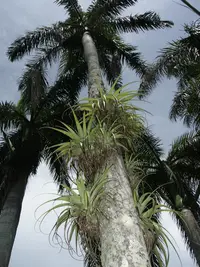
It is native to humid forests of Central America, where it often grows as an epiphyte on trees, anchoring to bark rather than rooting in deep soil.
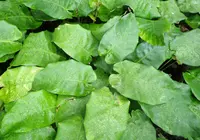
Mature leaves can develop a slightly velvety, matte surface due to fine epidermal cells, which diffuse light and help protect the tissue from intense tropical sunflecks.
Lack of blooms usually relates to insufficient maturity, low light intensity, or low humidity. Overfertilizing with high nitrogen can also suppress flowers. Adjust environmental conditions gradually and avoid repotting too often, which can interrupt the flowering cycle.
Keep your plants happy and healthy with plant identification, disease detection, and easy care guidance.