Olive Brittlegill Care (Russula olivacea)

Olive Brittlegill

About Olive Brittlegill

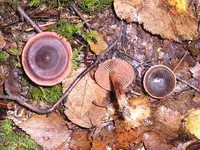
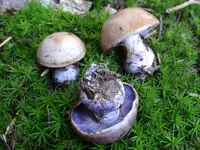
Olive brittlegill, Russula olivacea, is a woodland mushroom, not a leafy houseplant. It forms fleshy caps with olive, reddish, or brown tones and pale, brittle gills beneath. The stout stem is usually whitish to slightly flushed and often feels firm and dense.

This species appears mainly in coniferous and mixed forests across Europe, forming symbiotic relationships with tree roots, which means it cannot be grown like a normal potted plant. It prefers moist, well-drained, humus-rich forest soils and dappled light. For anyone wondering how to care for Olive Brittlegill, it is mainly a fungus to observe in its natural habitat rather than one to cultivate indoors or in a garden.

Main Plant Requirements

Care Difficulty

Hard Care

Light Preference

Partial Shade

Water Requirements

Regular Water

Temperature Preference

Cool Climate

Hardiness Zone

Unknown

Soil Texture

Loamy, Organic-rich

Soil pH

Acidic (5.5–6.5)

Soil Drainage

Moist but well-drained

Fertilization

Minimal (feed rarely)

Get Personalized Care Plan

Scan your plant to receive care tips personalized for your specific plant

Available on iOS and Android

How to Care for the Olive Brittlegill

This ectomycorrhizal mushroom prefers dappled woodland light rather than direct, open sun.

  • Site Russula olivacea in deciduous or mixed forest with 2–4 hours of soft morning sun and bright, filtered light for the rest of the day.
  • Provide at least 50–70% shade; dense canopy, leaf litter, and understory plants help diffuse harsh midday and afternoon sun that can overheat the forest floor.
  • In summer, increased canopy shade is usually sufficient; avoid clearing overhead branches that could expose the mycelium to drying and temperature swings.

This forest fungus relies on consistently moist, not waterlogged, soil around its tree partners.

  • Aim for mineral soil that stays evenly moist 5–10 cm below the surface, using leaf litter or wood chips to slow evaporation and buffer rainfall swings.
  • If natural rainfall is low and soil becomes dusty and dry to 5 cm depth, apply gentle irrigation to the surrounding forest floor, avoiding puddling or standing water.
  • Russula olivacea declines in soggy, compacted sites; watch for persistent surface water, algae growth, or a sour smell as signs drainage needs improvement.

This species favors cool to mild forest temperatures with moderate seasonal variation.

  • Optimal activity occurs around 55–70°F (13–21°C), common in temperate late summer to autumn under mixed or coniferous woodland canopies.
  • The mycelium in soil typically tolerates down to about 25–30°F (-4 to -1°C), but fruiting bodies are damaged by hard frost and prolonged freezing at the surface.
  • Sustained heat above 80–85°F (27–29°C), especially with dry soil, can suppress fruiting; deep leaf litter and shade help moderate warm-season temperature spikes.

This mycorrhizal mushroom does not have specific humidity care needs in typical outdoor woodland conditions and is not suited to controlled indoor humidity management.

This ectomycorrhizal fungus relies on undisturbed forest soil conditions rather than prepared potting mixes.

  • Russula olivacea typically occurs in moderately moist, well‑aerated, humus‑rich forest soil formed from natural leaf litter and decomposing wood.
  • It favors loose, crumbly mineral soil under trees, where pore spaces allow gas exchange around fine fungal threads known as mycelium.
  • Soil should drain freely after rain; standing water, compacted clay, or heavily worked garden beds tend to reduce fruiting.
  • Avoid adding fertilizers or altering pH aggressively, since these mushrooms are adapted to relatively stable, mildly acidic woodland soil.

This species is not realistically suitable for container growing, even with advanced cultivation techniques, because it depends on complex mycorrhizal relationships with host tree roots in open soil.

Russula olivacea is a wild mycorrhizal mushroom that should not be fertilized directly, since extra nutrients can disturb its fungal–root partnership.

Russula olivacea does not require pruning, as its mushroom fruiting bodies are temporary structures that naturally decay.

This fungus forms a mycorrhizal association with host tree roots, so it is not suited to normal repotting or container culture.

  • Transplant only by moving the entire host tree or a sod section containing established roots and soil, ideally in cool, moist weather.
  • Limit disturbance of the forest or garden soil where Russula olivacea appears, since its underground mycelium is sensitive to disruption.
  • Avoid frequent transplanting; the fungus may fail to re-establish if the tree root zone is repeatedly disturbed.
  • Keep the root zone evenly moist after any move to reduce stress on both the host tree and associated mycelium.

Propagation of this species is specialized because it relies on a living host tree and a stable soil ecosystem.

  • Natural spread occurs via spores released from mature caps, which colonize compatible tree roots over time.
  • Encourage spore dispersal by leaving some intact mushrooms to mature and decay on site.
  • Support long-term colonization by maintaining host trees, avoiding deep cultivation, and minimizing fungicide use in the area.
  • Most home growers focus on how to take care of Olive Brittlegill in suitable woodland conditions rather than attempting lab-based propagation.

This mushroom is naturally cold hardy in its native woodland climates and usually needs no targeted winter care.

  • Leave leaf litter or natural mulch over the tree root zone to buffer freeze–thaw cycles around the mycelium.
  • Avoid deep digging or soil compaction in winter so the fungal network under the surface remains intact.
  • Container cultivation is not recommended; rely on in-ground woodland conditions for reliable overwintering.

Care Tips

Leave Host Roots

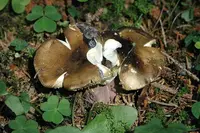
When foraging, cut the mushroom at the base instead of pulling it up to avoid disturbing the underground mycelium that depends on nearby tree roots, which helps sustain future fruiting in the same spot.

Minimal Habitat Disturbance

Keep leaf litter, small twigs, and moss layers intact around fruiting areas, since this species relies on the stable, shaded forest floor microclimate those materials create.

Selective Harvesting

Only pick a portion of the mature, intact caps in any patch and leave younger and damaged fruiting bodies in place to maintain spore production and long-term population stability.

Soil Compaction Avoidance

Avoid repeated trampling, bike tracks, or heavy equipment in known fruiting zones, as compacted soil reduces air spaces and damages the fine mycelial network that produces mushrooms.

Spore Dispersal Support

If collecting for study or culinary use, consider leaving some caps to fully open and age in place so they can release spores, which is a practical way of indirectly caring for Olive Brittlegill in natural sites.

Common Pests and Diseases

Mycophagous slugs

This pest feeds on the caps and gills of fruiting bodies, leaving ragged holes and slime trails on and around mushrooms. Damage is often worst during wet, mild weather when slugs are most active.

Solution

Hand-pick slugs during cool, damp periods and remove sheltering debris such as boards, stones, and dense ground litter near fruiting areas. If needed, use iron phosphate slug bait placed away from children and pets, and maintain moderate leaf litter rather than thick, constantly wet mats to lower slug pressure while still conserving the woodland habitat where Russula olivacea forms mycorrhizae.

Fungus gnat larvae

This pest attacks developing fruiting bodies and mycelium in the soil, causing pitted caps, tunneling in stems, and premature decay. Symptoms include soft spots, distorted growth, and tiny black adults hovering near mushrooms.

Solution

Reduce excess surface moisture by avoiding constant saturation of the immediate fruiting zone and improve air movement at ground level. Remove and discard heavily infested or collapsing mushrooms, and if cultivation is attempted in controlled beds, cover substrate with fine mesh to exclude adult gnats from laying eggs.

Mite grazing

These insects feed on mushroom tissue and spores, creating fine pockmarks on caps and stems and sometimes carrying other fungal spores or bacteria. Symptoms include roughened surfaces, patchy discoloration, and a dust-like appearance under close inspection.

Solution

Limit heavy organic clutter directly on top of fruiting sites and avoid overfeeding beds with manure or rich compost that encourages mite build-up. In small, managed patches, harvest mushrooms promptly at maturity and discard any specimens with extensive surface damage, which interrupts the mite food source and reduces population density over time.

Bacterial blotch

This disease causes greasy, water-soaked spots on caps that turn yellow-brown and can progress to soft decay, especially in warm, humid conditions. Symptoms include slippery or slimy patches and rapid breakdown of affected tissue.

Solution

Encourage better air circulation around fruiting areas by thinning dense low vegetation and avoiding constant overhead wetting of caps. Remove and dispose of affected mushrooms as soon as blotches appear and avoid handling undamaged specimens with contaminated hands or tools to reduce spread, which is a core part of Russula olivacea care instructions in managed woodland beds.

Secondary mold colonization

This disease affects older or damaged mushrooms, where opportunistic molds such as Trichoderma or Penicillium grow on caps and gills, causing fuzzy, colored patches and fast decay. Symptoms include green, blue, or white mold growth starting on bruised or insect-damaged tissue.

Solution

Harvest mushrooms promptly when mature and avoid leaving injured or slug-eaten fruiting bodies on site, since they act as inoculum sources. In semi-managed sites, keep the fruiting area free of rotting wood chips piled directly on mushrooms and maintain a moderate, not overly saturated, leaf layer to slow mold spread on fresh fruiting bodies.

Interesting Facts

Variable cap coloration

This species typically shows an olive to wine-red cap with yellowish tones, and individual fruitbodies can vary widely in color even within a single patch, which often makes field identification challenging.

Association with conifers

It forms ectomycorrhizal partnerships with coniferous trees, especially spruces, exchanging mineral nutrients from the soil for sugars produced by the host tree.

Robust brittle gills

Its gills are thick, crowded, and characteristically brittle, snapping cleanly rather than bending, a structural trait linked to the distinct cellular arrangement of russuloid fungi.

FAQs about Olive Brittlegill

This mushroom is generally considered edible when correctly identified and thoroughly cooked, but similar Russula species can cause stomach upset. Only experienced foragers should harvest it, and any doubtful specimen must be discarded instead of eaten.

Grow Healthy Plants with Botan Care

Keep your plants happy and healthy with plant identification, disease detection, and easy care guidance.

Botan plant care app — identify plants on mobile

Explore More Plants